Why is my cat vomiting undigested food?
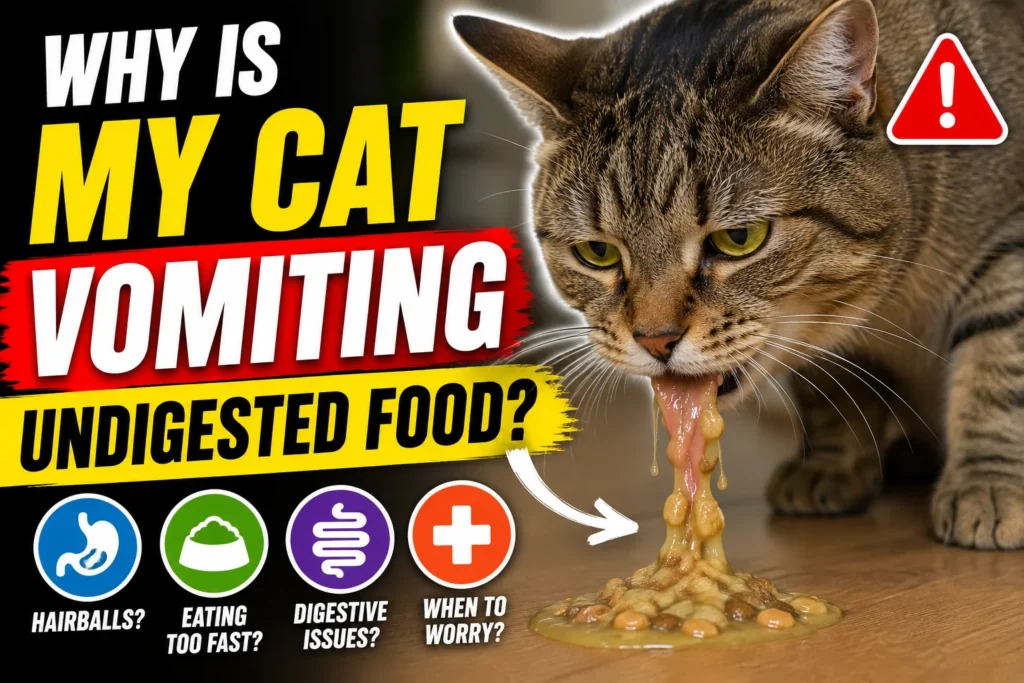
Why is my cat vomiting undigested food?Coming home from work and seeing your cat has made a mess of their food and water can be very concerning. Is she possibly sick or did my cat just go through the process of vomiting?
The answer is as follows:
Vomiting undigested food has a different set of causes than vomiting digested yellow bile.Knowing how to tell the difference can be vital to your cat’s health.
Do you understand the difference between vomit and regurgitation?
To be able to give the correct diagnoses, first figure out what you are seeing.
- Regurgitation occurs with little or no effort on your behalf as the food comes back up.The food looks largely intact, undigested and tube-shaped. It happens minutes to 2 hours after eating. Your cat will simply lower their head and the food falls out.
- Vomiting: This is active. Your cat will gag, heave and contract their abdominal muscles. If the food is still undigested but mixed with stomach juices, it is early gastric vomiting.
7 Reasons For Why is my cat vomiting undigested food?
1. Eating Too Fast
The first reason is the most widespread, especially if you have several cats at home or your pet used to be stray. If the cat eats the dry food without chewing it, then the dry food swells inside the stomach. Then there is a reaction from the stomach and it throws everything out.
Signs: Food is whole, wet, but formed. Your cat acts normal immediately after.
2. Allergies or Food’s Intolerance
If you cat is allergic to chicken, fish, grains or other protein then the stomach will expel the food even before its digestion starts.
Symptoms: The cat throws up no more than two hours after the food intake. It might be accompanied by itching or diarrhea.
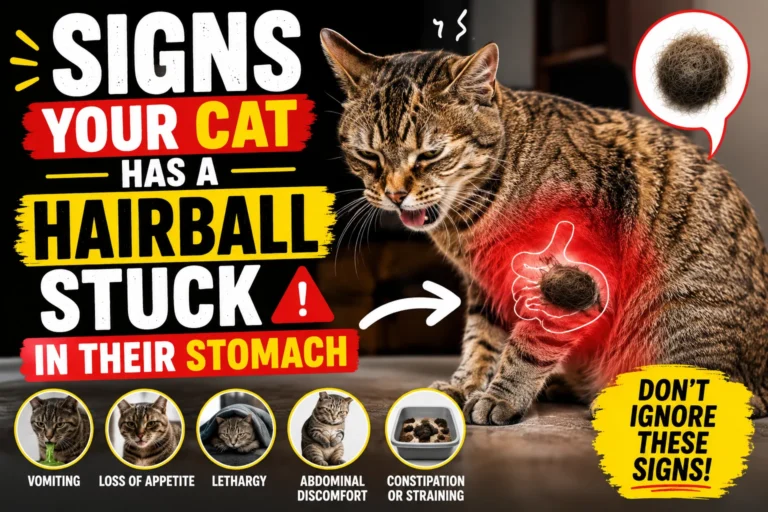
3. Hairballs
If your pet has a big hairball inside his stomach, then it blocks it. The new food cannot enter the stomach, and hence, the stomach will make the food come back up.
Symptoms: Sometimes hair will be seen in the vomited material. The cat gags or coughs after feeding.
4. Esophageal Disorders
It is a disease in which the muscles in the esophagus lose their tone, making them unable to move food along. Food remains in the chest until the cat bends forward.
Symptoms: Regurgitation of entire kibble many hours after feeding. Weight loss. Foul smell from the mouth. This occurs mostly in Siamese cats.
Signs: Regurgitation of whole kibble hours after eating. Weight loss. Bad breath. This is common in Siamese breeds.
5. Gastritis
An inflamed stomach due to infection leads to the stomach not functioning correctly as a digestive organ; therefore, food will not be digested, and the cat will vomit up everything in its stomach.
Signs of an inflamed stomach include lethargy, hiding and vomiting that changes from yellow/green.
6. Intestinal Blockage
Should your cat have swallowed string, toys, or even a hair tie, this may partly obstruct the exit path from the stomach. There is no way for the contents to reach the small intestine, and it gets regurgitated.
Signs: Undigested food, then dry heaving then not keeping water down. This is an emergency.
7. Overeating or Diet Change
When switching abruptly to another kind of food for your pet, you cause “shock” in the digestion system. =Free-fed cats tend to graze through the entire day, particularly when they are obese.
When does this situation escalate into an emergency?
In the instance where your cat vomits undigested food once but still remains lively and hungry, you will have to continue monitoring your cat from home. Your cat needs to be brought to the veterinary clinic immediately if any of the following symptoms are observed:
- Repetitive vomiting
- Blood in the vomit
- Lethargy
- Painful abdomen
- No stool for 48 hours
- Weight loss alongside vomiting
Disclaimer: This article is for informational purposes only and does not replace a veterinary examination.
5 Vet-Approved Home Solutions to Try First
If your cat is acting normal, try these sequential steps:
Step 1: The “Slow Feeder” Test
Switch to a puzzle feeder or a Lickimat. Place a golf ball in the food bowl to force your cat to eat around it. If vomiting stops, the cause was simply eating too fast.
Step 2: Raise the Bowl
Elevate the food bowl 4-6 inches,except for megaesophagus, those cats need to eat off the floor and remain upright for 10 minutes. For normal cats, an elevated bowl reduces gravity reflux.
Step 3: Change the Texture
Dry kibble expands 50-100% in the stomach. Switch to pâté-style wet food or add warm water to kibble to let it expand before eating. Wait 15 minutes after soaking to serve.
Step 4: Hairball Management
Give a cat-safe hairball lubricant 2-3 times per week. Brush your cat daily during shedding season.
Step 5: Probiotics
A high-quality feline probiotic helps reset gut motility. Give once daily for 2 weeks.
Also Check: How to Clean a Dog’s Ears with Apple Cider Vinegar?
Veterinary Diagnosis: What Will the Vet Do?
If home fixes fail for more than 3 days, your vet will likely:
- Physical exam Palpating for blockages or pain.
- X-rays To determine whether or not the stomach empties properly.
- Blood tests For pancreatitis, kidney disease, or diabetes.
- Endoscopy Stricture, ulcers or megaesophagus.
- Treatments include injections that relieve nausea or surgery for obstruction or megaesophagus.
Treatment ranges from anti-nausea injections to surgery for blockages, or lifelong management for megaesophagus.
Preventative Care: Break the cycle
These are steps to take after diagnosis:
- Frequent small meals Eat four smaller meals not one or two larger ones.
- Regular deworming Worms may block the stomach exit point.
- Regular deworming Roundworms can physically obstruct the stomach outlet.
- Keep strings and rubber bands hidden These are the no 1 cause of linear foreign bodies.
Summary Cheat Sheet
| Cause | Key Clue | Solution |
|---|---|---|
| Eating too fast | Food is whole, cat acts fine | Slow feeder bowl |
| Megaesophagus | Regurgitates hours later, skinny | Vertical feeding |
| Hairball | Hair visible in vomit | Lubricant + brushing |
| Food allergy | Itchy skin + vomiting | Novel protein diet |
| Blockage | Vomits water too, painful | Emergency vet |
Frequently Asked Questions
Why does my cat throw up undigested food but act fine?
Most likely eating too fast. The stomach rejects the volume, not the food itself. Use a slow feeder for 3 days.
Is vomiting undigested food the same as a hairball?
No. Hairballs are usually cylindrical and contain fur. Undigested food is kibble-shaped. However, a hairball may cause vomiting of food secondary.
Should I feed my cat immediately after they vomited?
No. Do not give food for 4-6 hours and give 1 tablespoon of water each hour. Then give a bland diet.
Dry food which can induce vomiting by my cat?
Yes, and that is due to the following two reasons: 1. Dry food expands, 2. Some cats have allergy to preservatives in the dry kibble
What about the fact that my cat vomits only undigested food during night time?
This means either acid reflux or megaesophagus. Being in a lying position all night will cause the stomach acid to travel upwards. You could raise their bed or feed them a late dinner.
What is the difference between regurgitation and vomiting in cats?
Regurgitation is passive and occurs immediately after eating; the food is intact. Vomiting is active and occurs hours after the food is partially digested.
Can stress induce vomiting of undigested food in my cat?
Certainly. Stress causes delayed gastric emptying. New pets, moving homes or loud noises can trigger acute vomiting.
How do I know if it’s a blockage?
Check for a “bunny hopping” painful walk, lack of pooping for 2 days and vomiting even water. Go to an emergency vet immediately.
What color of vomit is dangerous?
Red, brown/coffee-ground or neon green. White foam with whole food is usually low urgency.
Will changing my cat’s food stop the vomiting?
If the cause is a food intolerance, yes. Switch to a single novel protein over 7 days. Do not switch abruptly that causes more vomiting.
Final Verdict
Most cases of “cat vomiting undigested food” are simple behavioral issues, such as eating too fast or hairballs. However, if your cat is losing weight, vomiting multiple times a day or acting painful night. A simple $150 X-ray could distinguish between a slow eater and a life-threatening string blockage.