
Understanding Why This Gentle Giant is Prone to heart disease
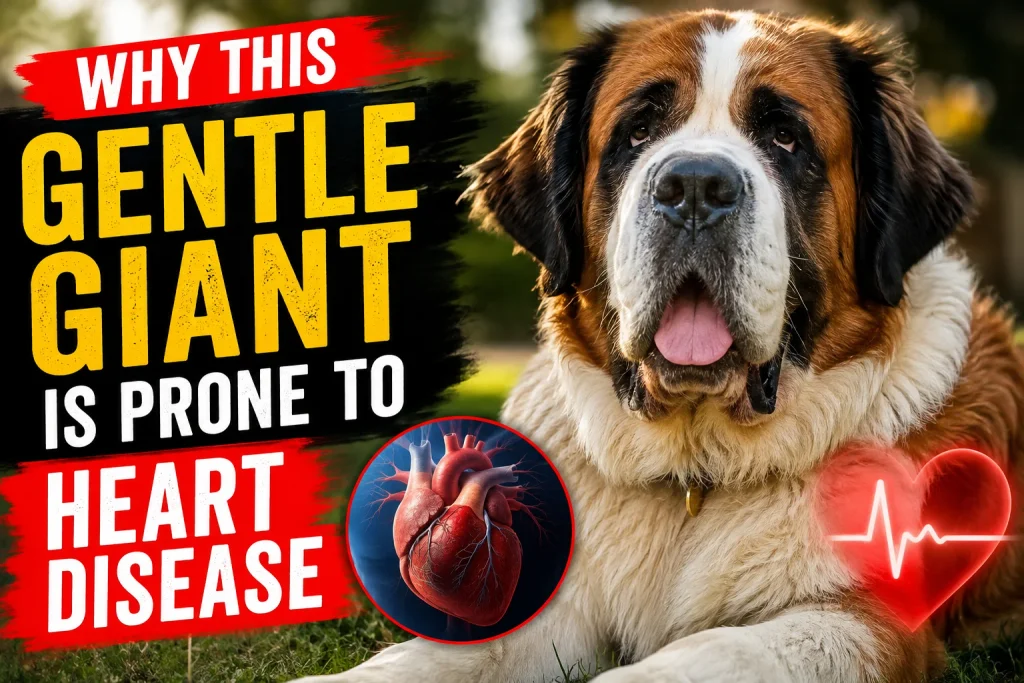
Understanding Why This Gentle Giant is Prone to heart disease. The Maine Coon, rightly crowned “gentle giant” of the cat-dom, will steal your heart with its massive stature, charming ear tassels, and endearing disposition. But behind its stoic facade of a super cat, lurks a secret vulnerability that no owner or breeder should ever overlook: an inordinate genetic predilection towards developing Hypertrophic Cardiomyopathy (HCM). Being a Doctor of Veterinary Medicine, and more importantly an expert in creating pet content with a scientific basis, I feel a duty to equip you with a well-rounded. Read More “Maine Coons & Heart Problems” Understanding HCM.
What is HCM in Cats?
Hypertrophic Cardiomyopathy is the most common heart disease to diagnose and is believed to affect up to one in every seven cats . Basically it is a disease of the heart muscle which means that the walls of the left ventricle (main body of the heart’s pumping chamber) become abnormally stiff and thick.
The thickened heart muscle or hypertrophy is not helpful but is pathological and can create the following problems.
- Reduced ability for the chamber to relax and be adequately filled with blood at every beat of the heart.
- An inability for the ventricle to pump blood round the bodies as well.
- Any enlarged atrium will have to work harder to force blood into the thickened ventricle. A significantly enlarged atrium carries with it a high risk of both congestive heart failure and painful, deadly clots .
The Genetic Blueprint: The MYBPC3 Gene Mutation
Genetics play the biggest role in why Maine Coons are prone to getting HCM. For this breed, the disease is often associated with an inheritied mutation in one particular gene called the cardiac myosin binding protein C gene, or MYBPC3. This gene signals the heart muscle to make a proteins that’s absolutely essential for heart function – normal muscle contracting and relaxing. The mutation found in Maine Coons is called the A31P mutation.
Understanding the Genetics: Autosomal Dominant Inheritance
A31P mutation is passed on the autosomal dominant method. In other words if your cat gets a single mutation from a parent it is affected. There are no carriers when the mutation is autosomal dominant. The cats either carry or do not carry the A31P mutation. Whether the cat suffers from mild or severe the mutation is dependant on whether they inherit one or two copies of them mutation.
- Heterozygous (One Copy): Your cat carries one normal copy of the gene and one copy with the mutation. Your cat with this genetic predisposition is more likely to develop HCM than cats that don’t carry the mutation, but the onset can be later in life, and the severity is often less than seen in homozygous cats.
- Homozygous (Two Copies): Your cat carries two copies of the mutation, one from each parent. Your cat is most likely to develop the disease. Research indicates that most homozygous Maine Coons are expected to develop HCM, that the age of onset is likely younger, and that the severity is usually greater. One major study indicated that of homozygous cats within their sample, 80% were diagnosed with HCM, and just under half died of cardiac related issues during the observation period.
Other Genetic Factors: A Complex Picture
The A31P mutation alone cannot be attributed fully to the genetic narrative. Complex disease conditions do not often stem from a single gene. Some of the other findings relating to HCM in Maine Coons are:
- Multiple mutations- some research points toward the A74T polymorphism, among other genes being responsible, at least in part, for HCM in the Maine Coon.
- Variants of Unknown Significance- Another genetic variant, a one in the TNNT2 gene was also reported to be in existence but has not been found to be a risk factor for HCM and is therefore referred to as a ‘variant of unknown significance’.
Also Check: Best Automatic Smart Cat Feeders for Weight Loss Control 2026
Why This Specific Mutation Leads to Heart Disease
The MYBPC3 gene encodes a vital structural protein in the contractile structure of the heart called the cardiac sarcomere. The A31P mutation, which occurs toward the amino terminus (start) of the cardiac sarcomere protein, is hypothesized to lead to disease through a number of mechanisms: First, the resulting altered amino acid may prevent the normal binding of other cardiac contractile components to MyBP-C, thus hindering optimal contraction and relaxation of the heart. Second, the mutated protein, which normally does get integrated into cardiac cell muscle, can act as a toxic polypeptide, leading to disruption of existing cell structures and additional stress on cardiac muscle cells. This ultimately results in the chaotic heart muscle cell architecture seen in HCM.
The Role of Other Factors (Non-Genetic and Secondary HCM)
Although in Maine Coon genetics is the most common cause forHCM. Factors like, age and sex are contributors to this disease.HCM can be found in very young cats, but the disease worsens over time. HCM generally affect males more than females.
- HCM can reach its most serious stage at 2 years of age in male Maine Coon’s with the genetic disease.
- Secondary HCM, a less serious type of this disease found to be caused from other such as: an over active thyroid (hyperthyroidism) and/ or high blood pressure (hypertension) cause the blood pumped through the body. These causes require treatments for the underlying issues which can result in resolution of heart muscle thickening. Maine Coons with genetic HCM do not have a cure, the disease just continues and has to be monitored.
Responsible Breeding and Screening
Research into the genetic causes of HCM is vital for the future health of the breed. Responsible breeders of HCM-prone lines test their breeding animals for the A31P mutation and practice selective breeding. For example they would avoid breeding two homozygous cats of the mutation.
This can greatly decrease the number of kittens born that will be susceptible to early and more severe heart disease.
Ideally, all cats being bred should also be tested for echocardiograms on a regular basis.
Frequently Asked Questions (FAQs)
Is HCM in Maine Coons 100% genetic?
While the major cause is the A31P mutation (gene) this disease is complex. Other factors, including genetic ones, may also play a role and conditions such as hyperthyroidism and high blood pressure can also cause increased heart wall thickness, but these are different from the primary HCM type.
If my Maine Coon is a genetic carrier will it get HCM?
Possibly. Cats that are heterozygous for the gene mutation have an increased risk, and though may be affected much later in life and display a milder form, are at a higher risk than normal cat and much at risk to homozygous cats. Cats with two copies of the mutation (homozygous) have a very high chance of presenting with the disease early on in life and showing severity.
What do the genetic results mean?
There are three categories for genetic testing results:
Normal (negative): This means that your Maine Coon does not have a copy of the mutation.
Carrier (heterozygous): this means that your Maine Coon only has one copy of the mutation and has an increased risk of being affected.
Affected (homozygous): this means that your Maine Coon has two copies of the mutation and has a very high risk of being affected.
At what age should I have my Maine Coon tested?
The MYBPC3 test can be performed at any age, on kittens. Regular cardiac screening for at-risk cats by a specialist in veterinary ultrasound has generally been recommended starting at 2 to 3 years of age. Combination testing allows for the most complete picture .
How do I spot HCM symptoms at home?
The majority of cats are asymptomatic for most stages and the subtle signs for this disease may be tachypnoea at rest, lethargy, reduced appetite and for seriously affected cats, even sudden respiratory distress. A saddle thrombus is where one or both posterior limbs are blocked by a blood clot which causes paralysis (and pain) to the affected region.
How can HCM be diagnosed?
The heart murmors or irregularities found via physical examination or ECG, though indicators of cardiac problems, have only confirmed heart disease on the cardiac sonograph following an echo car diogram . The ultrasonic scan can calculate the dimensions of the heart wall.
Can HCM be cured?
No, there is no definitive cure for primary HCM. The management of primary HCM, where it is an inherited condition, consists of treatment aiming to slow the progression of the disease. Medications prescribed aim to minimize the signs associated with disease and their complications such as congesive heart failure (Fluid in thelungs) and thrombosis .
Are male or female Maine Coons more affected than males?
Male cats tend to have greater incidence, are more severely affected and usually progress to a critical age of 2 years. Female Maine Coons can sometimes show a more varied presenting onset.
Should I avoid buying a Maine Coon kitten from a parent who has the mutation?
Not necessarily. A responsible breeder will tell you the status of tested parents. Cats should not be mated if either a sire or dam or their progeny are identified as carrying the mutation as this may produce homozygous progeny; a responsible breeder avoids this.
If my Maine Coon has a normal gene test can it still get HCM?
Yes it is very possible. A normally typed Maine Coon is less likely to suffer heart disease than a carrier or homozygous Maine Coon as it has no A31P mutation (this being a major contributing gene) however the actual form can be caused by other factors including Unknown inherited issues or secondary conditions so regular checks at the veterinary is advised as they should not present obvious or major issues.
Conclusion
With this majestic stature also comes a great responsibility. As this fatal cardiovascular disease is hereditary because of a single point mutation (A31P) in the gene encoding the myosin binding protein-C gene (MYBPC3) on an autosomal dominant pattern. HCM is affected significantly by whether a feline only inherits one, or both, of the mutated forms of MYBPC3; however age, sex, and subsequent illnesses can also be contributing factors. By breeding intelligently, being aware of your own cat and visiting your local veterinary professional regularly, you are providing the ultimate chance of a full life to such gorgeous feline companions.



2 Comments