Unleash Your Dog’s Inner Detective: A Vet-Approved Guide to Scent Work Games at Home
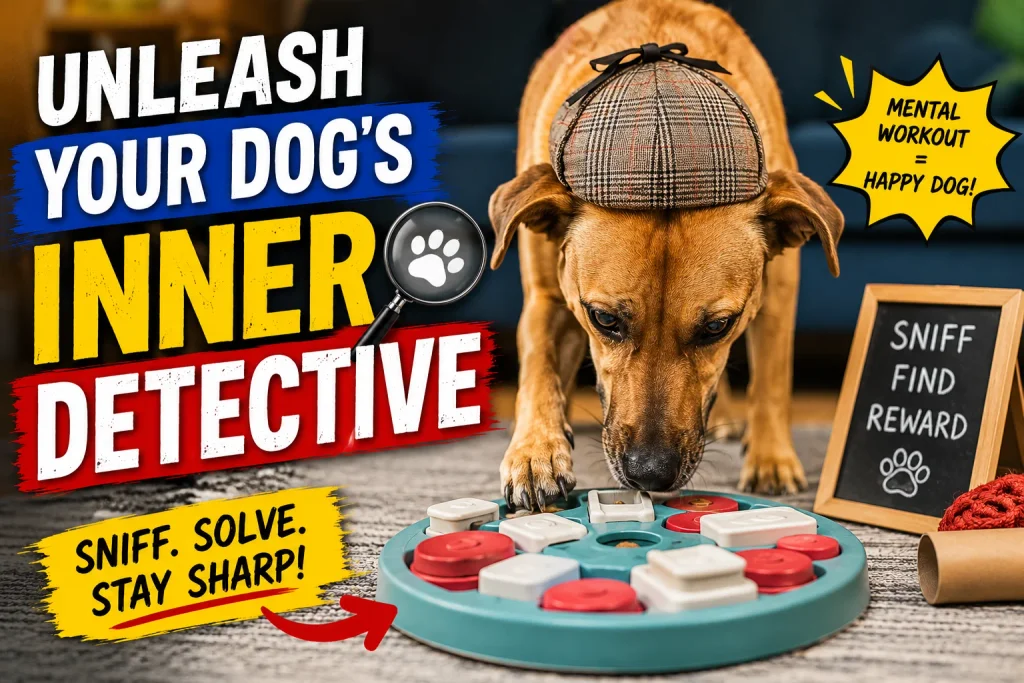
Unleash Your Dog’s Inner Detective: A Vet-Approved Guide to Scent Work Games at Home. The other question I’m often asked in vet clinic is, “What can I do to tire out my dog besides taking it on an extended walk?” Believe it or not the answer to this question may be right at the end of your dogs nose. Nose work, or scent work, is one of the best things you can do for mental stimulation and exhaustion for your dog! It has tired out dogs more efficiently than an hour long walk.
When it comes to interpreting the world and all that surrounds it, our dogs primary sensory interpretation lies with their nose. They have an estimated 300 million olfactory receptors to our 6 million. By stimulating this sense, you are engaging with your dogs innate instincts and providing both entertainment and enrichment. We will begin right step-by-step, to creating a smell enriched space for you and your dog!
Unleash Your Dog’s Inner Detective: A Vet-Approved Guide to Scent Work Games at Home
Before we go into the “how to” let’s first cover the “why”. Scent games is not just the ultimate party game but more important for the health of your dog
1. Mental workout: One thing, equal as important as a physical workout, is a workout for the mind. Scent exercises for about 15 minutes can be compared to the amount of workout of an actual 30-minute walk, which is ideal if the weather is bad or for an older dog with joint pains .
2. Confidence Building: For shy, anxious, or fearful dogs, successfully finding a hidden treat or toy provides a massive confidence boost. It gives them a “job” to do and allows them to solve problems independently, which is incredibly empowering.
3. Reduces Destructive Behaviour: A bored dog is often a destructive dog. When you channel their energy into a productive and mentally taxing activity like scent work, they are far less likely to chew your shoes or dig up your garden.
4. Strengthens Your Bond: You and your dog learn to work as a team. You learn to read their body language and trust their nose, which deepens your connection in a magical way.
Getting Started: The “Find It” Game
The beauty of starting scent work is that you don’t need any fancy or expensive equipment. You can begin with items you already have around the house .
What You’ll Need
- High Value Rewards: Small and stinky are good treats that your dog goes nuts over. Small pieces of cheese, cooked chicken and freeze dried liver will be great.
- A Toy Your Dog Obsessed Over: If you are dog that is highly motivated by toys and a particular squeaky toy could be your target.
- Containers or Boxes: Muffin tins, cardboard boxes, plastic containers, paper cups will do the trick.
Also check: Why is My Dog Obsessed with Chasing Shadows or Light Spots?
1: The Simple Treat Hide
This is the foundation of all scent work. The goal is to teach your dog the game and associate the verbal cue with the action of searching .
- Easy Beginnings: Show your dog that you put the treat on the floor within a few feet. Give the command, like “Find it!” or “Search!”. Praise them enthusiastically when they find and devour the treat.
- Visual Barrier: Put the treat behind a chair leg, just under the side of a cushion, or around the corner. They still will be able to see the item you are hiding. Give the command.
- Go Out of Sight: Have someone hold your dog in another room, or ask them to “stay.” Place the treat in an obvious spot in the next room. Release them and give the cue.
The key here is to set your dog up for success. Always make the first few hides in a session easy . If they get frustrated, go back a step.
2: The Classic Cup or Box Game
This game adds a cognitive layer and is excellent for teaching your dog to discriminate between scents .
- Setup: Place three or more identical plastic cups or cardboard boxes upside down on the floor in a line, spaced slightly apart.
- The Game: With your dog watching, lift one cup and place a treat underneath it. Encourage your dog to investigate the cups. When they nudge or paw the correct one, lift it and let them have the treat.
- Increasing Difficulty: As your dog gets better, hide the treat without them watching, add more containers, or start mixing up the cups to make it trickier.
3: Scented Toy Hunt
For dogs crazy about balls or a squeaky toy, have that plaything be your target.
- Introduce the toy: Let the dog sniff the toy to build excitement. You might want to let it “cook” in a container with a good-smelling ingredient (such as cat nip). This will get the smell acquainted.
- Search: Keep your dog contained while you hide the toy in plain sight (like under a bed or just behind the sofa). Then, signal: “Find your toy!” and let the search commence.
- The Reward: Make a huge fuss and play a quick game of tug or fetch when they find it. The reward is the toy itself!
Progression: Making Scent Work More Challenging
When your dog masters the basics of nose work, it’s time to up the ante and challenge them further.
- Increase Height: Place treats on shelves, window sills, and seats. This allows them to use their nose even more, as they have to travel downwards towards them in order to sniff them out.
- Add Distractions: Try playing the game in the garden, where there are competing scents from plants and wildlife. This is a big step up in difficulty.
- Teach a “Scent” Cue: For advanced dogs, you can start pairing a specific scent, like a tiny bit of birch or anise oil on a cotton ball, with a reward. This is the foundation of competitive nose work . For home games, simply hiding treats and toys provides all the enrichment they need.
Expert Tips from the Vet & Trainer
With an eye toward making the session as safe, rewarding and successful as possible, here are a few suggestions.
- Brief sessions are enough: A few minutes (3-10 is plenty to get started) is all that’s needed. Always stop while he is on a positive note.
- Let Them Lead: Once you give the cue, do not point or guide your dog. Let them solve the puzzle independently. This is crucial for their confidence and problem-solving skills .
- Use Positive Reinforcement: Scent work should always be a fun and rewarding game. Use praise, treats, or toys to celebrate every success .
- Consider Your Dog’s Physical Needs: This is a fantastic activity for dogs on crate rest or those with limited mobility, as it is low-impact .
- Essential Oil Safety: If you move to formal odor training with essential oils, be extremely careful. Many concentrated oils are toxic to dogs. Use only canine-specific kits or heavily diluted, safe oils. It is often best to stick with food and toys for home enrichment .
Frequently Asked Questions (FAQs)
Can any dog do scent work?
Absolutely! From Chihuahuas to Great Danes, all breeds, including brachycephalic (flat-faced) breeds like Pugs and Bulldogs, have fantastic noses and can benefit from scent games . It’s not about the breed; it’s about tapping into a natural instinct.
How long should a scent work session last?
For beginners, sessions should be short around 3 to 5 minutes . As your dog gets the hang of it, you can extend sessions to 10-15 minutes. It’s always better to end the game while your dog is still excited and wanting more.
What age can a dog start scent training?
You can start as early as 8 weeks old with simple “find the treat” games . It’s a brilliant way to engage a puppy’s mind and build their confidence. There is also no upper age limit; senior dogs benefit enormously from the low-impact mental stimulation.
My dog gets frustrated when they can’t find the treat. What should I do?
If your dog seems frustrated, the hide is too difficult. Immediately go back a step and make the hiding place very obvious . The goal is to build their confidence, and a 100% success rate in the beginning is ideal. You want them to enjoy the process, not get stressed.
Can I use essential oils for scent work at home?
While essential oils like birch, anise, and clove are used in competitive scent work, they are not recommended for casual home use unless you purchase a dedicated, canine-safe training kit . Many essential oils are toxic if ingested or inhaled in high concentrations. It is much safer and more practical to stick with food treats and toys for at-home games.
How does scent work differ from a normal walk?
A normal walk provides physical exercise, but scent work provides intense mental exercise. A focused, 15-minute nose-work session can tire a dog out more than a 30-minute walk . It is the perfect solution for days with bad weather or for dogs with exercise restrictions.
What if my dog tries to eat the container?
Always supervise your dog during scent work. Use durable containers and remove anything that could be swallowed. If your dog is a chewer, use a closed cardboard box with a hole cut in the top for the scent to escape, rather than an open cup or container.
Can I use my dog’s kibble instead of treats?
Yes, especially if your dog is highly food-motivated. For the first few sessions, you can use their regular kibble. However, using a high-value treat (like chicken or cheese) will create more enthusiasm and motivation to search, which is especially helpful when you first introduce the game.
How do I teach my dog a “find it” cue?
To teach the cue, simply say “Find it!” right before your dog discovers a treat. Do this repeatedly. Over time, your dog will associate that specific word with the action of searching for and finding a reward . Start by saying the cue as they are about to eat a visible treat and then progress to saying it before they search.
What is the best way to start if my dog doesn’t like treats?
If your dog is more toy-motivated, use a favourite toy as the reward. Start by getting them excited about the toy, then hide it. The reward for finding it is a short game of tug or fetch. The “Scented Toy Hunt” game described above is perfect for this.
Conclusion
If you need an activity that will fill your canine companion’s head and have the seal of approval from your vet too, it’s scent work. It’s incredibly easy to get started, uses something your dog’s born to do and brings with it a huge range of benefits – just look to build confidence and a stronger connection to name a few of the bonuses! Grab some treats, the boxes, and prepare to be wowed by your dog’s olfactory capabilities.