How to Treat Chin Acne in Cats Using Home Remedies?
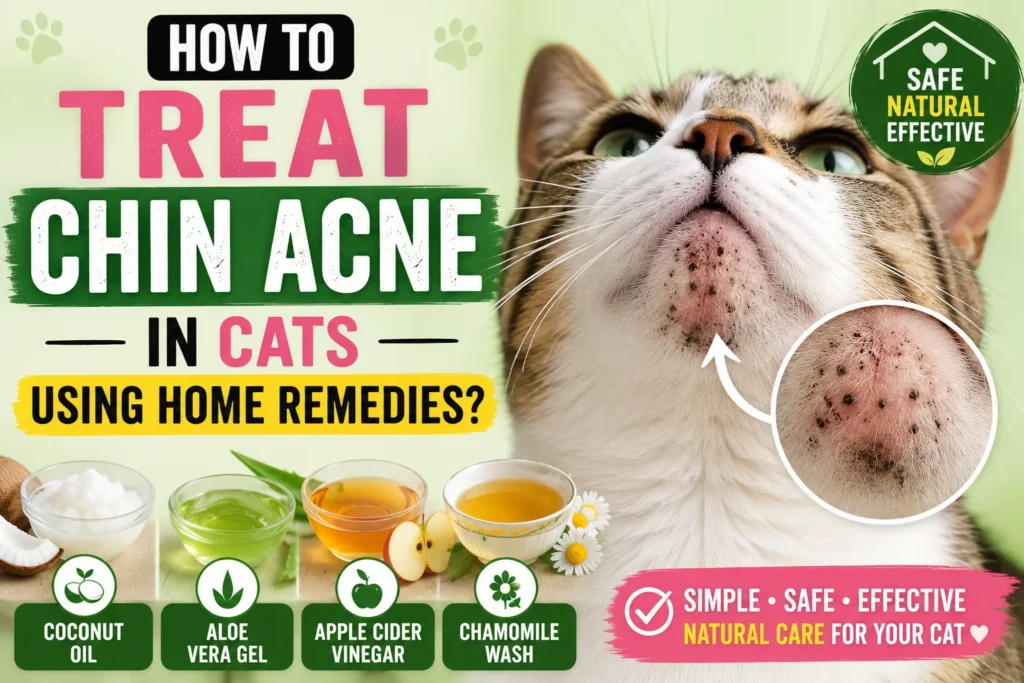
How to Treat Chin Acne in Cats Using Home Remedies? Do you see little black spots, red bumps or scabs on your cat’s chin? Chances are you’re dealing with a very common condition called feline chin acne. Do not fret, as you’re not alone, and for the most part, it can be easily handled through some basic treatment procedures performed right at home. Being a vet, I have come across this problem quite a lot and rest assured that you can handle this without having to visit the vet’s clinic.
Here are some natural ways to deal with your cat’s chin acne.
How to Treat Chin Acne in Cats Using Home Remedies?
What Exactly is Cat Chin Acne?
Cat chin acne is an ailment characterized by clogging of hair follicles in the chin area. It occurs when there is an excessive production of sebum (natural oils in the skin) and keratin (skin protein). The combination of these elements blocks the pores, causing the blackheads, which are referred to as comedones.
It may seem worrying, but the mild form of chin acne is painless and will not be a problem for your pet. In cases where it is not treated in time, bacteria can find their way inside the clogged pores and cause irritation of the skin, causing red and inflamed pimples.
Root Causes of Feline Chin Acne
Identifying the cause will be the first step towards treating the condition. Although not always evident, the following triggers or aggravate acne:
- Plastic Bowls: This is one of the biggest causes. Plastic bowls tend to scratch, and the scratches serve as homes for the growth of bacteria. Bacteria will find its way into the cat’s skin through the bowl when eating or drinking, hence causing irritation and blockage of the skin’s pores.
- Bad Grooming Habits: This is another trigger of feline acne because cats, particularly the elderly ones with arthritis, cannot groom effectively. This causes accumulation of oils in the cat’s chin.
- Stress and Immunity Problems: Cats that are stressed or have poor immunity due to hormonal changes in the body can get acne.
- Allergies: Skin inflammation caused by either food allergies or environmental allergies will trigger acne.
- Dirty Bowls: Whether the bowl is plastic or not, dirty food and water bowls can be a harbor for bacteria that can cause acne in cats.
Home Remedies Step by Step Guide
The best approach for mild acne is a consistent, gentle hygiene routine. Here are the most effective, vet-approved home remedies:
1. Start with a Warm Compress
A warm compress is a very comforting way to begin. This is meant to make the crust softer and to open the pores as well as reduce inflammation.
- Soak a clean piece of cloth in warm (but not hot) water.
- Squeeze it out and apply it on the chin of your kitty for 2-3 minutes.
- It will make the whole procedure easier and less uncomfortable for your little buddy.
2. Gentle Cleansing with Pet-Safe Solutions
Having applied a compress, it will be required to cleanse the skin surrounding your cat’s chin. One should not use any human acne products such as benzoyl peroxide and salicylic acid since they are quite harsh and can cause serious irritation in pets. Below are the examples of more mild antiseptics that could be used:
- Chlorhexidine Solution: This is an antimicrobial solution which is often prescribed by a vet. In case you have bought a concentrated preparation, you should dilute it, for instance, with the ratio 1:10 (10 ml to 100 ml of water). Take a cotton ball with this solution and wipe your cat’s chin.
- Feline Medicated Wipes: There are some medicated wipes sold in stores specifically for cats with the following ingredients: chlorhexidine, acetic acid, and phytsphingosine.
- Anti seborrheic Cat-Shampoo: A special shampoo which removes extra oil from the surface of the skin will help. Apply water to the area, then put some of the product on the area and rub it in for 1-2 minutes. After that, rinse the area with warm water. Make sure to avoid getting the shampoo into your pet’s eyes and mouth.
3.Omega 3 Supplements for Skin Health
Omega-3 and omega-6 fatty acids make good supplements to help enhance the skin’s health. The fatty acids have natural anti-inflammatory qualities which can help ease the skin. Get your vet’s advice on the best feline omega-3 supplement you can add to your cat’s meals.
4. A Crucial Change The Bowls
And if you do not do anything else, then this is one thing that you should do. All the plastic bowls you have that are being used for storing food and water should be substituted with either stainless steel, glass, or ceramic bowls. This is because plastic is porous and has scratches where bacteria can thrive.
Important Safety Rules to Follow
Do not “pop” the pimples: It will hurt your cat and may spread the infection to more layers of its skin .
- Don’t apply human medicines: Hydrogen peroxide, alcohol, tea tree oil, and many other human medicines are poisonous or highly irritative for cats .
- Aloe Vera: Although some sources recommend aloe vera, it is dangerous if eaten by the cat. If you plan on applying it, it should only be a pet-specific medicine and not one that may be licked away.
Also Check: Can You Use Human Shampoo on a Dog in an Emergency?
When to See a Veterinarian
But home treatment is effective, it can be used only for mild infections. In case of absence of any improvement within 1-2 weeks or if things start to get worse, it is necessary to pay your pet a visit to the vet. Here is when you need to go to the vet immediately:
- Severe inflammation, redness, and pain.
- Bleeding and formation of sores.
- Constant itching of your cat in the place of lesion and its sluggishness.
- The presence of infection on your cat’s lips.
Frequently Asked Questions (FAQs)
How can I remove cat chin acne the fastest?
The most efficient way is to use a warm compress, followed by cleansing of the affected area with dilute chlorhexidine solution or cat-specific medicated wipes. It should be done immediately after your cat uses ceramic or stainless steel bowls for food.
Is it okay to apply Neosporin on my cat’s chin acne?
No, it is discouraged from being done. Although others would recommend that, the application of human antibiotic ointment such as Neosporin might result in skin irritation. This kind of product is not meant for internal use, thus, your cat will lick it off and it might upset his stomach.
Can feline chin acne be contagious for other cats or humans?
Feline chin acne cannot be transmitted. There are no pathogens involved in this condition it is triggered by individual reasons of the cat, like clogged follicles, stress, or allergy.
Why does my cat develop acne on her chin area while her bowls are kept clean?
Although the bowls are kept clean, if the bowls are plastic, there could be some bacteria present in the scratches on the bowls. Apart from this, stress, food allergy, or health issues might trigger this condition.
Is it a good idea for me to squeeze my cat’s pimples?
By no means. It would be extremely painful for her, and it could drive the bacteria deep inside her body, causing a severe infection or leaving scars. Let the topical medications handle the job.
Could food be the reason behind my cat’s chin acne?
Of course. Allergic reactions to foods may cause inflammation of the skin, resulting in acne. Try consulting your veterinarian on switching your cat to hypoallergenic food .
What are ways that I can ensure my cat’s acne will not return?
Prevention is essential in this matter. It is necessary to ensure that cats are washed daily with stainless steel or ceramic bowls. In order to avoid future occurrences in case of susceptible breeds, wiping their chin with a medicated wipe a few times per week is helpful. Also, an omega-3 supplement is useful for cats’ skin care .
What would be the signs of feline chin acne?
The condition manifests itself as small black spots (blackheads) and darkened spots on the chin. With further development, there will be noticeable redness, inflammation, whiteheads, scabs, and crusty areas.
Which solution is the most effective for treating the chin acne of my pet?
One of the treatments recommended by the doctors is the chlorhexidine diluted solution. This solution possesses antibacterial and antifungal properties but needs to be diluted prior to its use (e.g. 1:10). You can get more information from your veterinarian.