Can Dogs Have Almond Milk Instead of Cows Milk?
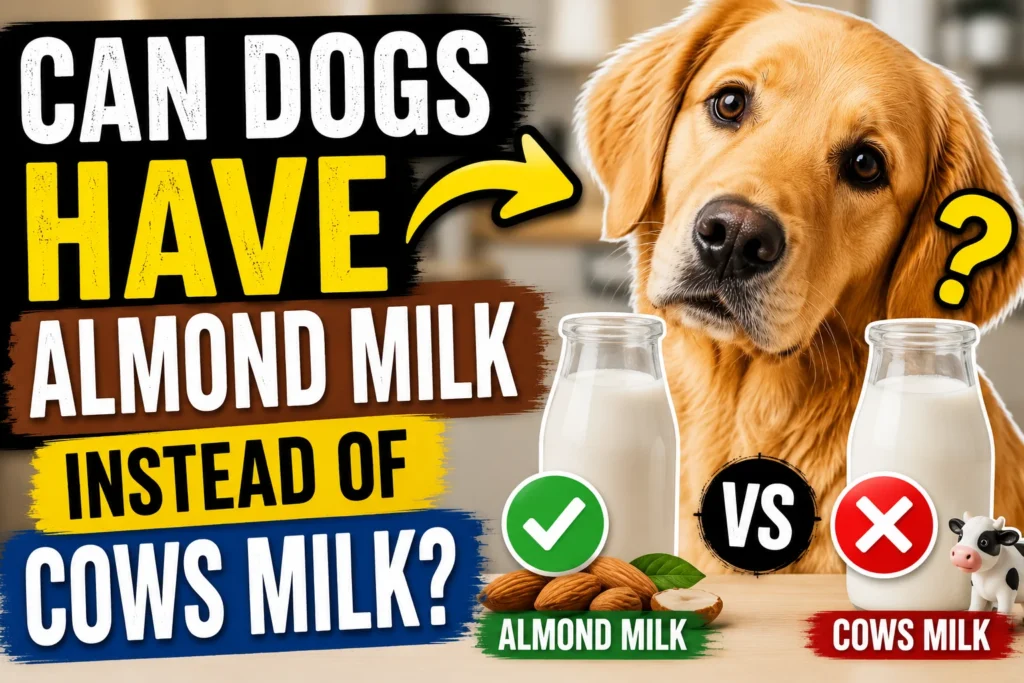
Can Dogs Have Almond Milk Instead of Cows Milk? As a vet, I hear my fair share of questions about human foods wanting to go to pets. One of the most common is: Can a dog have almond milk? The short answer to that, friends, is technically yes, but with several caveats. Almond milk isn’t necessarily more dangerous for dogs than regular cow’s milk, it may be safer, but this is not without the pitfalls.
Can Dogs Have Almond Milk Instead of Cows Milk?
Why Cow’s Milk Is Usually a Bad Idea
But Before we dive in alternative we need to know why cow’s milk is not good to dog. Most of adult dogs are intolerant to lactose. As puppies they have a digestive enzyme, called lactase that break down their mother’s milk and usually that enzyme disappears once they weaned!
With lack of enzyme they can get stomach aches, flatulence, vomition and even diarrhea as the lactose ferments in their gut!
Not to forget to mention that the milk is also rich in fat and sugar and it’s easy for a dog to get obese with an excessive milk intake, or even have a pancreatitis! If you have come to milk substitute we’ll see almond milk.
Is Almond Milk Safe for Dogs?
What Almond Milk Is A dog can drink plain, unsweetened almond milk in a little amount and remain okay as long as there’s not too much consumption involved. As an item not carrying lactose as a dietary component, you are unlikely to encounter difficulties from stomach issues in connection to milk digestion that occur with a lot of animals who struggle with the dietary constituent. You must continue to keep to hand: this is truly nothing greater than a treat, never part of the dog’s everyday nutrition; they have quite tiny added dietary benefit for dogs in almond milk.
Commercial Almond Milk Has Hidden Threats
Risks You Don’t Know Exist In The Almond Milk You Buy And Give To Your Dog It comes as no surprise but the vast majority of the almond milk you buy contains other ingredients other than simply ground almonds that aren’t good and potentially deadly for dogs. If you want to know anything else this is the article that you must take the most important message from. Xylitol – Highly Deadly artificial sugar Xylitol (pronounced zi-luh-tall) is a artificial sweetener used in sugar free and low calorie items (like chewing gum, candy and so on).
The ingredient of primary concern that you want to lookout for in commercial almond milks is artificial sweetener called “xylitol”.
Xylitol is toxic to dogs. If it is consumed by dogs, it causes the release of insulin that makes the sugar level drop (the blood sugar become dangerously low which the vets call “hypoglycaemia”). Some common symptoms of xylitol poisoning that develop usually within 30 to 60 minutes of ingestion are loss of energy and weakness, and vomiting. In serious case you may even see seizure and the collapse of dog.
High Fat Content
Almonds are naturally high in fat. While some of this is filtered out during production, almond milk is still higher in fat than other alternatives . For dogs with conditions like pancreatitis or inflammatory bowel disease (IBD), a high-fat treat can trigger a painful and serious flare-up . Even for healthy dogs, too much fat can lead to an upset stomach and contribute to weight gain over time .
Other Additives and Fillers
The vast majority of store-bought almond milks are also packed with sweeteners, artificial flavors, gums, and preservatives. These additives are empty calories, and they just might be the ingredients behind puppy upset tummy or irritated dog gut health. Chocolate almond milk should be completely avoided, as chocolate has theobromine, which is poisonous to dogs.
How to Safely Give Your Dog Almond Milk (If You Choose To)
And in case you DO want to give your dog a bit of almond milk, strictly observe these things:
- Choose Plain and Unsweetened: Only select almond milk where the only ingredients are almonds and water .
- Scrutinize the Label: Triple-check that the product does not contain xylitol .
- Start Small: Give only a few tablespoons as an occasional treat to see how your dog reacts .
- Observe the dog. Check to see that it isn’t vomiting, suffering diarrhea, or burping gas. In either case, if you find those, give no more.
Also Check: Signs Your Dog Has a Yeast Infection on Their Skin
Healthier Alternatives for Your Dog
While almond milk can be safe in tiny amounts, it’s not the best treat option. There are much healthier and more beneficial choices:
- Water: Always the best choice for hydration .
- Bone Broth: A tasty and nutritious treat that is often well-tolerated and provides beneficial nutrients .
- Plain, Unsweetened Yogurt: Contains less lactose than milk and provides probiotics, which are good for digestion . Again, moderation is key.
The Verdict: Almond Milk vs. Cow’s Milk for Dogs
Comparing the two, almond milk will likely be the safer option out of the two unless there are specific harmful ingredients present, such as lactose in cows milk . It isn’t a particularly healthy choice for your pet, and there can be concerns regarding additives such as xylitol. Keep in mind, any form of treatment must contribute to no more than 10% of your dog’s overall calorie intake each day .
Conclusion
Almond milk (unsweetened, unflavoured, xylitol-free) is a permissible treat for dogs on occasion. However, there is no reason to give your dog almond milk if you do not already have it. You could instead offer them plain water, which is always preferable. For the best answer regarding your dog’s nutritional concerns, ask your private veterinarian what they would recommend for their unique needs first!
Frequently Asked Questions (FAQs)
Is almond milk better for dogs than milk?
Yes, adult dogs fare better when given almond milk as it is lactose-free and does not typically give them stomach problems that are associated with milk.
Is my dog going to get sick if he drank milk made of almonds and xylitol?
Xylitol is a harmful toxin to canines that can result in extremely low blood sugar levels, also known as hypoglycemia, that may result in seizures, muscle weakness, or liver failure which can ultimately be death. If you are to determine your dog has consumed any traces of this ingredient, call your nearest veterinary provider right away.
Will it do damage if my puppy drank almond milk?
It will do no good for puppies, they still have developing digestion and require the necessary ingredients to maintain good health such as mother’s milk or specially prepared dog food formulated for young puppies as recommended by your vet.
Can almond milk cause diarrhea in dogs?
Yes, it can. Even plain almond milk is high in fat and can cause an upset stomach and diarrhea, especially if given in large amounts . Additives and thickeners can also lead to digestive issues.
What quantity of almond milk is safe for your dog to consume?
If you do provide it, keep the serving size small, between 1 to 3 tablespoons, given as an occasional treat, not a source of daily hydration, other than water.
Should I give Homemade Almond Milk to My Dog?
Homemade almond milk the safest kind of almond milk to give a dog. If you’re making it yourself, you can ensure that only pure, whole almonds and filtered water were used, and you won’t risk accidentally feeding them one of the ingredients that makes store-bought almond milk dangerous to dogs, such as xylitol.
Are Almonds Dangerous for Dogs to Have Allergies to?
Some dogs will experience a reaction to nut. While not a common food allergen in dogs, you shouldn’t risk it with certain nuts because there’s just so many of them involved. Almond milk is normally not very allergenic, however, always introduce any new food slowly and in moderation.
Is almond milk good for baking dog treats?
The good news is that unsweetened, plain almond milk is a healthy alternative for many dogs and you can use it to make homemade dog treats with it avoiding the risk of using milk in this way.
Signs that your dog lactose intolerant symptoms?
You might notice one or more of the following signs occurring in your dog shortly after they have been fed or given food that contains lactose: Vomiting Diarrhea Flatulence or bloat Abdominal tenderness The dog symptoms typically manifest within the first two hours. Dog Alternative To Water
What Should I Feed my Dog Instead Of Water?
Unsalted bone broth healthy for the body of dog, this alternative water option tastes delicious and offers some healthy components for your furry friends.