
What to Do When Your Cat Refuses Low-Protein Prescription 2026?
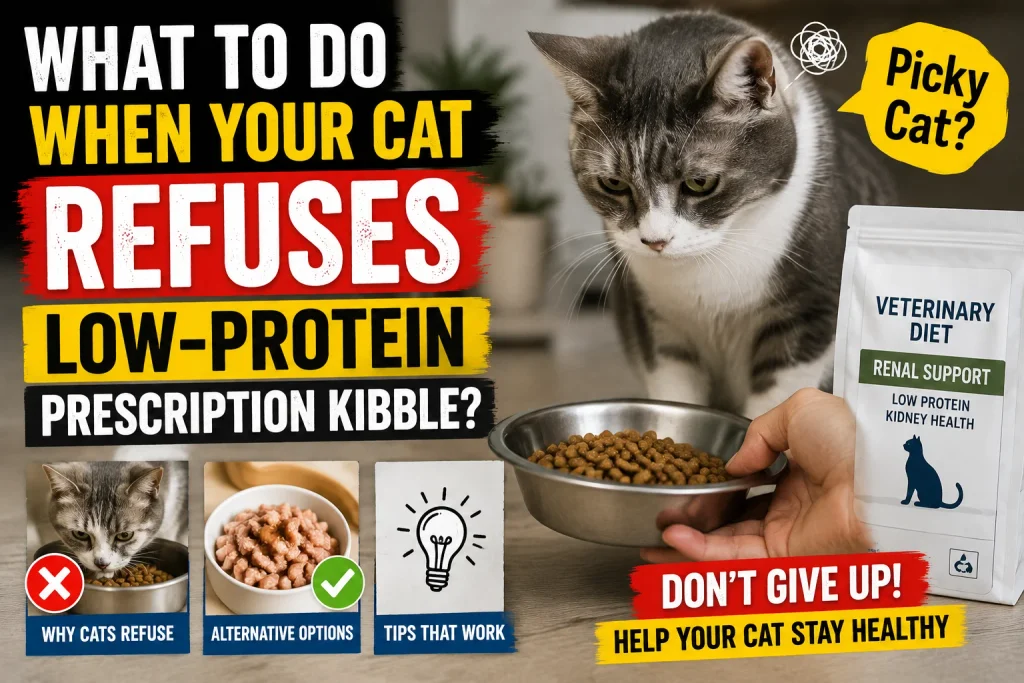
What to Do When Your Cat Refuses Low-Protein Prescription?. As a veterinarian specializing in feline nutrition, one of the most common and distressing phone calls I receive goes something like this: “I bought the special kidney food the vet prescribed, but my cat won’t touch it. What do I do?”
You are not alone. Low-protein prescription diets, often called “renal diets,” are a cornerstone of managing chronic kidney disease (CKD) and other conditions in cats. However, they are famously bland. Cats are creatures of habit, and when faced with a sudden change to a less palatable food, their natural response is often a hunger strike .
This guide is designed to walk you through a safe, effective, and stress-free strategy to get your cat eating again. The absolute first rule of feline medicine is this: A cat that doesn’t eat is a medical emergency. While this article provides crucial strategies, it does not replace veterinary advice. If your cat hasn’t eaten for more than 24 hours, contact your vet immediately.
Why Is This So Serious? It’s Not Just “Being Picky”
Now, before we go about solutions, I want you to understand what you are facing. The thing is when a cat quits eating, it does not really lose weight, it quickly loses muscle.
Cats are obligate carnivores. Their metabolism depends heavily on protein.This process is extremely fast a cat can start losing muscle mass in just a day or two. This muscle breakdown produces more waste products that damaged kidneys must then filter, creating a vicious cycle of nausea, worsening appetite, and further decline .
Remember this mantra: “Fed is best.” Forcing a cat to eat a “perfect” diet they refuse is counterproductive. A less-than-perfect diet that is eaten is far superior to the best diet in the world that is ignored .
1: The Step-by-Step Transition Strategy: What to Do When Your Cat Refuses Low-Protein Prescription?
Many cats don’t refuse the new food, they reject the sudden change. A slow, methodical transition is the most critical factor in long-term success .
1. The 7-10 Day Gradual Mix
Don’t switch the food overnight. For cats with kidney disease, a transition can take 1-2 weeks, and sometimes up to a month .
- Days 1-3: 75% old food, 25% new food.
- Days 4-6: 50% old food, 50% new food.
- Days 7-9: 25% old food, 75% new food.
- Day 10: 100% new food.
If you see signs of gastrointestinal upset (vomiting or diarrhea), slow the process down . Some cats may only accept 10% new food at a time over several weeks . Also, consider that cats are picky about kibble shape; a sudden change in shape can be just as off-putting as a change in taste .
2. The Texture Trick
Cats are very shape-and-texture-oriented. Some cats dislike crumbs, while others may not like a specific kibble shape . If your cat is on dry kibble, try adding a small amount of warm water or low-sodium chicken broth to the kibble. This softens the texture, enhances the aroma, and creates a “gravy” effect .
2: Making the Food Irresistible
If your cat still turns its nose up, it’s time to bring out the “culinary” tricks. The goal is to stimulate appetite through smell, texture, and temperature .
- Warm It Up: Gently warming the food to just below body temperature releases the aromatic compounds that make it more enticing to a cat with a diminished sense of smell .
- The “Side-by-Side” Test: When introducing a new food, especially a new texture (like moving from dry to wet), place a bowl of the new food right next to the bowl of the old food. This lets the cat explore it without pressure.
- Palatability Toppers:
- Low-Sodium Broth: A splash of low-sodium chicken, beef, or fish broth can make a huge difference . Broths marketed specifically for cats are often a good option.
- Pure Oregano: An unusual but vet-approved tip is to take a pinch of 100% pure oregano (no garlic or other herbs) and squeeze it to release its oils over the food. This can be a powerful olfactory lure.
- FortiFlora: Ask your vet about using FortiFlora, a probiotic powder that many cats find highly palatable. Sprinkling it on the food can improve taste.
- Variety: Some prescription diets are available in multiple flavours and textures. Ask your vet if you can try a different protein source (e.g., switching from chicken to fish or beef). Royal Canin Renal, for example, offers wet food in different aromatic profiles.
Also Check: How to Manage Skin Allergies in White Pitbulls at Home 2026
3: Consulting Your Vet The “What If It Still Doesn’t Work?” Plan
If all at-home tactics fail, you must return to your veterinarian. Do not wait. Here are the options they may present:
1. Discussing a “Plan B” Food
There are many renal diets. Your cat might simply dislike the one you’ve chosen. Ask about trying a different prescription brand (e.g., switching from Hill’s k/d to Royal Canin Renal Select, which has a crunchier shell and soft core for enhanced palatability, or Purina NF) . In some cases, a vet might approve a commercial low-phosphorus food or a “multi-organ” formula that is lower in protein than standard food but more palatable .
2. Phosphate Binders (The “Compromise” Diet)
Your cat’s vet will explain the primary goals of a renal diet: reduced phosphorus and high-quality protein. If a cat absolutely refuses all prescription diets, your vet can prescribe a phosphate binder. This is a powder that you mix into a regular, palatable cat food. It binds to the phosphorus in the food, preventing it from being absorbed by the body and easing the workload on the kidneys . This is a life-saving compromise.
3. Appetite Stimulants and Anti-Nausea Medication
Kidney disease causes a buildup of toxins in the blood, leading to nausea and a loss of appetite . Your vet can prescribe medications to:
- Stimulate Appetite: Drugs like mirtazapine can chemically encourage your cat to eat .
- Stop Nausea: Medications like Cerenia can settle the stomach, making food more appealing and preventing food aversion (where a cat associates eating with feeling sick) .
4. Appetite Stimulants and Anti-Nausea Medication
If your cat still isn’t eating, the veterinary team has more intensive tools. A feeding tube (often an esophagostomy tube) may sound scary, but it is a gentle, effective, and temporary measure. It can be placed under a light anesthesia and allows you to administer liquid food directly into the stomach. This ensures your cat gets the calories and nutrition they need while you wait for appetite stimulants to work or work on finding a palatable food they will eat on their own. It gives you time and saves your cat’s life .
Frequently Asked Questions (FAQs)
My cat is on a hunger strike because of the new food. Is it safe to just “wait them out”?
Absolutely not. Cats must not be fasted for more than 24 hours. Their bodies are unique in that they will start breaking down their own muscle mass for energy very quickly. This can lead to a potentially fatal condition called hepatic lipidosis (fatty liver disease). Never play a “waiting game” with a cat.
Why does prescription kidney food have to be so bland if cats don’t like it?
These foods are formulated to restrict certain nutrients, like phosphorus and sodium, while providing high-quality, easily digestible proteins. This careful balance helps slow the progression of kidney disease. Unfortunately, the taste profile is often less appealing than high-fat, high-salt commercial foods. This is why the transition and palatability tricks are so vital.
Can I mix the prescription food with regular wet food to make it taste better?
Yes, but you must ask your vet for approval first. In the initial transition phase, mixing old and new food is standard practice. However, if you use a non-prescription regular food, the diet loses its therapeutic benefits. A better option is asking your vet for a “Plan B” prescription diet or a phosphate binder so you can safely use a more palatable food without accelerating kidney damage.
My vet said to give a low-protein diet, but my cat is getting skinny. Should I just give them a high-protein food to build muscle?
No. This is a complex situation. While we don’t want them to lose muscle, feeding high-protein food when they have kidney disease can increase the buildup of toxic waste products, making them feel sick and accelerating the disease. The solution is a high-quality, moderate protein diet that is very digestible . Your vet can help find the right balance, or prescribe an appetite stimulant to get them eating enough of the correct diet.
What are the best meal toppers for a cat on a low-protein diet?
The best toppers are those that add flavor without adding excessive phosphorus or sodium.
Low-sodium chicken or fish broth is excellent.
Forti Flora is a great option.
A small amount of pure oregano oil squeezed over the food.
Always avoid toppers with garlic or onions, as they are toxic to cats.
How long should I wait before calling the vet if my cat isn’t eating?
If your cat has refused all food for 24 hours, you must call your vet. For cats with kidney disease, the timeframe might be even shorter. If they are acting lethargic, hiding, or vomiting, call immediately.
My cat will only eat the food if I hand-feed them. Is this okay?
Yes, it’s okay in the short term. If it gets them to eat, it’s a win. However, the goal is to avoid turning this into a long-term habit. Try placing the food at room temperature, or experimenting with different bowls (e.g., a flat plate or a wide, shallow bowl) to see if a change in presentation encourages independent eating.
Does the type of bowl matter?
Yes! Cats can experience whisker fatigue, which makes deep bowls uncomfortable. Try a wide, shallow ceramic, metal, or glass plate. Also, ensure the food is at room temperature, as cold food has less aroma and can be off-putting.
Can stress be causing my cat to refuse to eat?
Absolutely. Hospitalization, a change in routine, a dirty litter box, loud noises, or conflict with other pets can cause a cat to stop eating. This is called anorexia, and it can be triggered by stress . Ensure your cat has a quiet, safe space to eat, away from other pets.
I’ve tried everything, but my cat still won’t eat. What is the very last resort?
The absolute last resort is not to stop trying but to implement assisted feeding, which is a medical procedure. If your cat is not eating and is losing weight, your vet will likely recommend a feeding tube . This is often a lifesaver for cats with CKD, as it bypasses the “pickiness” while you work on the underlying medical issues. It is not a sign of failure; it is a powerful tool to keep your cat alive and comfortable.


2 Comments