
How to Manage Skin Allergies in White Pitbulls at Home 2026
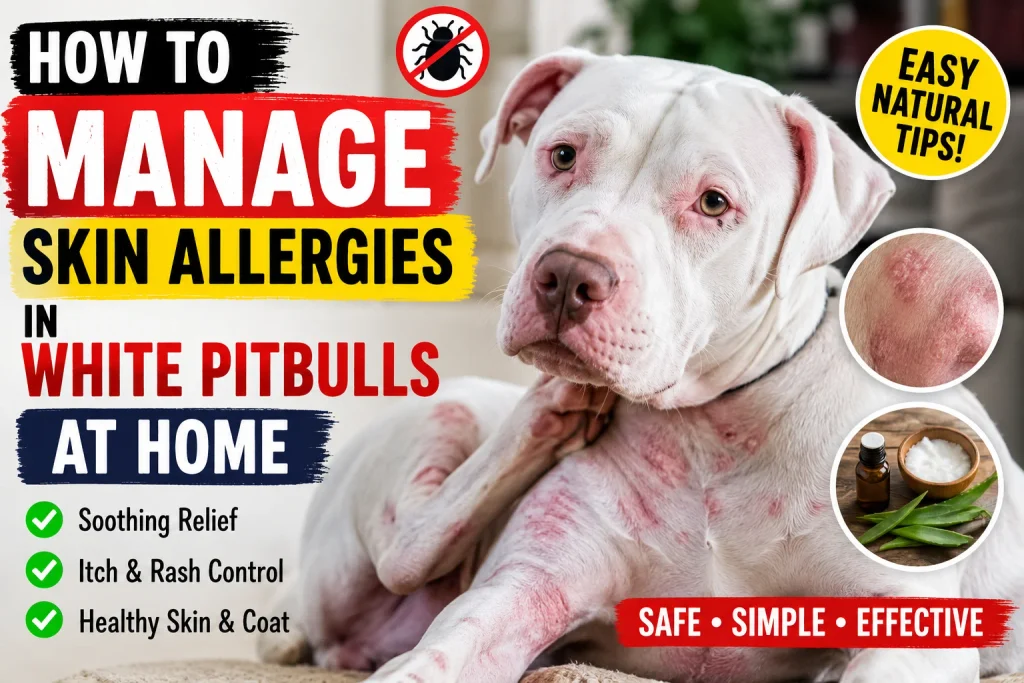
How to Manage Skin Allergies in White Pitbulls at Home. Congratulations if you’re a white Pitbull owner! They are the most loving, loyal, and silly canines a family could have. But, If you are reading this, you have more than likely learned the difficult truth; white Pitbulls are very prone to skin allergies.
Watching your sweet companion scratch and lick their red, irritated skin can feel awful. Since they are Pitbulls, their specific genetics and color leave them more vulnerable to all kinds of skin conditions. The great news? Waiting for a vet appointment isn’t your only option for getting them some much-needed relief.
Note: Although the at home remedies discussed on this page generally perform very well and very reliably, no at home remedy should be used as a substitute for vet examination. If your pet may have an opening wound, extreme hair loss or appear to be in much pain contact your vet right away.
Understanding Why White Pitbulls Are So Itchy
However, to effectively treat a Pitbull’s itch, we have to know what’s causing it. The typical white Pitbull is at a double-negative disadvantage for their skin health. Their thin, one-layered fur does little against environmental allergies such as pollen, grass, or dust mites, while their DNA for an all-white coat predisposes them to a Solar Dermatitis and hyper sensitivity towards UV light which results in burning the skin creating a rash or blisters with an extended exposure time in the sun. These symptoms are representative of Atopic Dermatitis, and with combined common Food Allergies such as chicken, beef or milk, how many white Pitbulls don’t experience itchy skin?
A 4-Step Home Management Protocol for White Pitbull Allergies
Treating allergy doesn’t just mean taking one drug. Allergy treatment and management involves a multi-modal, holistic approach involving itch management, environment control and diet management. This is the most successful protocol to employ at home.
1: The Decontamination Bath
The most obvious remedy is simply to wash off the skin allergens. A nice hot wash-away can do wonders as well in flushing off pollen and dust, reducing the irritation they may cause!
- The Soothe: Oatmeal or Colloidal Shampoo. Nothing beats an old reliable oatmeal bath-and for good reason. If your pup’s skin is itching or inflamed (but not infected with yeast or bloody/raw), use an oatmeal or colloidal oatmeal pet shampoo, like Burt’s Bees Oatmeal Shampoo, for its emollient properties to prevent water loss and calm inflammation. Allow it to sit on your dog’s fur for 5-10 minutes to ensure best performance.
- The Medicated: Chlorhexidine Shampoo. If your dog has a bacterial or fungal infection (usually characterized by the skin having a strong “yeasty” smell or the development of red pimples), then you will need a prescription-strength or medicated shampoo like Malaseb, which works to rid your dog of secondary infections from itching and scratching.
Frequency: During allergy season, bathing your white Pitbull once a week is often recommended, but no more than twice weekly to avoid drying out their skin .
2: Post-Walk Decontamination & Paw Soaks
Your pit bull can’t live in the house for all the allergens to be stuck on the skin and feet.
- Clean after the walks. After the walks wash your dog’s body and feet or wipe with a wet towel to let allergens know to go to their paws.
- Foot Soaks . Pit bulls are known for licking paws raw from environmental allergies such as grass. If the dog happens to be constantly licking paws, you may consider soaking feet.
- Just run a shallow tub with water, soak in medicated shampoo and have him lay his paws in the mixture for 10- 15 minutes.
- You can then purchase some medicated wipes to dab at paws two or three times per day.
Also Check: Shih Tzu Eye Problems: A Comprehensive Guide for Concerned Owners 2026
3: Soothing Topical Treatments for “Hot Spots”
White pit-bulls, despite you taking care of them, might end up with itchy spots. Here are the fastest natural cures:
- Virgin aloe vera gel: simply apply undiluted/ additive-free pure aloe vera gel onto a hot and red spot; the coolness will indeed bring comfort to your furry friend.
- Coconut oil: It is anti-inflammatory and antibacterial, it can make the skin less dry and prevent it from scaling when it is directly massaged into itchy places. It does not hurt if your pet licks it.
- Sprays and Balms: Various readily available over-the-counter products such as Vet’s Best Allergy Itch relief Spray or hydrocortisone sprays can be useful for immediate relief. These should be used judiciously, on the guidance of the vet.
4: Internal Support: Diet and Supplements
Skin is no different; when it comes to helping it be as healthy as can be, you must consider what you feed yours skin from the inside out and out.
- Fish oil (Omegas-3): This dietary superstar of healthy skin can help reduce itchiness and enhance the skin’s’ natural barrier by reducing inflammation. Ask your vet what dose of dog-friendly fish oil is right for your pit bull (often 20-30mg/kg).
- Eliminate Food Triggers: Among dogs in general, common food allergens such as beef, dairy, and chicken are frequently identified allergens in pit bulls, says Dr. Johnson, and an elimination diet trial feeding either a single, novel protein diet or a hydrolyzed protein diet exclusively for at least 8 weeks – is the diagnostic gold standard.
- Probiotics: Good gut health can also help. A dog-specific probiotic supplement or a tablespoon of unflavored plain yogurt may help decrease allergic responses.
5: The Danger of Sun Exposure
The above only goes for white Pit Bulls; they rarely provide a great amount of protection to solar dermatitis, as the bright, pink skin offers very few protections from the sun to make for.
- Minimize sun exposure: Refrain from having walks during the hours of 10AM- 4PM when the suns UV exposure is at it’s peak. In most instances keep your white Pitbull in indoors or shaded areas to protect against the sun.
- Sun Suits: Some choose to buy what is called and “sun suit” in which a t-shirt, or UV protected white Pitbull shirt can protect the dogs belly and back from exposure when your dog does spend some hours outdoors.
The “Red Line”: When Home Remedies Aren’t Enough
While home remedies are excellent for managing symptoms, there are times you need to go to the vet. If your white Pitbull’s condition doesn’t improve or includes severe lesions, draining sores, or facial swelling, you need advanced help.
Veterinarians can offer treatments that home care cannot:
- Prescription Medications: Apoquel (oclacitinib) and Cytopoint (lokivetmab) are highly effective drugs that block specific itch pathways to provide rapid relief .
- Allergy Testing & Immunotherapy: If environmental allergies are severe, a vet can perform serological blood testing to identify specific triggers and formulate a serum for desensitization therapy. This can cure the allergy over time .
- Diagnosis for Other Issues: As seen in cases like “Marley” the Pitbull at UF Veterinary Hospital, what looks like simple allergies can sometimes be a combination of allergic skin disease and benign tumors causing chronic inflammation. Only a biopsy can diagnose this.
Frequently Asked Questions (FAQs)
Causes of Allergies in White Pitbulls?
White Pitbulls are predisposed to allergies thanks to sensitive skin, failure to block out external allergens due to the lack of an undercoat, a sensitivity to the sun (solar dermatitis), and food allergens such as chicken or beef.
Can I Give My Pitbull Human Allergy Medicine?
Never give your dog human antihistamine or any kind of medication without your dog’s vet’s order. Doses are formulated according to weight in dogs, and your Pitbull may even be adversely affected by ingredients not found in veterinary medications.
How Often Should You Bathe White Pitbull for Allergies?
If an itchy flare-up occurs and your vet recommends bathing, use a moisturizing oatmeal or prescription medicated shampoo to rinse allergens off and calm your dog. This should ideally be no more than once a week, otherwise, you may over dry his skin.
What is the Best Food for White Pitbull With Allergies?
The veterinarian can prescribe single-ingredient Hydrolyzed or Novel Protein food for your Pitbull to ensure that it does not contain proteins to which he can have an allergic reaction or ingredients so small they will not be triggered by the immune system. Some of the common ingredients used to prepare this food type include duck, venison, and kangaroo.
Is Coconut Oil Okay for Dog’s Itchy Skin?
Yes! Coconut oil has a lot of beneficial properties, including the ability to disinfect the skin and act as a moisturizing agent for dry, flaky skin. Rub this oil into your dog’s coat to soothe dry skin, as it’s nontoxic if he takes it off with his tongue. Just test this by placing it on one small area before putting it all over the dog.
Why Does My Pitbull Constantly Lick His Paws?
This is the most common sign of environmental allergies. Dogs love to run around and get exposed to pollens, allergens, and other such outdoor agents on their paws while outside. This irritation will cause them to lick their paws to relieve it.
Does Sun Make Allergies in White Pitbulls Worse?
Definitely! White Pitbulls do not have protective coloured skin, so a reaction to the sun is not uncommon. Sunlight (UV exposure) will certainly cause redness on the skin and can provoke an existing allergy.
What is the Best Home Remedy for Itchy Dogs?
An oatmeal bath can offer the best relief for an itchy dog. In addition to removing excess moisture and irritating dead cells, an oatmeal bath can reduce inflammation and coat the skin, providing relief from the itch.
Are white Pitbulls predisposed to skin conditions?
Yes. Their lack of pigmentation in both their fur and skin make their skin more vulnerable to damage from sun exposure, and environmental irritants compared to colored pit bulls.
How do vets treat the most severe cases?
Vets commonly manage severe cases with prescription medicines such as steroids (which may not be ideal long term and may have negative side effects), injection medications like Apoquel and Cytopoint, and treatment with antibiotics or antifungals to control any Secondary infections. The dog may also undergo specific allergy blood tests.


One Comment