Why Does My Cat Suddenly Stare at Me and Meow Aggressively?
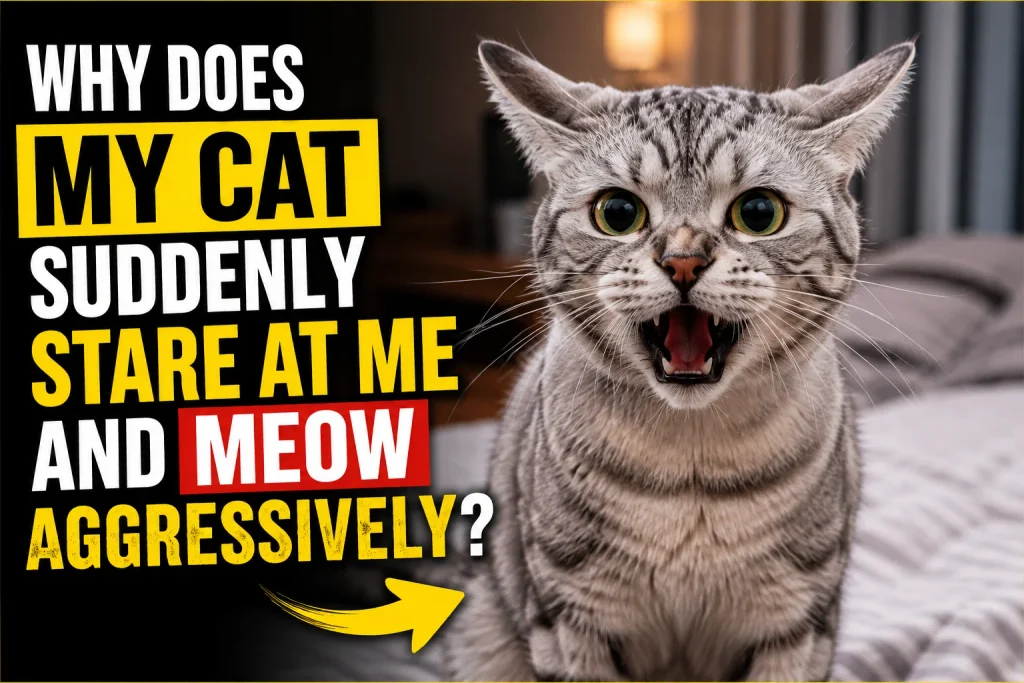
Why Does My Cat Suddenly Stare at Me and Meow Aggressively?. You are lounging on your couch and then you sense it: that unexplainable feeling of being observed. You turn to face you cat who just happens to be intensely staring right at you, fully dilating their eyes and making a string of aggressive-sounding meows. This experience is baffling, perhaps a little unnerving, to every single cat-loving individual. Although, direct stare accompanied with slow blinks would definitely mean “I love you”, the direct stare together with aggressive sounds it means totally something different.
This expression might even confuse but your feline friend actually tells you something. The message could range from a simple demand to a serious medical issue. As both a veterinarian and a feline behaviour specialist, I can tell you that decoding this behaviour is crucial not just for your peace of mind, but for your cat’s well-being.
Let’s break down the complex reasons why your cat might be giving you this unsettling combination of a fixed stare and an aggressive meow.
Why Does My Cat Suddenly Stare at Me and Meow Aggressively?
First, however, let’s be sure we’re talking about “aggressive”. We’re not talking about a neighbourly “hellos” meow. This is often a low, long sound or a sound that may come with yowls, growls, and hisses. The cat’s hard, unblinking stare, dilated pupils and the situation itself is one of high stakes within feline social order.
A cat’s meow is a vocalization specifically developed for communicating with humans, so when it’s paired with this intense body language, you know they are trying to send a very specific signal your way .
1. Medical Issues: The First Thing to Rule Out
In my experience as a vet, when a normally calm cat suddenly displays aggressive behavior, the very first assumption must be a medical problem. Pain or discomfort is a primary cause of sudden aggression . Your cat can’t tell you where it hurts, so it may act out through a fearful or aggressive display to warn you away.
Common medical causes include:
- Feline Hyperesthesia Syndrome (FHS): Also known as rolling skin disease, this condition is a neurological disorder resulting in over-sensitivity. A feline with FHS may have rippling skin down their back, dilated pupils and will have agitated responses that include staring, chasing their tail, loud distressful meows etc.
- Pain: Conditions like arthritis, dental disease, or an injury (like a tail pull or trauma to the back) can cause significant pain. When you look at them or approach, they may associate you with that pain and react aggressively to prevent you from touching the sore spot .
- Cognitive Dysfunction: Just like humans, senior cats can suffer from dementia-like symptoms. This often manifests as confusion, anxiety, increased vocalization, and a blank stare, particularly at night .
- Other Illnesses: Gastrointestinal distress, urinary tract issues (especially blockages in male cats), and even an overactive thyroid can cause discomfort and lead to aggressive vocalization .
The Vet’s Advice: Any sudden change in behavior warrants a veterinary visit. A full physical, orthopedic, and neurological exam, plus bloodwork and urinalysis, is essential to rule out these underlying medical conditions before considering a behavioral issue .
2. Redirected Aggression: The Case of Mistaken Identity
This is one of the most frequent culprits. Redirection occurs when a cat is frustrated by something that it can not get access to. For example another animal outside the window may wind a cat up, they can not “trigger stack” then if they come out at you, when you go and try and pat them, that is where that anger is put, onto you.
- What it looks like: Your cat might be staring out the window, tail thrashing, and making a low, guttural meow. You go to comfort them, but they whirl around and stare directly at you with aggressive intent, perhaps even swatting or biting .
- The Trigger: It doesn’t have to be another cat. A stray dog, a bird, a strange noise, or even a new scent can trigger this response .
3. Feline Social Conflict: Competition for Resources
They are animals of habit and can get easily aggravated, anxious and aggressive due to changes and disruptions in their lives.
This often manifests as:
- Staring and Yowling: Two cats may have a prolonged stare-down, accompanied by loud meowing or yowling, before one backs down or a fight breaks out .
- Resource Guarding: Your cat may be protecting a specific resource—food, water, a favorite sleeping spot, your lap, or even you. They stare and meow aggressively to warn the other cat (or you) to stay away .
- Peer Conflict: Sometimes, two cats simply don’t get along. If you have a multi-cat household and this behavior is escalating, it might be a sign of a deteriorating relationship that needs to be addressed .
4. The Environment’s Role: Stress and Overstimulation
Cats are creatures of habit and can be easily stressed by changes in their environment. This stress can manifest as anxiety and aggression.
Common stressors include:
- Changes in Routine: A new baby, a new pet, a move, or even construction noise can deeply unsettle your cat .
- Overstimulation: Sometimes, a cat that’s had enough petting can become overstimulated. They may give a warning stare and a low-pitched meow before biting or swatting if the petting continues .
5. Attention-Seeking (The Demanding Stare)
While a demand meow isn’t typically aggressive, it can be persistent and accompanied by a very focused stare. Your cat may be trying to tell you they are hungry or want to play .
The key difference is the body language. A demand meow is often higher pitched and insistent, while an aggressive meow is lower in pitch and accompanied by more hostile signals like dilated pupils, a stiff body, and ears pinned back .
Decoding the Body Language: Key Warning Signs
To truly understand what your cat is saying, you must look at the whole picture. An aggressive cat will often display a combination of these signs :
- Body Language: A cat might crouch, flatten itself, arch its back and fluff up its fur.
- Tail: The tail may appear puffed up, thrashing back and forth, or tucked down below their hind legs.
- Ears: You can also usually tell by their ears. For a cat that feels attacked or fearful their ears might be pinned back flattening on the top of their head in what’s sometimes called airplane ears. Alternatively, you may notice their ears being held sideways.
- Eyes: A cat’s pupils may be dilated (wide open) showing over-excitement or fear, or tiny and slit-like when offended.
- Whiskers: Pulled back tightly against the face.
This combination of a hard stare and aggressive meowing is a very clear “back off” signal.
Also Check: A Vet Approved Guide on How to Stop Two Cats from Fighting Over the Same Litter Box 2026
The Expert Verdict: A Holistic Approach
Addressing this behavior requires a multi-step, holistic approach:
- Schedule a Vet Visit: This is non-negotiable. Rule out pain or illness first. This is the most critical step .
- Identify and Remove Triggers: If your cat is staring out the window and growling, close the blinds . If you have a multi-cat household, ensure there are enough resources (food bowls, water, litter boxes) in separate locations to reduce competition .
- Create a Calm Environment: Reduce stress by providing high perches, hiding places, and a predictable routine. Consider using synthetic pheromone diffusers, like Feliway, which can help create a sense of calm and reduce stress signs .
- Use Enrichment: Boredom can lead to behavioral issues. Increase playtime with interactive toys to satisfy your cat’s hunting instinct and provide an outlet for pent-up energy .
- Never Punish: Punishment will only increase your cat’s fear and anxiety, making the problem worse. Instead of scolding, try to understand the root cause .
- Provide space: Do not approach or try to console an aggressive cat. Back away slowly and let them deal with it themselves. Attempting to do otherwise can cause you to be bit.12
By understanding this often-confusing behavior you can build a better relationship with your cat. Cats are not spiteful creatures and their “mean” behavior has deeper roots that signal distress or an effort to protect themselves. By being an observer and by truly listening and responding accordingly, you can eliminate some of these conflicts.
Frequently Asked Questions (FAQs)
Is it normal for cats to stare?
Yes, it is a form of communication. But it all depends. A loving and sweet slow blink and stare is a sign of affection, but a aggressive stare with some vocalizations could be a threat.
Why is my cat staring and yowling at me?
Your cat likely wants attention or possibly food. But sometimes a low yowl or groan accompanied with tense body language might mean pain or stress.
Why is my cat’s pupils dilated and staring?
A staring cat that’s pupils are dialated is usually either feeling scared or anxious. If your cat stares with its dilated pupils and is aggressive, that means he is possibly at a hyper state or ready to strike.
Can a cat attack while staring and meowing aggressively?
Yes. This behaviour is often a warning signal. If you ignore the warning and approach a cat in this state, they may swat, hiss, or bite as a defensive or frustrated response .
Why does my cat do this specifically at night?
At night, senior cats may show signs of cognitive dysfunction, leading to confusion and anxious vocalization. If they see another animal outside at night, territorial behaviours can also be triggered.
How do I react when my cat stares and meows aggressively at me?
The best response is to back off. Do not make direct eye contact, and do not try to pet or console them. Wait for them to calm down, and try to figure out what triggered the episode.
Could this be a sign of a neurological issue?
It can be. Conditions like Feline Hyperesthesia Syndrome (FHS) cause extreme skin sensitivity, tail-chasing, and agitated behavior, including intense staring and distressed meowing.
Can a new pet or person in the house cause this?
Absolutely. A new family member or pet is a major stressor for cats. This can lead to redirected aggression, where a cat upset by a change takes out its frustration on you.
Help, my cat is doing this but seems to be looking at something else such as a wall?
If your cat meows hysterically with their attention turned to the ceiling or a blank wall then they may have actually seen or heard an animal living inside the walls, they also may be having a brief seizure known as a “petit mal” seizure that only effects the mental brain of your feline.
When should I call the vet?
You should call the vet immediately if this behaviour is sudden or unusual for your cat, or if it’s accompanied by other symptoms like hiding, loss of appetite, vomiting, or changes in litter box habits.