Natural Joint Supplements For Large Breed Puppies To Prevent Limping
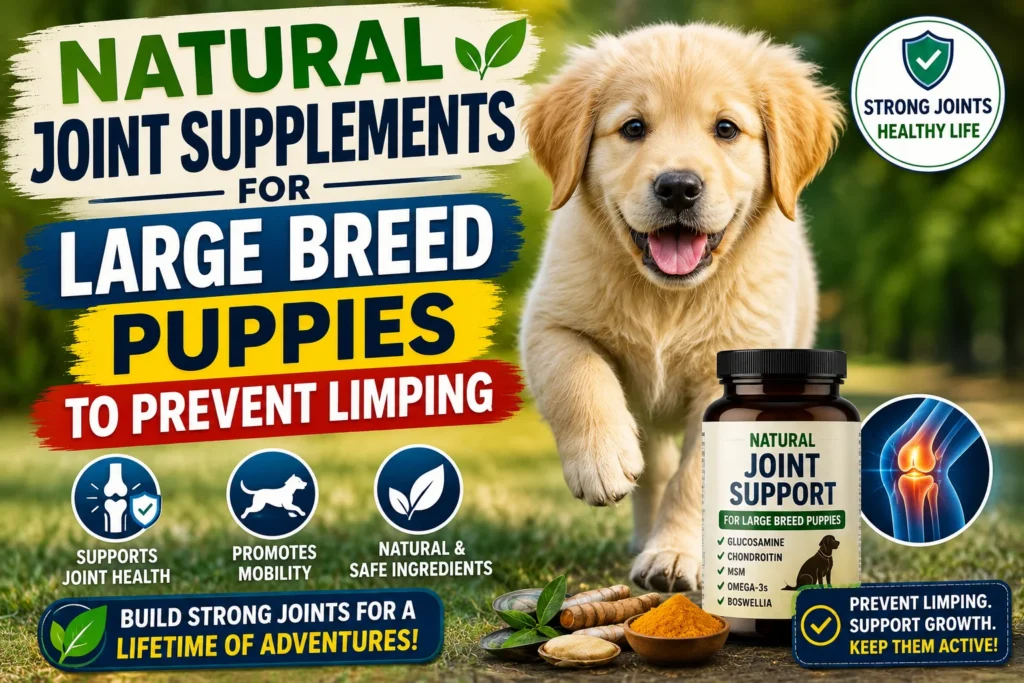
Natural Joint Supplements For Large Breed Puppies To Prevent Limping. Taking on a big, goofy, fluffy lab, german shepherd, or even a great dane pup is a thrilling time. The sheer size these pups achieve is incredible in such a short time and as a vet I frequently see concerned parents whose new puppy is starting to favor a joint. This is an understandable fear!
Dogs that mature at a larger size are at greater risk for development problems and the number one questions I receive is “What natural supplements can I give my growing large breed pup to prevent them from limping?
Natural Joint Supplements For Large Breed Puppies To Prevent Limping
Why Large Breed Puppies Are at Risk for Joint Issues?
Large & Giant breeds have more than size in common, they have unique growing patterns. For the first 12-18 months (compare that to smaller breeds!) of your puppy’s life, they’re experiencing rapid skeletal and muscle development and their joints have yet to fully form. This is the window where their developing structures are susceptible to developmental disorders like hip & elbow dysplasia, a cause of lameness, arthritis and pain.
One study suggests that as many as 40% of large breeds will be affected by hip dysplasia, one of the most common causes of rear leg lameness. While some of it may be genetic, over-consumption of calories, the wrong calcium to phosphorus balance, and strenuous exercise on developing joints can all contribute to the problem, making joint support a proactive part of managing their health.
The Smart Approach to Supplementation: When and Why?
One frequent error made when attempting to assist large breed puppies with joint health is giving them an adult joint supplement product. While it’s standard practice by veterinarian standards not to begin giving joint supplements to large breed pups until they have fully matured skeletally, often about 2 years of age , there may be reasons your veterinarian recommends giving them something earlier: if the puppy has a higher genetic risk for joint problems or if you have a giant breed.
Also Check: What Age Do Puppies Start Teething And Biting Everything?
Top Natural Ingredients for Joint Health
If your dog has grown past the age of six months and is looking for a natural dietary support product with your vet’s guidance, try products that include these natural ingredients that have been clinically proven.
1. Glucosamine and Chondroitin: The Dynamic Duo
These form the core of cartilage. Glucosamine supports the structure of cartilage and chondroitin helps it withstand the effects of compression and the forces of motion . You’ll see glucosamine and chondroitin in many of the best large-breed puppy foods already.
2. Green-Lipped Mussel: A Powerful Marine Source
Another New Zealand based marvel; this one’s the powerhouse ingredient that’s Green Lipped Mussel. Packed with all three join building ingredients you’re looking for – Omega 3s, glucosamine, and chondroitin – Green Lipped Mussel offer a fantastic all round answer for join wellbeing. Keep an eye out for it on the list of ingredients on any supplement claiming to support your younger large breed dog’s joints.
3. Hyaluronic Acid: Essential for Joint Fluid
Hyaluronic acid is one of the major structural components of synovial fluid (which is our joint lubrication). This enhances our range of motion and comfort of movement . Products, such as Pokusa ChondroLine Junior HA supplement, are rich in both HA, collagen and other important nutrients and are formulated to help the largest breeds of puppies with a propensity for skeletal and joints disease .
4. Omega-3 Fatty Acids (DHA/EPA): The Anti-Inflammatory
The omega 3s – in particular DHA and EPA – act as natural anti-inflammatories. Omega 3s also help to regulate joint metabolism and are also important for health including coat condition and brain development . Fish oils and algae provide us with rich sources of Omega 3.
5. Collagen: Building Strong Connective Tissue
As the most prevalent protein in our bodies, it’s key for keeping the body’s tendons, ligaments, and cartilage in optimal health. Feeding it with this supplement may support them as they grow and will keep them firm and flexible .
6. Vitamin C and E: Antioxidant Power
These days I don’t even need a specific multivitamin for joints because it already seems like I’m getting plenty from my prenatal. Plus my OBGYN has always been very strict with prescription doses of B12 because I have the MTHFR gene. However if I were not pregnant or did not have my MTHFR condition, I might consider this one because of the vitamins I noted above: Vitamin C is a key component of creating collagen (so it is important for joint health), Vitamin E supports healthy cell metabolism, and building of connective tissues. And of course together these vitamins act as antioxidants and would help fight damage to growing joints.
“Wait, My Puppy is Limping. What Should I Do?”
It’s not one of the questions you’ll want to answer! When your big dog or puppy starts limping, you can’t count on it going away on its own. A joint supplement just won’t do the trick if the cause of the limping is more than muscle pain or discomfort.
A limp indicates a problem that needs prompt diagnosis and treatment by a veterinarian.
Developmental problems (like hip or elbow dysplasia) are a common culprit, as is a more serious injury or even something like panosteitis. The American Veterinary Medical Association suggests that a limp in your pet may also include stiffness or lameness, a unwillingness to use a leg, or a preference for certain movements. Only your veterinarian can determine the cause of the limp and how to proceed.
How to Choose a Safe Supplement
Talk to Your Veterinarian: This should be non-negotiable as they will be able to tell you how safe a certain product will be and how much you need for your pup. Use a Formula For Large & Giant Breeds: There are specific products designed specifically for large/giant breed puppies or young dogs, which is always the best option . See What Is On The Label: Focus on scientifically researched ingredients, such asglucosamine, hyaluronic acid, or green-lipped mussel.
Do Not Over Supplement Your Dog: One thing that you have to be careful about is not supplementing with too much calcium in addition to your large breed puppy food.
More calcium in large breed food will cause structural problems, and it will. Just be aware that food will still contain calcium and phosphorus for development, and the added supplements are supplements. They’re not substitute in the proper amount.
Frequently Asked Questions (FAQs)
What age do I start a joint supplement in my large breed puppy?
Vets suggest generally from 2 years of age for large and giant breed dogs. There are “young dog from a large breed” supplements that can start from 4 months of age, however, this should be under the direct recommendation and supervision of your veterinarian, not the supplement manufacturer, to support healthy joints before problems arise.
Will a joint supplement stop my puppy from developing hip dysplasia?
No, a joint supplement will not stop a genetically transmitted condition such as hip dysplasia. They are used to support the current health of joints and the pain or symptoms associated with it. Joint supplements cannot alter genetic predispositions but can assist to manage the pain from arthritis or help prevent the onset in genetically predisposed animals.
My puppy is limping already should I give him a joint supplement?
Definitely not! A limping puppy has an injury, disease, or another medical problem. Never give a joint supplement in place of a veterinary exam for any condition your puppy is experiencing this can mask or delay appropriate treatment for serious health concerns.
Can I give my puppy the same joint supplement that I give my senior dog?
No. Growing large-breed puppies have different nutritional needs than the adult. Joint supplements designed for adult dogs usually have a mix of supplements designed for a mature skeletal system and may not be appropriately formulated for a large-breed puppy who is still growing.
What are the best natural ingredients for my puppy’s joints?
The most beneficial natural ingredients found in joint supplements for dogs are Glucosamine, Chondroitin, Green Lipped Mussel, Hyaluronic Acid, Collagen, and Omega 3 fatty acids. All of these ingredients are naturally derived and offer many benefits for cartilage, joint fluid and connective tissue.
Is food with glucosamine enough or do I need a supplement for my puppy?
For a healthy, well-growing large breed puppy that has no signs of joint problems, a quality large breed puppy food that already includes glucosamine and chondroitin may be sufficient to support their joints until they reach maturity at approximately two years of age. Additional supplements should typically only be considered then.
What about natural anti-inflammatories such as Turmeric?
Turmeric is a natural anti-inflammatory ingredient, and it is found in a number of supplements targeted for “growing puppies.” While it does have its place, you may wish to consult with your vet regarding the use of anti-inflammatory natural compounds for developing puppies, as some effects are less understood than with core joint support ingredients.
How important is exercise for large breed puppy joint health?
Exercise is critical for joint health in large breed puppies, however, it should be moderate. Avoid prolonged forced running, jumping from heights, and repetitious jumping until after the growth plates close, generally between 12-18 months of age. Natural free play is best for growing large breeds.
What should I absolutely avoid in a joint supplement for my puppy?
The number one thing to avoid is added calcium beyond what is found in a properly formulated large breed puppy food. High calcium content in growing dogs can lead to skeletal deformities. Avoid supplements that list many artificial additives and preservatives as well.
Elbow Dysplasia What’s it doing?
“One of the most common reasons why puppies of large and giant breeds come into us with front limb lameness. The term actually describes a number of conditions that involve the development of the elbow joint, but the primary reason why it occurs in the young, growing dog is probably due to the factors associated with their rapid growth and nutrition, along with genetic tendencies”
The Bottom Line
Caring for your large breed puppy’s joints is a marathon, not a sprint. Your greatest allies in this endeavor: balanced, breed-specific nutrition, moderate exercise, and healthy weight maintenance. Supplements may offer excellent support, but their usefulness begins around two years of age for most large breed dogs. Discuss the options with your vet; she or he knows best whether your growing giant is a candidate for dietary supplementation.