
Signs Of Nerve Damage In A Dog Hind Legs
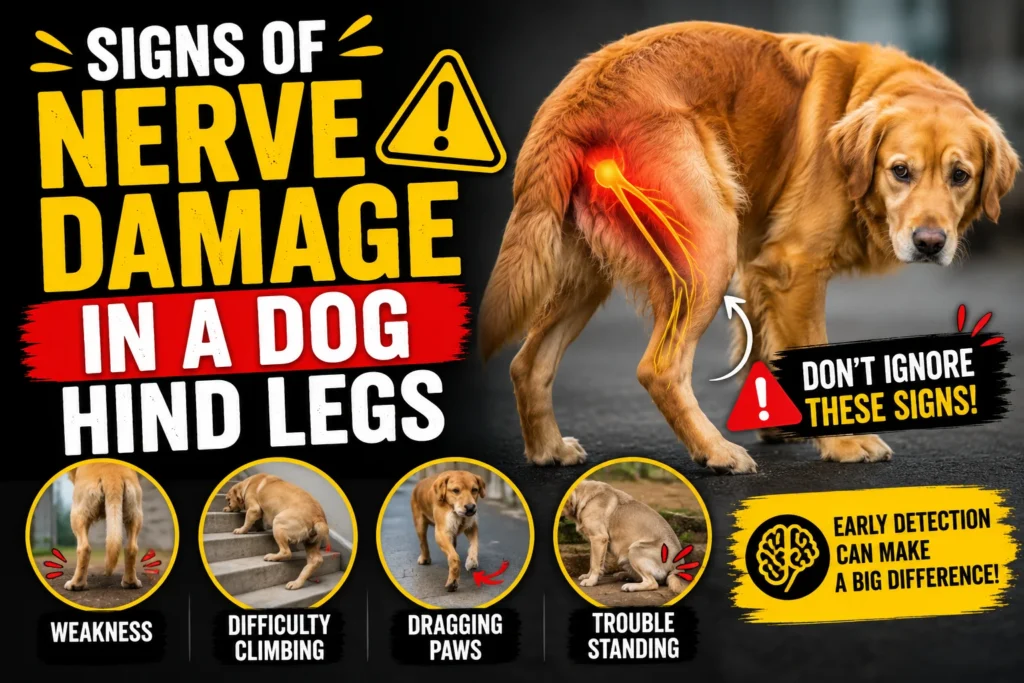
Signs Of Nerve Damage In A Dog Hind Legs. Seeing your pet struggle to stand or drag a limb is disturbing. Nerve damage could be the reason. Fortunately, it is something that many people can help their pets with and with proper care, we can help them slow the progression of the condition. Because most owners do not recognize early symptoms of a disease impacting the nerves of a dog’s hind legs, I’m sharing some of those early indications:
Signs Of Nerve Damage In A Dog Hind Legs
What is Nerve Damage in Dogs?
Hind leg nerve damage or neuropathy occurs in a dog when there is interference along the pathway of signals traveling between the brain, spinal cord, and the muscles in the hind limbs. The condition may arise from spinal cord problems (“myelopathy”) or problems affecting the peripheral nerves that emerge from the spinal cord (“neuropathy”). There are many potential underlying reasons for nerve damage in hind legs: These can include progressive conditions such as Degenerative Myelopathy (DM – a progressive and debilitating disease often compared to ALS in humans), spinal injury from herniated discs (IVDD), trauma or tumors, as well as effects from infectious agents such as Canine Distemper. Prompt recognition of nerve damage signs helps guide timely treatment.
Key Signs of Nerve Damage in Hind Legs
1. Gait and Mobility Changes
Changes in gait – Some of the earliest symptoms of nerve damage in the back legs will be changes in gait or walking. You may see:
- Knuckling: The dog walks on the top of its paw instead of the pads. This indicates a loss of proprioception the dog doesn’t know where its foot is .
- Dragging Paws: The hind paws may drag on the ground, leading to scuffed toenails or worn-down paw pads .
- Ataxia (Wobbliness): The dog appears uncoordinated, swaying in the hindquarters. This is sometimes called a “frog walk” if they squat with their knees flexed .
- Crossing Over: The hind legs may cross each other while walking instead of moving in a straight line .
2. Weakness and Paralysis
- Difficulty Rising: The dog struggles to get up from a lying position. This starts as weakness but can progress to paralysis .
- Scuffing and Stumbling: The hind end may collapse or the dog may stumble frequently during walks .
- Paralysis: For extreme cases, a dog may no longer have use of one or both of his back legs.
3. Physical Symptoms
- Loss of muscle mass: Your pet might develop a great loss of the muscles in its hind legs, or the back. The reason behind the loss of muscles is the damage or lack of functionality in the nerves, or the muscles simply aren’t being worked out as they should be.
- Loss of bowel/urinary control: Incontinence is an occurrence in such cases due to a loss of control over the bowel movements and bladder function of the pet.
4. Pain Response
More importantly, the majority of nerve diseases ( such as degenerative myelopathy) are 100% non-painful in their initial stages! Signs of pain at the neck or back usually suggest other issues such as Intervertebral Disc Disease(IVDD). Dogs that have developed nerve tumors typically will have a chronic component to pain.
Also Check: Why Is My Pet Bird Plucking Its Own Feathers?
Common Causes of Hind Leg Nerve Damage
Understanding the cause helps predict progression:
- Degenerative Myelopathy (DM): A slowly developing disease of no pain commonly found in old large breeds like German Shepherds. DM normally commences in one hind leg and develops to the other over a period of several months.
- Intervertebral Disc Disease (IVDD): This disease can be the result of acute (sudden bursting) disc problem often in such breeds as Dachshunds and the more progressive forms of it are more common in aged dogs.
- Fibrocartilaginous Embolism (FCE): A “spinal stroke” caused by a piece of disc material blocking a blood vessel. It causes sudden, often one-sided weakness, usually during exercise .
- Poly radi culoneuritis: An immune mediated disease akin to Guillain-Barre in humans, characterized by rapid progressive ascending weakness .
When to See a Vet
Hind leg paralysis Any acute (sudden) loss of ability to use one or both hind legs or paralysis in the hind limbs is a veterinary emergency. Contact a veterinarian immediately if your dog is unable to stand, is showing signs of intense pain, is dragging one or both hind legs, or is leaking urine. Some signs that appear mild, such as a scuff mark on a toenail or occasional “knuckling” (when a dog walk on the top of its paw instead of on the bottom), are indications that the dog is dealing with a progressive condition that requires prompt attention from a veterinarian.
Diagnosis and Treatment
They’ll conduct a neurological exam to identify the location of the lesion and determine if the problem is with the spinal cord, a nerve or a muscle. Further tests like an X-ray, MRI or a sample of spinal fluid may be necessary. Surgery is a frequent part of IVDD treatment, and for Degenerative Myelopathy, therapy and maintenance are essential.
Frequently Asked Questions (FAQs)
What’s The Top Cause of Back Leg Weakness In My Dog?
Slowly progressive weakness in older dogs usually indicates Degenerative Myelopathy or Type II Intervertebral Disc Disease . Sudden weakness usually is caused by a Type I or acute Intervertebral Disc Disease or a spinal stroke .
What nerve damage pain is my dog experiencing?
Not all nerve damage is painful for your dog . Degenerative Myelopathy (DM) does not cause pain, but you will see pain associated with a secondary wound that is the result of foot dragging . Conditions such as IVDD often produce moderate to severe pain for dogs .
Why is my dog knuckling over on its hind feet?
Knuckling, also known as improper placement, usually occurs as a result of the loss of proprioception (conscious body awareness) and is another classic sign that there is nerve damage and a neurological condition .
Can my dog recover from hind limb paralysis?
Recovery is dependent on the cause . Dogs with spinal strokes usually make a quick recovery of a few weeks with the proper care . IVDD dogs have good prognosis if surgery can be performed before the disease is very progressive or pain sensation is present . Degenerative Myelopathy does not respond well to treatment and is not curable .
What’s the speed of progressiveness of Degenerative Myelopathy?
Depending on the dog and progression rate it takes approximately 6 months for a DM dog to be unable to ambulate normally or 12 months for the dog to lose use of both hindlimbs altogether .
What do I do when my dog has suddenly become unable to use its rear limbs?
This condition constitutes a medical emergency, so it is important to do all you can to keep the dog quiet, prevent further spinal damage, and have it transported to your veterinarian or nearest emergency animal hospital right away .
How Do Vets Check For Nerve Damage In My Dog?
A neurological exam consists of assessing reflexes, muscular mass, and pain sensation .
Some vets also perform the patellar reflex (tests the femoral nerve) and/or may conduct CT and MRI diagnostic imaging of the spinal cord and nerves.
What Are Breeds Susceptible To Nerve Damage?
Many large breed dogs are susceptible to Degenerative Myelopathy such as: German Shepherds, Huskies, and Boxers . Many smaller breed dogs are susceptible to IVDD, especially Dachshunds and Beagles .
Can a dog with nerve damage benefit from physical therapy?
Yes, as physical rehabilitation, especially including water therapy and range-of-motion exercises, play an integral role in managing dogs with this disease or recovering from surgery for nerve related problems .
Are there new options available for treating nerve damage in my dog?
A new drug (chondroitinase) has proven to be effective in treating many acute disc herniations in dogs with very promising clinical results as a non-surgical treatment option . Regenerative therapies, such as stem cells, also continue to be investigated for their effectiveness .