How to Stop a Cat From Scratching Leather Couches?
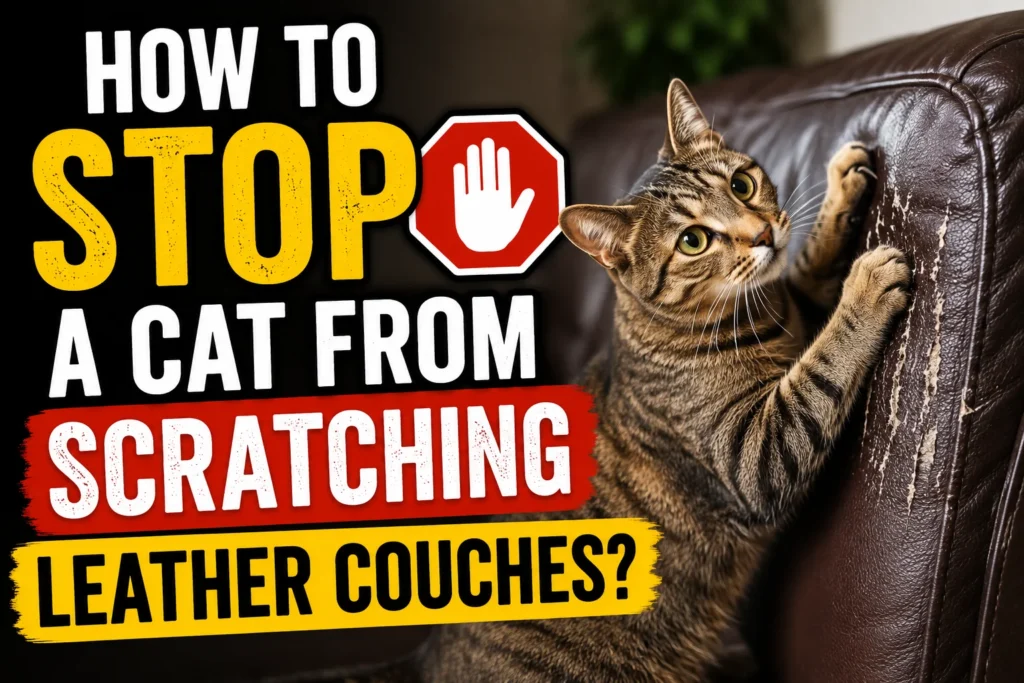
Stop a Cat From Scratching Leather Couches, You invested in a beautiful leather couch for its elegance and durability. Your cat sees it as a giant, expensive scratching post. If you are searching for how to stop a cat from scratching leather couches, you are likely frustrated, worried about costly repairs, and looking for a humane solution.
As a veterinarian, I assure you scratching is not spite. It is a biological necessity.
How to Stop a Cat From Scratching Leather Couches?
Before applying any fix, you must understand feline motivation. Cats scratch leather for three primary reasons:
- Visual & Texture Appeal: Leather has a tight weave that catches claws perfectly. It does not shred easily (like fabric), allowing cats to get a deep, satisfying grip.
- Scent Marking: Cats have scent glands in their paws. Scratching leaves both a visual mark and a chemical signal. Leather holds these scents longer than other materials.
- Nail Maintenance: Leather provides the necessary resistance to slough off old outer nail sheaths.
Vet Note: Never punish a cat for scratching. Punishment increases stress, which actually increases scratching frequency. Instead, redirect the behavior.
Step 1: Immediate Protection (Stop the Bleeding)
While you train your cat, protect your couch.
A. Double-Sided Tape (The Temporary Solution)
Cats hate sticky textures. Apply wide, clear double-sided tape (often sold as “sticky paws” or furniture tape) to the corners, arms, and any scratched areas. Within 2-3 weeks, the couch becomes “tactically unpleasant” while you provide better alternatives.
B. Vinyl or Plastic Covers (Not Pretty, But Effective)
Clear vinyl sofa protectors drape over scratching zones. They are slippery and unsatisfying for claws. Use these only during the training phase.
C. Aluminum Foil (The Budget Hack)
Cats despise the crinkly sound and reflective surface. Wrap foil around affected areas. Remove after two weeks, as cats sometimes adapt.
What to avoid: Citrus sprays, vinegar, or cayenne pepper. These can damage leather finish and irritate your cat’s respiratory system.
Also Check: Why Does My Cat Refuse to Eat Wet Food?
Step 2: Provide an Irresistible Alternative (The Redirection Method)
You cannot simply say “no.” You must say “yes, but here.”
The Golden Rule of Cat Furniture
Place the acceptable scratching post directly in front of the damaged couch zone. Not across the room. Within 18 inches.
Choose the Right Post for Leather-Loving Cats
- Material: Sisal rope or corrugated cardboard (vertical for the couch back, horizontal for the seat).
- Sturdiness: Wobbly posts are rejected. Must not move when scratched.
- Height: Tall enough for your cat to fully stretch (at least 30 inches).
Pro tip: Rub catnip on the new post. For the first week, attach a tempting toy to it. Every time your cat uses the post, offer a high-value treat (e.g., freeze-dried chicken).
Step 3: The “Scent Swap” Technique (Advanced Behavioral Trick)
Your cat has already scent-marked the couch. You need to “move” that scent.
- Step A: Do not clean the couch with ammonia-based products (smells like urine to cats).
- Step B: Use an enzymatic cleaner to neutralize existing scent marks.
- Step C: Take a clean cloth and rub it gently on your cat’s cheek pads (where pheromones are strongest). Then rub that same cloth on the new scratching post.
- Step D: Apply a synthetic feline facial pheromone spray (e.g., Feliway) to the post daily. This chemically signals “safe and familiar.”
Step 4: Nail Management (Reducing the Damage)
Scratching less destructively starts with shorter claws.
Trim Nails Weekly
Learn the “burrito wrap” method or have a vet tech demonstrate. Only trim the translucent tip (avoid the pink quick). Shorter nails = less leverage on leather.
Nail Caps (Soft Claws)
These vinyl covers glue onto the nail and last 4-6 weeks. They are painless and allow normal retraction.
Vet caution: Monitor for chewing. Do not use on outdoor cats (they need claws for defense).
Scratching Post Placement Optimization
Do not hide the post. If you have a sectional, you need two posts one at each corner.
Step 5: Environmental Enrichment (The Long-Term Fix)
Cats scratch more when bored or anxious. A stimulated cat scratches furniture less.
- Vertical territory: Cat trees, wall shelves, window perches.
- Play therapy: Two 15-minute play sessions daily with wand toys (mimic hunting).
- Puzzle feeders: Mental exhaustion reduces destructive energy.
Red flag: If your cat suddenly starts scratching excessively (especially after years of no issues), schedule a vet visit. Arthritis, hyperthyroidism, or anxiety disorders can manifest as increased scratching.
What Doesn’t Work (And Wastes Your Money)
| Method | Why It Fails |
|---|---|
| Spray bottles | Teaches cat to scratch when you are absent |
| Declawing | Illegal in 42 countries; causes chronic pain, biting, litter box aversion |
| Ultrasonic repellers | Cats habituate within days; also annoys dogs and young children |
| Moving the couch | Cat follows the scent |
Vet’s ethical note: Declawing is amputation of the last bone of each toe. It permanently alters gait and causes lifelong pain. Never consider this for furniture protection.
Sample Training Timeline (Week-by-Week)
- Week 1: Tape + foil on couch. New sisal post 6 inches from damaged area. Daily play.
- Week 2: Remove foil. Keep tape. Reward every post scratch with treats.
- Week 3: Narrow tape to only most damaged corner. Add pheromone spray to post.
- Week 4: Remove all tape. Observe. If cat returns to couch, repeat week 1 for 48 hours.
- Week 6: Success rate over 85% if protocol followed.
When to Call a Professional
Consult a board-certified veterinary behaviorist (DACVB) if:
- Your cat scratches despite following all steps for 8 weeks.
- Scratching is accompanied by urine marking, aggression, or hiding.
- You have tried more than 3 different post types with no improvement.
Final Thoughts: Harmony Is Possible
Stopping a cat from scratching a leather couch is not about changing the cat it’s about changing the environment. With sticky deterrents, a strategically placed sisal post, weekly nail trims, and daily interactive play, you can protect your investment without damaging your bond.
Your cat is not being bad. Your cat is being a cat. Now you have the tools to meet that need elsewhere.
Frequently Asked Questions (FAQs)
Can I repair cat scratches on a leather couch?
Yes. For minor scratches, use a leather repair kit with colored filler and a heat gun. For deep punctures, consult a professional upholsterer. Prevention is cheaper than repair.
Is there a scent that repels cats but won’t damage leather?
No safe, leather friendly scent reliably repels all cats. Citrus oils can strip leather finish. Stick to physical deterrents (tape, covers) rather than scents.
How long does it take to retrain a cat to stop scratching leather?
Most cats show significant improvement within 2-4 weeks of consistent redirection. Older cats (10+ years) may take 6-8 weeks.
Will my cat stop scratching if I get another cat?
No. Two cats often compete for territory, doubling the scratching. Introduce a new cat only for companionship, not as a furniture solution.
Do cat scratch deterrent sprays work on leather?
Most commercial sprays are water-based and safe but minimally effective. They work best as part of a multi-step plan (spray + post + tape), not alone.
Can I train a kitten to avoid leather from day one?
Absolutely. Kittens are highly moldable. Provide three different post materials (sisal, cardboard, carpet) and never allow leather access unsupervised for the first 3 months.
Why does my cat only scratch the leather when I’m in the room?
Attention seeking. Your cat learns that scratching leather makes you get up, talk, or move. Ignore the behavior (no eye contact, no words) and only reward post scratching.
What is the best scratching post material to replace leather?
Sisal rope (not fabric wrapped). It offers the same high resistance grip as leather but is upright. Horizontal cardboard pads also work for cats that scratch the couch seat.
Will neutering/spaying stop my cat from scratching leather?
Neutering reduces hormone-driven marking in males but does not eliminate normal claw maintenance. Spayed females scratch just as much as intact ones.
How do I clean cat scratches and prevent re-scratching the same spot?
Clean with a leather-safe enzymatic cleaner (e.g., Anti-Icky-Poo). Then apply double-sided tape to that exact spot for 3 weeks. The scent removal plus sticky texture breaks the habit.