What Can I Feed A Weak Old Dog?
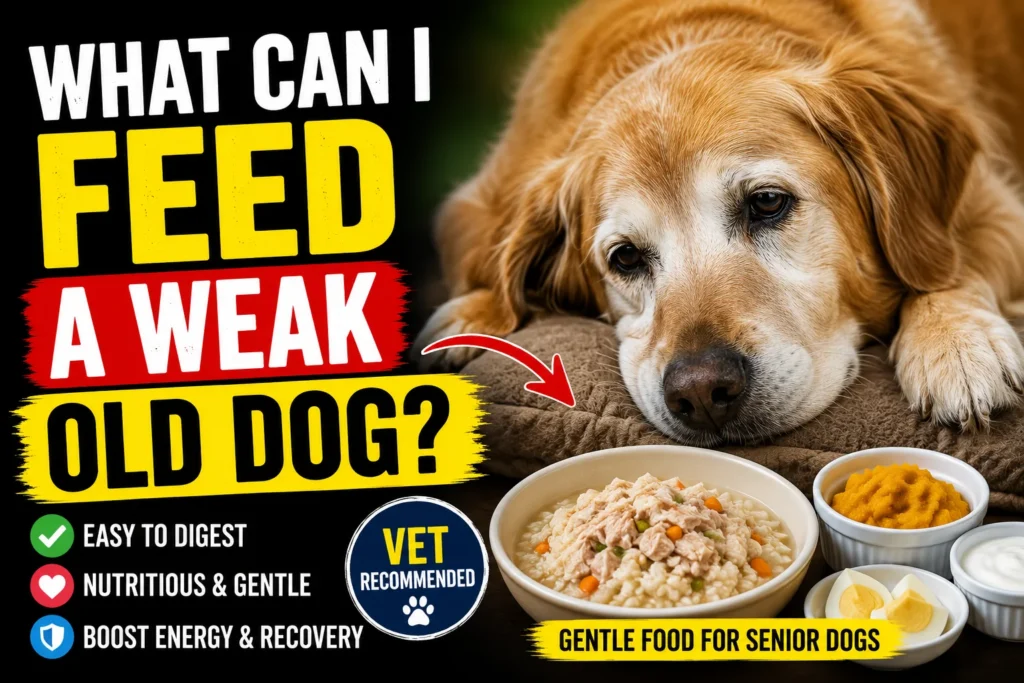
What Can I Feed A Weak Old Dog? It’s never easy for anyone in life, a pet owner, to watch his dearest pet grow old and start to lose its mobility. What should you do for your aging dog when it is no longer his happy, bouncing Self, when your dog is not as active as he once was, or when he starts to lose interest in food? “Should I be feeding my old, weak dog?” is a question that I hear from clients regularly, and unfortunately, there isn’t a simple answer.
According to some exciting new research coming out in 2025, senior formulas can vary wildly in their formulation, and may actually not vary very much from an adult food; some may even not have enough basic nutrients! It simply won’t work to take the same approach to every frail senior. As the fact remains: there is no “one” perfect food that fits the needs of every weak old dog. Rather, an approach that best suits your specific dog’s condition, tailored just to him is optimal.
Still, the majority of old dogs who seem to be having issues can be helped tremendously by using some very important nutritional tenets that aim at utilizing the best of ingredients and some tried and true appetite stimulants.
What Can I Feed A Weak Old Dog?
The Crucial Role of High-Quality Protein
A debilitated elderly dog will want protein the most. If there’s one fact of pet food that people think is true, it’s that seniors eat less protein. This is the farthest thing from true! Due to aging, dogs lose muscle mass, sarcopenia, that directly correlates with frailty associated with age.
Actually, senior dogs may even need a higher quantity of protein compared to their young dogs! Some research discovered that senior beagles needed 50% extra protein compared to youthful Beagles, so that you can support their musculature. Dog nutritionists prescribe 25% of a senior dog food regimen to protein in support of musculature and immunities. The very best vet nutritionists actually claim that a slightly greater protein dog food is ideal even with a healthy senior dog.
Rethinking Fat and Calories for Weight and Energy
The idea of a dog’s calorie needs as it grows older is confusing. Dogs that are slowing down in their old age certainly have lower caloric needs or they risk becoming obese. Yet, at that time, the dog who is very frail and thin and does not wish to eat may indeed need the calories to stay alive.
Senior formulas run the gamit of fat and calorie densities; the best one is determined by the individual dog’s body condition.
If your dog is skinny and weak: you’ll want calorie-dense, highly palatable, often wet, food. If your dog is overweight and sedentary you’ll want lower calorie, higher fiber food. This is a perfect illustration of why a “senior” formula might not be the appropriate diet. Your vet will evaluate their BCS to suggest appropriate fat and calories.
Beneficial Supplements: Omega-3s and Joint Support
In addition to macronutrients, these supplements can greatly assist in the care of a frail senior dog.
- Omega-3 Fatty Acids (EPA/DHA): Fish-based long-chain fatty acids (omega-3s) like EPA and DHA are a must for a senior dog’s health. These are anti-inflammatories that can have a remarkable impact on mobility, and the pain and frailty associated with common age-related conditions like arthritis.
- The Cornell University College of Veterinary Medicine says you may need to supplement high amounts of these fatty acids to have an impact.
- Joint Supplements Glucosamine and chondroitin: sulfate supplements can support the health of cartilage and the joints. These can be supplemented if your senior food is low on these nutrients and you can check product packaging to determine if the product has a seal from an organization such as the National Animal Supplement Council.
Why Your Senior Dog Might Stop Eating?
Refusal to eat in a dog, especially a weakened, old one, should cause worry. Several things could be causing a dog’s appetite to disappear, and finding the right cause is necessary to administer proper treatment.
- Dental disease: If the pet has to chew on painful kibbles it makes more of sense to eat a portion from the dog bowl.
- Pain or other illness: Pancreatitis, cancer, severe arthritis, kidney disease and the likes, bring a great amount of pain and sickness which suppresses an appetite. Decreased sense of smell. Dogs rely heavily on the sense of smell to encourage them to eat.
- When the smell has to disappear it becomes more of a challenge to be able to get their appetite up.
- Canned dog foods can sometimes spark appetite because they have a much stronger odor than kibble. Side effect from certain drugs. Some treatments like chemotherapy medications can induce nausea and can affect appetite.24-hour rule: If you notice that your dog hasn’t eaten in 24 hours, take him to the vet.
- This rule applies especially to senior dogs where rapid muscle wastage can be a concern.
Also Check: Best Ways To Exercise A Senior Dog With Bad Hips
Medical Appetite Stimulants: When Home Care Isn’t Enough
When the pet is suffering from weakness and loss of appetite, simply offering them some high value food might not be sufficient to bring back their appetite. When this happens, your vet may put them on appetite stimulators to get them back to eating.
- Capromorelin (ENTYCE): This one of the widely used appetite stimulators for dogs and very commonly used by the vets. This drug stimulates the appetite in dogs by imitating a “hunger hormone” known as ghrelin and stimulating your brain. It’s proven effective in dogs who are going through convalescence of acute diseases or chronic diseases like kidney issues. In one study, dogs on capromorelin gained 15% body weight more than the ones who were administered placebo.
- Mirtazapine: originally human medicine for depression which has off-label use in canines for stimulates of the appetite. Useful for canines with a predisposition of nausea because the drug also causes vomiting. Must be caution used with any other drug that influences serotonergic action.
- Always keep in mind not to offer any human medication nor to guess any dose, since these drugs can only be obtained with your veterinarian’s prescription.
How to Make Meals More Appealing?
While waiting for your visit to the vet, or in conjunction with your vet’s course of action, you can try these remedies:
- Turn up the heat: Just heat the dog’s food a little higher than room temperature. Increasing the temperature of the food a few degrees higher than your dog’s body temperature intensifies the smell of the dog’s food. As always, you should test the temperature with the tip of your finger to make sure it doesn’t get your dog’s tongue-burnt!
- Slip them a little extra something: The dog will sometimes start eating if you top his meal off with a little something extra: boiled, plain, skinless, boneless chicken OR about a tsp of low-sodium chicken broth added to his kibble.
- Dry food can become stale and can really stink…but that is what you like?
- Switch To Wet Food: Canned food for your dog generally tastes better and it’s less strenuous to chew, than dry food. For whatever reason many of dogs love canned food much more than kibble.
- Hand Feeding: Just for an experience, and to see if you can get the very stubborn ones to take a few bites, hand feed.
- Keep Access Simple: Some dogs with chronic arthritis or painful conditions don’t like to have to reach down to their food bowls.
If this is the case with your dog, place a few inches of their food into something easy for them to get to.
Conclusions
Feeding a frail, aged canine is a very tricky business. Though there is not really just one specific food which you can be assured to get work, focus on superior protein, be attentive of calorie amounts to correspond with your canine’s pounds, and look at using anti-inflammatory supplements, for example omega-3 essential fatty acids. Ultimately, observe your dog intently, and deal with your veterinarian. Every and any fall in appetite, in excess of eventually, warrants expert review and investigation of potential factors, professional medical urge for food stimulants when needed, and tailored guidance towards ideal nutrition for helping your cherished buddy cling to their strength, comfort, and well-being as they start to age.
Frequently Asked Questions (FAQs)
For my frail old dog who is not eating, what’s best: wet or dry food?
I find canned (wet) food is the easiest for my weak dog to eat, and it has a stronger aroma and flavor to tempt them. It also is very hydrating, which older dogs need.
I heard protein can harm a senior dog’s kidneys?
That is false. Only dogs that have been diagnosed with kidney disease should have restricted diets. Studies show a high-quality diet with protein doesn’t harm healthy old dogs; they actually need increased protein to keep muscle and body mass in order as they age.
How can I encourage my senior dog to eat more food?
You can also try heating the food up to increase the aroma or adding a few spoonsful of plain boiled chicken and broth to their meals. If these don’t help, there are appetite stimulants that your veterinarian can prescribe.
Are all “senior” dog foods essentially the same?
Not by a long shot! In 2025, research showed that there isn’t a single definition of what a “senior” food should be and some do not meet the minimum requirements for an adult dog’s food.
My senior dog is skinny, and should they have more fat?
An older dog that is underweight usually needs to have a high-fat, high-calorie diet to help them gain some weight. Conversely, an older dog who is overweight may need a lower-fat, reduced-calorie diet.
Should I be giving my senior dog human food?
Plain chicken and salmon can make excellent appetite stimulants to mix with your senior dog’s diet; other than these few exceptions, most human foods are not properly balanced for a dog’s long-term nutritional needs.
What supplements can benefit a weak, senior dog?
Most vets would recommend the supplementation of Omega-3 fatty acids (EPA/DHA) to reduce joint inflammation and pain. In addition, many older dogs also benefit from Glucosamine and Chondroitin to support healthy joints.
When is not eating a problem for my old dog?
It is a medical concern and time to contact your veterinarian any time a senior dog hasn’t eaten in more than 24 hours, even if other signs are not obvious. Seniors can deteriorate rapidly if their intake is significantly reduced or stopped entirely.
What are prescription appetite stimulants and how do they work?
A prescription appetite stimulant (i.e., Capromorelin, ENTYCE) tricks the brain by artificially activating receptors of the hormone Ghrelin, the body’s natural appetite stimulant hormone When the appetite stimulant triggers those Ghrelin receptors, the body feels that the dog is hungry and stimulating their interest in food.
Is my dog just picky or is something wrong?
It is far more likely that if your dog’s appetite has diminished suddenly or for an extended period of time, and you also have a senior dog, that there is a medical problem contributing. Pain caused by a hip injury or arthritis, oral pain from dental disease or nausea due to underlying disease of other internal organs.