How to Clean a Dog’s Teeth at Home If They Hate Brushing?
How to Clean a Dog’s Teeth at Home If They Hate Brushing?. If your dog is on the run the second you pull out your doggy toothbrush, don’t you feel all alone; there are countless dogs out there who can’t stand have anyone’s hands all over their mouth so routine teeth brushing is completely impossible. And the bad news if you completely omit dog teeth care? Well, your canine’s mouth will start build-up in the coming years, leading to halitosis, gum pain and inflammation, and damage to your dog’s kidney and liver, not to mention that the doggy will have problems with his heart.
Luckily for the sake of your canine’s dental hygiene; however, there is no have all or have nothing about this procedure your canine doesn’t have to suffer all because you’re brushing is not feasible.
You may be able to find some simple teeth care options for your canine if it’s a priority that your dog has a shining and perfectly clean smile.
Why Dental Care Matters for Dogs
The Number One reason why your adult dog could develop problems of poor health is that his or her teeth were not kept clean. Once your dog has eaten, he will begin forming a sticky film of plaque over his teeth after a few hours. If allowed to go untreated, this plaque solidifies to form tartar, and only your vet can get rid of that!
If your dog’s teeth are in bad shape, here are some problems that might affect him: Stinky breath from your dog.
Yellow or brown coating on the dog’s teeth. Red and bleeding dog’s teeth and gum. Missing dog’s teeth. Dog’s painful mouth when eating.
Tooth infections.
The existence of bacteria on dog’s bloodstream. Your canine’s excellent dental care will prevent future medical conditions.
Signs Your Dog Has Dental Problems
Be on the look out for the symptoms of dental problems:
- Constant bad breath
- Brown or yellow tartar buildup on the teeth
- Swelling or bleeding of the gums
- Pawing at the mouth
- Drooling excessively
- Problems chewing hard food
- Loose or broken teeth
- Swelling of the face
- Loss of appetite
If your dog displays any of these symptoms of dental problems contact your veterinarian for treatment prior to attempting home remedies.
Why Dogs Hate Tooth Brushing
Here Are Some Possible Reasons Why Your dog May be Scared Of brushing:
Unfamiliar Activity:
If your dog does not accustomed to getting brushed you will naturally seem a little confusing, especially with brushing!
Previous Traumatic Experience:
It is possible that your dog is not currently dealing with some disease and pain, but there have been occurrences where his gums or teeth get irritated.
Pain-Sensitive Gums:
Certain breed are not born with extremely durable gums, so even the sensation of you stroking them might be extremely irritating. It is possible that you could actually be hurting your pet without knowing it!
Rate You may also scare your dog away simply by rushing when you attempt to brush his teeth, as the hurried movements and sounds might be interpreted as aggressive by the canine. Figuring out the “how and why” will enable you to approach your furry pet and develop a solution.
Also Check: How to Treat Dry Crusty Nose on Pugs and French Bulldogs?
How to Clean a Dog’s Teeth at Home If They Hate Brushing?
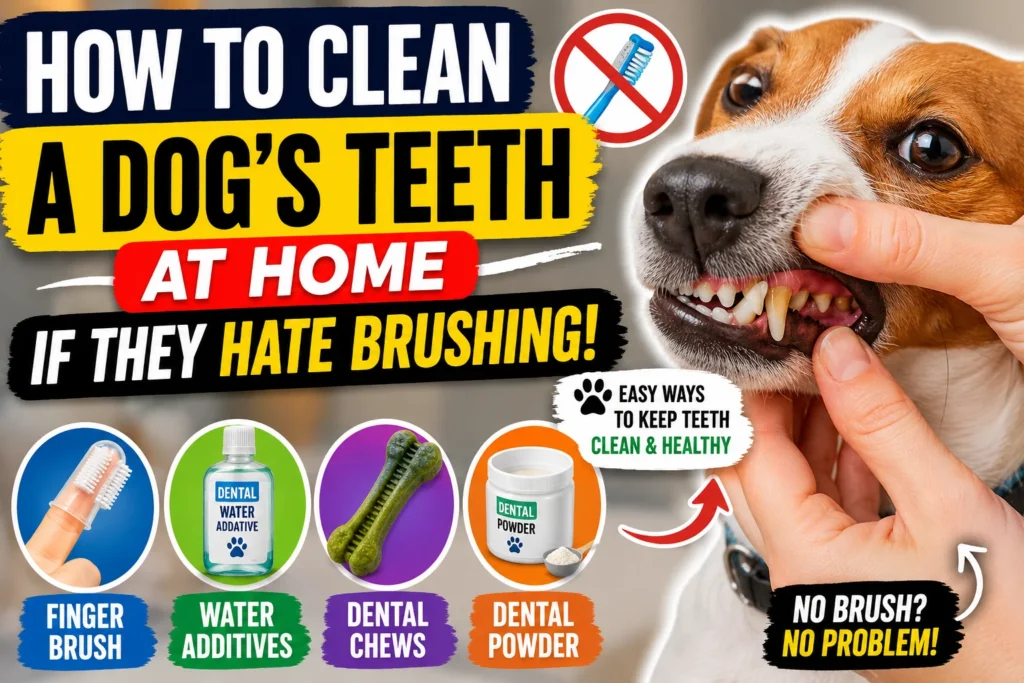
1. Use Dental Wipes
Dental wipes are soft cloths designed to remove plaque from the outer surfaces of teeth.
Benefits:
- Easier than toothbrushes
- Less intimidating
- Removes fresh plaque
- Simple daily routine
Although not as effective as brushing, they’re an excellent alternative for reluctant dogs.
2. Offer Veterinary-Approved Dental Chews
Dental chews help scrape plaque while your dog chews naturally.
Choose products that:
- Have the Veterinary Oral Health Council (VOHC) Seal
- Match your dog’s size
- Are low in calories
- Are digestible
Avoid extremely hard chews that may fracture teeth.
3. Try Dental Water Additives
Water additives are mixed into your dog’s drinking water.
They help:
- Reduce bacteria
- Freshen breath
- Slow plaque formation
These are especially useful for dogs that refuse any mouth handling.
4. Use Dental Gels
Dental gels stick to the teeth and gums.
Many contain enzymes that help reduce bacterial growth even without brushing.
Apply with:
- Your finger
- A finger brush
- A soft applicator
5. Feed Dental Diets
Some veterinary dental diets are specially formulated to reduce plaque buildup.
Their kibble:
- Cleans teeth mechanically
- Breaks apart differently than regular kibble
- Helps reduce tartar
Ask your veterinarian whether a dental diet is appropriate.
6. Give Safe Chew Toys
Chewing naturally cleans teeth.
Good choices include:
- Rubber dental toys
- Grooved chew toys
- Textured dental toys
Avoid:
- Bones
- Antlers
- Rocks
- Hard nylon toys that cannot bend
If it’s harder than your fingernail, it may break your dog’s teeth.
7. Finger Toothbrushes
Some dogs tolerate silicone finger brushes much better than regular toothbrushes.
They provide:
- Better control
- Gentle pressure
- Less fear
Even short sessions can help.
8. Coconut Oil
Some owners gently rub a small amount of virgin coconut oil onto the gums.
Although coconut oil has mild antimicrobial properties, scientific evidence supporting it as a primary dental treatment remains limited.
It should never replace proper dental care.
How to Train a Dog That Hates Tooth Brushing
Many dogs can eventually learn to accept brushing.
Step 1: Start Slowly
Press dog’s lips briefly. Immediate reinforcement! 2: toothpaste 3: 4: 5: 6
Veterinary dental kibble Crunchy carrots (in moderation)
Step 2: Introduce Toothpaste
Only use pet approved toothpaste. Let your dog lick about a tablespoon off of your fingertip.
Step 3: Touch the Teeth
Rub the teeth Rub one tooth with your finger and reward.
If he isn’t comfy, stop. (1-2 seconds)
Step 4: Introduce a Brush
Let your dog sniff the brush but don’t brush! Reinforce when he’s comfy.
Step 5: Brush One or Two Teeth
Brush the tooth or two of the tooth Brush one or two teeth and reinforce.
Never Use Human Toothpaste
Weeks will see improvement better than forcing it!! Don’t use human toothpaste!!! Human toothpastes have xylitol, foaming ingredients and lots of fluorine in large doses.
Foods That May Support Dental Health
Foods that may help with oral health are ones that require a bit of chewing.
- Green beans
- Dental treats approved for dogs
Remember that food alone cannot prevent periodontal disease.
Natural Remedies: Do They Work?
Coconut Oil: Some studies suggest coconut oil might kill a couple of strains of bacteria.
Parsley: It can make bad breath smell better for a bit, but it won’t fight plaque.
Apple Cider Vinegar: No you don’t. The acidic property may irritate oral tissues and can wear away the tooth enamel.
Baking Soda: Don’t use baking soda unless your vet told you to.
When Your Dog Needs Professional Dental Cleaning
What can’t be removed with home care:
Harden tartar. “Hardened tartar can only be removed at the vet by an experienced professional dental technician or a veterinarian while the dog is safely anesthetized. Hardened tartar is a rough, uneven surface for more plaque and bacteria to cling to making the problem even worse over time,” said Dr.
Wiseman.
Signs Your Dog Needs A Cleaning:
- Heavy amounts of tartar
- Gums are bleeding
- Dogs have loose teeth
- Halitosis
- Pain when eating
Receding gums Your dog needs a professionally administered cleaning and debridement. This is performed under general anesthesia, so veterinarians are able to clean under the gum line, where the majority of dental disease begins.
How Often Should You Clean Your Dog’s Teeth?
Ideally: Brushing every single day is best, even just for 30 seconds.
Dental wipes: daily.
Dental chews: one a day.
Water additives: once per day.
Dental exams: once yearly.
Professional dental cleanings: as recommended by your vet.
Remember: better consistent than perfect.
Frequently Asked Questions (FAQs)
Can I clean my dog’s teeth without brushing?
You can attempt the use of dental wipes, water additives, enzyme gels, dental diet and chews for the reduction of plaque on dog’s teeth but the brushing of their teeth would be the best for that purpose.
What is the best alternative to brushing a dog’s teeth?
If your dog resists you to brush their teeth then a combination of dental wipes, VOHC approved dental chews and water additives would be the alternative solutions for the cleaning of your dog’s teeth.
Why my dog detests being teeth brushed?
Most of the dogs hate having their teeth brushed due to fear, lack of familiarization, tooth pain previously felt, soft or sore gums and past traumatic experience while brushing of teeth.
Bad breath in dogs is the signal of dental disease?
Well in many instances bad breath signifies some initial level of plaque accumulation or gum disease but the fact is it could be a warning for other issues related to kidney, digestion or some other problems.
Can dental chews replace brushing?
Dental chews can decrease the rate of plaque build up on a dog’s teeth, but they can not clean all of a dog’s teeth like brushing does.
Is coconut oil safe for cleaning my dog’s teeth?
Small quantities of coconut oil should be safe to clean most healthy dog’s teeth with, but this oil should not replace proven dental products.
How often should I use dental wipes?
Brushing the teeth, but in the absence of this practice,Dental wipes should be used on a daily basis to minimize the build up of dental plaque on a dog’s teeth.
Can puppies use dental products?
Most dental products can be used in puppies as long as the appropriate age specific product is utilized and early Dental hygiene is practiced.
What should I do if my dog’s gums bleed during cleaning?
Discontinue the process and have the dental condition assessed and treated by a Veterinarian, as bleeding gums may indicate dental disease.
When should my dog have a professional dental cleaning?
Most dogs will need an oral exam annually and some will require regular Professional cleanings to address excessive tartar build up, gingivitis, periodontitis, lose teeth and oral pain.
Final Thoughts
Even If Your Dog Hates Brushing-Don’t Forget Dental Care Although brushing still is best for removing plaque and preventing gingivitis, there are a variety of options if brushing isn’t a success for your dog: water additives, dental chews, dental wipes, enzyme gels, and even the right chew toys. The bottom line is, as long as you give your dog some form of dental care on a daily basis – just a few minutes-you can decrease plaque buildup, give him sweeter breath, help prevent dental disease, and increase his lifespan.