
Why Is My Cat Losing Hair on Their Back Legs?
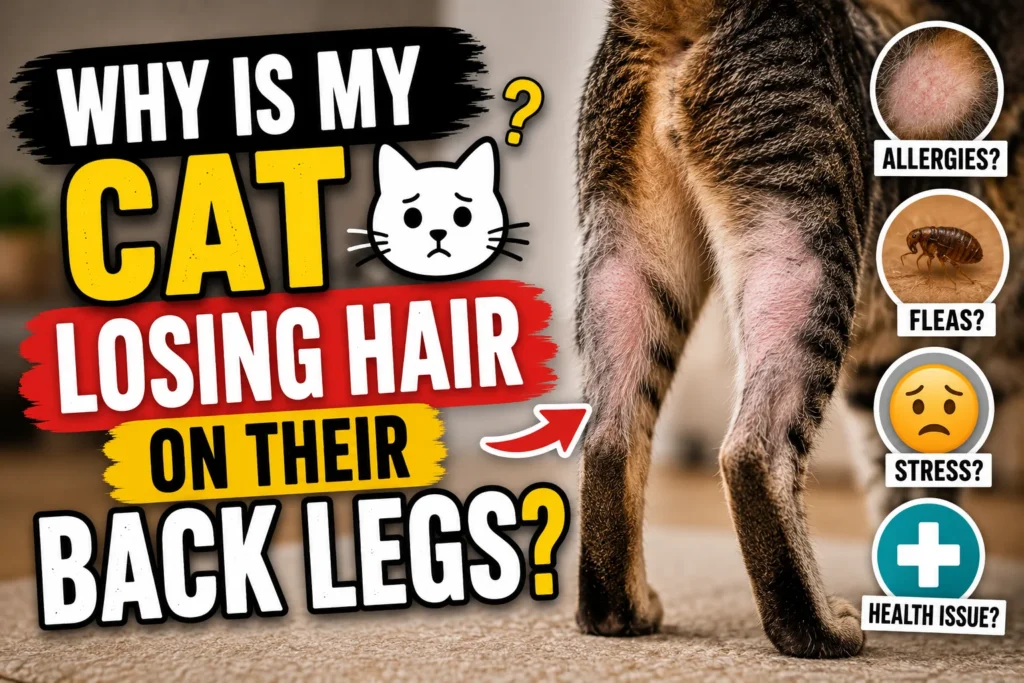
Why Is My Cat Losing Hair on Their Back Legs? Noticing bald patches or thinning fur on your cat’s hind legs is unsettling. As a pet parent, your mind might race to worst case scenarios. The good news? While this symptom should never be ignored, it is often treatable.
As both a veterinarian and a pet health writer, I have seen hundreds of cases of feline alopecia (hair loss). In this guide, we will walk through the 7 most common medical reasons for hair loss on the back legs, how to diagnose them, and the exact steps you should take to help your cat regrow that healthy coat.
Quick Reference Is This an Emergency?
- Emergency (Vet now): Open sores, severe swelling, lethargy, or inability to walk.
- Schedule a Vet Visit: Itching, scabbing, symmetrical baldness, or behavioral changes (over-grooming).
- Monitor at home: Seasonal shedding or friction from carpet (rare on back legs).
The 7 Medical Reasons for Why Is My Cat Losing Hair on Their Back Legs?
1. Flea Allergy Dermatitis (Most Common)
Fleas are the 1 culprit. Even if you don’t see fleas, a single bite can trigger an intense allergic reaction.
- The mechanism: The cat’s immune system overreacts to flea saliva, causing intense itching (pruritus).
- Location: Hair loss usually starts at the base of the tail and inner back thighs.
- Visual signs: Tiny black specks (flea dirt), redness, or small scabs (miliary dermatitis).
2. Psychogenic Alopecia (Over-Grooming)
Cats are masters of disguise. When stressed, bored, or anxious, they often self soothe by over grooming.
- The mechanism: The rough barbed texture of a cat’s tongue breaks hair shafts, leading to baldness.
- Key clue: The skin looks normal no redness, scabs, or bumps. The fur feels stubbly.
- Triggers: New pet, moving houses, construction noise, or lack of environmental enrichment.
3. Food or Environmental Allergies
Unlike fleas, these allergies cause year round itching.
- Food allergies: Typically to chicken, beef, or fish. Causes head/neck itching, but also back legs.
- Environmental: Pollen, mold, or dust mites.
- Visual signs: Red, inflamed skin, possible ear infections, or digestive upset.
4. Feline Hyperesthesia Syndrome
A neurological condition often misdiagnosed as behavioral.
- The mechanism: Abnormal nerve signals cause “crawling skin” sensations.
- Symptoms: Rippling skin on the back, dilated pupils, frantic licking of the back legs, and sudden running fits.
5. Ringworm (Fungal Infection)
Despite the name, this is not a worm. It is highly contagious to humans and other pets.
- The mechanism: Fungus invades hair follicles, causing breakage.
- Visual signs: Circular patches of broken stubble, scaling, and crusting. Not always itchy.
- Note: Ringworm often glows green under a Wood’s lamp (though not 100% of strains).
6. Pain-Induced Alopecia (Arthritis)
Older cats rarely limp. Instead, they lick painful joints.
- The mechanism: Licking releases endorphins (natural painkillers).
- Location: Hair loss directly over the knee (stifle) or hip joint.
- Clues: Difficulty jumping, stiff gait, or crying when touched on the lower back.
7. Acromegaly or Hyperthyroidism (Hormonal)
Less common, but serious. These conditions cause symmetrical, non itchy hair loss.
- Hypothyroidism (rare in cats): Sparse, dry coat.
- Hyperthyroidism: Unkempt coat, weight loss, ravenous appetite.
- Acromegaly (diabetes-linked): Enlarged paws/jaw + hair loss.
Also Check: Can Dogs Eat Raw Chicken Bones Safely?
How to Diagnose the Root Cause (Step-by-Step)
Step 1: The “Sit and Watch” Test
Watch your cat when they think you aren’t looking. Do they lick their back legs obsessively (psychogenic/pain) or scratch with their back claws (flea/allergy)?
Step 2: The Flea Comb Check
Run a fine-tooth comb over the lower back onto a white paper towel. Wet the towel. If you see red-brown streaks (flea dirt), you have fleas.
Step 3: Veterinary Diagnostics
Your vet will likely perform:
- Skin scrape (ruling out mites).
- Wood’s lamp & fungal culture (ringworm).
- Blood work (thyroid/diabetes).
- Food trial (8 weeks of a novel protein diet).
Treatment Protocols (What Actually Works)
| Cause | Treatment |
|---|---|
| Fleas | Prescription flea control (Revolution, Bravecto) + environmental spray. |
| Psychogenic | Feliway diffusers, puzzle feeders, and sometimes anti-anxiety meds (fluoxetine). |
| Allergies | Hypoallergenic diet (Royal Canin HP) or Apoquel/steroids. |
| Hyperesthesia | Gabapentin or phenobarbital for nerve pain. |
| Ringworm | Oral antifungal (Itraconazole) + lime sulfur dips. |
| Arthritis | Solensia (monthly injection), joint supplements, ramps. |
5 Home Remedies That Work (And 3 to Avoid)
Safe & Effective:
- Omega-3 fatty acids (salmon oil) Reduces skin inflammation.
- E-Collar (cone) Prevents further licking to break the itch-lick cycle.
- Hypoallergenic laundry detergent Rinse cat beds weekly.
- Environmental enrichment Cat trees and window perches reduce stress.
- Distraction Automatic laser pointers or treat balls during high-anxiety hours.
Never Use:
- Tea tree oil Toxic to cats even in small amounts.
- Dog flea medication (permethrin) Fatal to cats.
- Hydrocortisone creams Causes ingestion toxicity.
When Will the Hair Grow Back?
- Flea/allergy treatment: Visible regrowth in 4–6 weeks.
- Over-grooming: 2–4 weeks after stopping the behavior.
- Ringworm: 8–12 weeks (quarantine required).
- Arthritis relief: 3 months of consistent pain management.
Warning sign: If the bald skin turns yellow, black, or wet (exudate), seek immediate care. This indicates a secondary bacterial infection (pyoderma).
Final Verdict
Hair loss on a cat’s back legs is rarely an isolated cosmetic issue. It is a symptom. Whether it is a $20 flea treatment or a $200 arthritis management plan, solving the root cause will stop the hair loss and improve your cat’s quality of life. Do not rely on “home remedies” for more than 3 days without veterinary guidance.
Frequently Asked Questions (FAQs)
Is it normal for cats to have bald spots on their back legs?
No. While some cats have naturally thin fur near the flank fold (the “primordial pouch” area), true bald patches are abnormal and require investigation.
Why is my cat pulling hair out of their back legs with their teeth?
This is usually due to pain (arthritis) or itch (allergies). Cats use their incisors to pluck hair, not just lick it.
Can stress really cause baldness on the back legs?
Yes. Stress-induced psychogenic alopecia is one of the top three causes. The cat grooms so excessively that the hair breaks off at the root.
How do I tell the difference between ringworm and over-grooming?
Ringworm leaves broken stubble and scaling. Over-grooming leaves smooth, bare skin or a “shaved” look with intact follicles.
My cat has no fleas but is still balding. Why?
You only need one flea bite to trigger an allergic reaction. Use a prescription flea preventative for 3 months straight as a diagnostic test.
Can a poor diet cause hair loss on back legs?
Rarely. True nutritional deficiencies (e.g., zinc) cause full-body dull coat, not isolated back leg baldness. However, low-quality food worsens allergies.
What natural anti-itch spray is safe for cats?
50/50 mix of colloidal oatmeal and water is safe. Avoid anything with essential oils (lavender, eucalyptus, peppermint) as they are toxic to cats.
How much does it cost to diagnose cat hair loss?
Expect $50–$100 for an exam, $25 for a skin scrape, $70 for a fungal culture, and $200+ for blood work. Pet insurance often covers this.
Will shaving my cat help the hair grow back faster?
No. Shaving can cause trauma, sunburn, and paradoxically worsen psychogenic alopecia (they now lick the skin directly). Only shave under vet direction.
My cat is 14 years old and has bald inner back legs. Is this just old age?
No. “Old age” is not a disease. Senior cats usually have osteoarthritis causing pain licking. Ask your vet about Solensia or laser therapy.