
Feathers and Fear What to Do If Your Cockatiel Bleeds from a Broken Blood Feather 2026
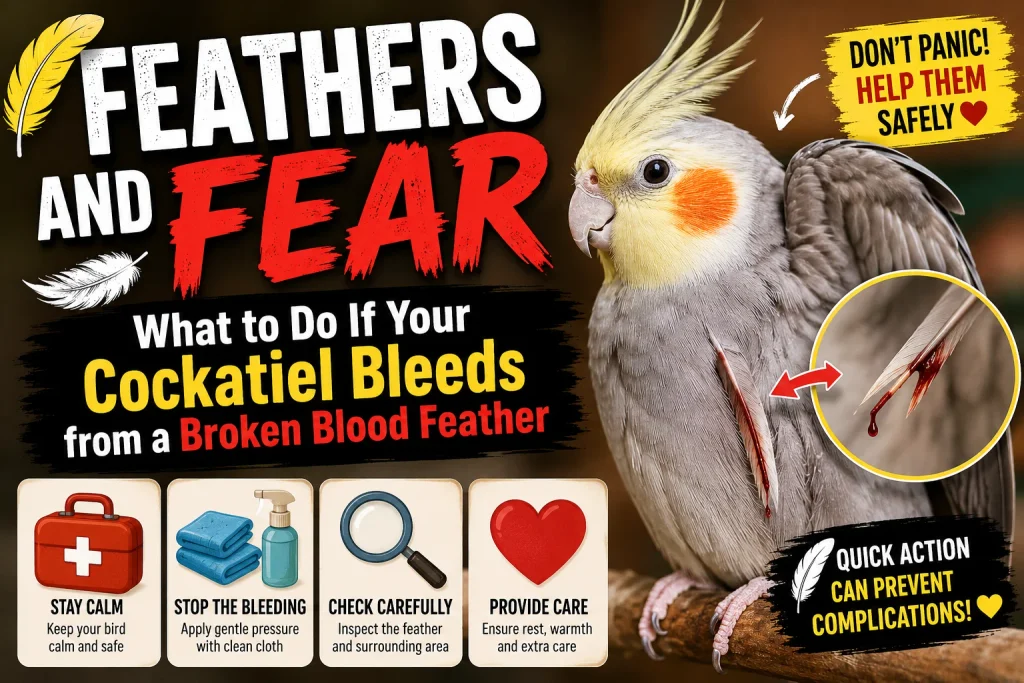
Cockatiel It’s that dreaded sight-an avian veterinarian owner sees a drop of blood on their cockatiel’s feathers, or, worse, a trickle coming from a damaged flight or tail feather. Panic is an obvious and immediate reaction, but the number one thing to do is try and stay as calm as possible and act quickly. It’s an alarmingly frequent and serious cockatiel emergency, and one that, as a veterinarian, I see regularly and with some treatment-it can be managed:
Understanding the Danger What is a “Blood Feather”?
In order to fully grasp the why and what of a blood feather being extremely dangerous, you must first get a grasp of what exactly a blood feather is. A blood feather is simply a brand new growing feather. During its growth stage, it is very rich in blood which travels through the shaft to feed the growing feather. This is where the “darkish” or purplish color seen on a brand new feather’s shaft comes from as it is saturated with blood.
The problem is with the way it is designed. That broken shaft is basically a straw inserted right in your bird’s circulatory system. Birds are very tiny creatures so their blood capacity can be minimal and losing blood from an unbroken blood feather can be extremely life threatening.
Step by Step Emergency Protocol
Follow this emergency plan if you have notice bleeding from your cockatiel’s feather. Your goals are to stabilize the bird and transfer to your vet in the shortest possible time.
Step 1: Stay Calm and Restrain Your Bird Gently
Your panic will likely upset your cockatiel and could cause their heart rate to elevate and blood pressure rise, making the bleeding continue. Speak in a low tone and move slowly. Wrap your cockatiel gently in a small wash cloth or towel.
Some pet owners refer to it as a “bird burrito”.
It will keep your cockatiel still so it doesn’t begin thrashing and flapping its wings and aggravating the wound.
Step 2: Identify the Source of Bleeding
Look carefully at the bird’s body (usually the wings or tail) to locate the broken feather. Part the surrounding feathers to find the bleeding feather shaft.
Step 3: Apply Pressure and a Clotting Agent
Once you locate where it’s bleeding, press down with a clean cloth, piece of gauze or cotton swab directly on the cut end of the feather to help stop the bleeding. You can also put some clotting substance on the feather tip to aid the process:
•Corn starch or Flour – safe and easy to find solutions to make your bird stop bleeding .
•Styptic Powder – Products like Kwik-Stop are made specifically for this, though they can be quite caustic or dangerous if a pet eats them. If you use Styptic powder, use sparingly and try to keep off the skin .
Step 4: When to Pull the Feather
If you can apply sufficient pressure to achieve a halt to bleeding after a minute or two, you can cease this task and continue to step 5. If bleeding continues, or is particularly severe, then the broken feather needs to be fully removed. This is the best way to stop a bleed, as it removes the “straw” from the blood source.
This is painful and best left to an avian vet.
If you aren’t 100% confident or if bleeding is severe – your next port of call should be your vet. If, for whatever reason, this isn’t an option as a vet is many hours away, this is how it’s done: Take a pair of fine-tipped tweezers, haemostats or needle-nosed pliers and grasp the feather at its base as near to the skin as you can. Firmly but smoothley pull the feather straight out of the body in the direction in which it is growing; don’t tug or twist it. The follicle should close, and the bleed should stop almost instantly.
You should then apply some more gentle pressure along with a sprinkle of further cornstarch to the follicle to be sure that the bleeding has entirely stopped.
Step 5: Seek Veterinary Care Immediately
Whether you pull the feather or the bleeding stop on its own, you can’t skip the vet appointment, and take your bird to theavian veterinarian as soon as possible . Your avian vet can: Observe the cockatiel to see if he is anemic if the bleeding stop Watch for signs of pain, bleeding, and infections Take care of any underlying causes of feather breakage Monitor and provide pain relief, remove the feather if the bleeding continues with less invasiveness and minimize the risk for further complications
For More : Signs of Wound Infection After Dog Mass Removal Surgery
Frequently Asked Questions (FAQs)
What exactly is a blood feather in a cockatiel?
A blood feather is a new, growing feather that has a rich blood supply flowing through its shaft to help it develop. It is typically darker at the base than mature feathers .
Why is a broken blood feather so dangerous for a cockatiel?
Because the feather shaft is hollow and connected to the bird’s blood vessels. When it breaks, it acts like an open straw, allowing blood to drain continuously and quickly, which can be fatal for a small bird .
How do I stop the bleeding from a broken blood feather at home?
First, gently restrain your bird. Then, apply direct pressure with a clean cloth and put a small amount of cornstarch or flour on the broken end of the feather to help it clot .
When should I pull a broken blood feather myself?
You should only attempt to pull the feather if the bleeding does not stop with pressure and you are confident you can do it correctly. A firm, smooth pull in the direction of growth is required. If you are unsure, your priority should be getting to a vet, as improper removal can cause more pain and damage .
Can a broken blood feather heal on its own?
Sometimes a clot will form and the bleeding will stop temporarily. However, the feather is still attached to the blood supply, and the clot can easily break loose, causing the bleeding to resume. This is why veterinary attention is recommended .
My cockatiel pulled the feather out itself, is it safe?
Yes, if your bird has completely pulled the feather out, the follicle will usually seal and the bleeding should stop. You should still apply some cornstarch and pressure for a minute to be safe and monitor for any signs of distress .
Is cornstarch safe to use on a bird’s bleeding feather?
Yes, cornstarch is a safe and effective household alternative to styptic powder for helping blood clot. Flour is also a good option in an emergency .
Should I take my cockatiel to the vet after the bleeding stops?
Absolutely. Even if the bleeding has stopped, a vet visit is crucial. Your bird may be in pain, have lost a significant amount of blood, or have an underlying condition that caused the feather to break in the first place .
Why do blood feathers break in cockatiels?
They often break during a sudden fright (night fright), a clumsy landing, or from being caught on cage toys or bars. In some cases, it can be related to poor feather quality from a poor diet or an underlying disease like Giardia, which causes itching and feather-picking .
What should be in a first aid kit for my cockatiel?
A good bird first-aid kit includes cornstarch or styptic powder, sterile gauze, a small towel or washcloth for restraint, fine tipped tweezers or hemostats, and the phone numbers for your avian vet and an emergency clinic that treats birds .





2 Comments