The Paradox of the Purr: Why Your Cat is Purring Loudly While in Pain or Distress 2026?
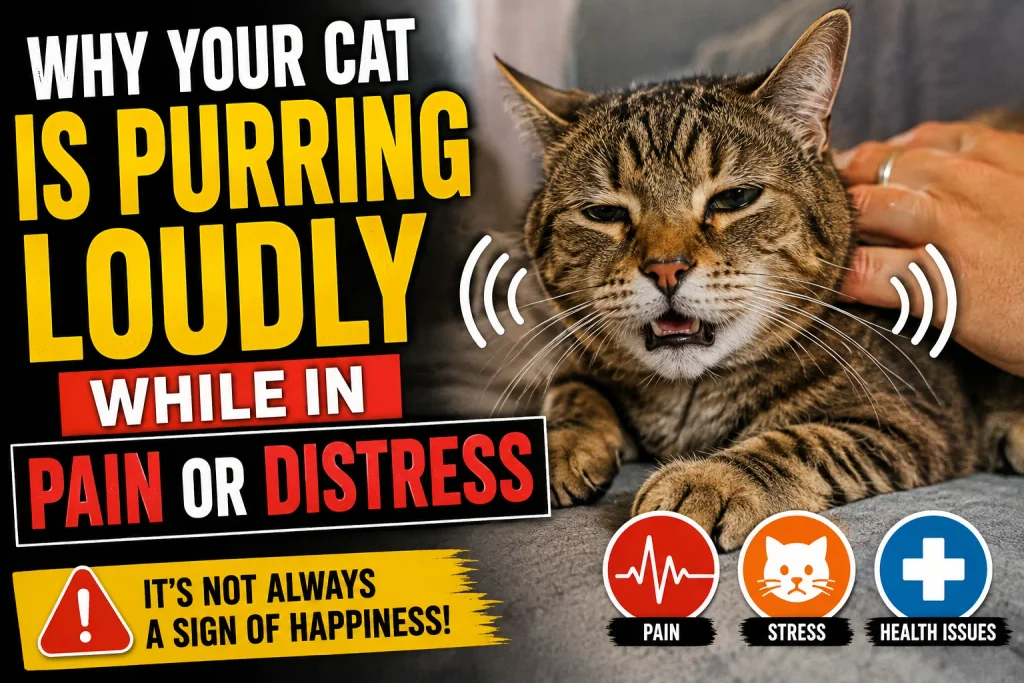
The Paradox of the Purr: Why Your Cat is Purring Loudly While in Pain or Distress. One of the most commonly asked and worrying questions I am asked is; “My cat is purring but is in obvious pain what is going on?” We associate the comforting hum with the ‘happy cuddly’ feline draped over our laps, and this is certainly often true. However as veterinarian’s we know that purring is in fact a complex form of communication with varied purposes and that the sight of a seemingly happy yet pained cat with a vibrating tummy is one of the most confusing contradictions a pet owner will encounter. In this article we investigate the science behind the purring, its links to pain and what symptoms to watch for to assist your cat.
The Truth About Purring: Why Your Cat is Purring Loudly While in Pain or Distress?
It is simply not true that a purr always means the cat is happy, it is one of the things that makes a cat purr, but there are many other reasons. Purring is one particular sort of vocalisation which occurs during both inhale and exhale, generated by rapid oscillation of the laryngeal muscles along with the diaphragm which vibrates at a specific low frequency and is low in pitch.
The Self-Healing and Pain Relief Mechanism
Perhaps the most intriguing property about purring is its potential role as a self-healing mechanism. Studies show that the vibrations produced when cats purr-usually in a range between 25 to 150 Hertz- can help bone development, pain, wounds, and musculature. This particular frequency range is equivalent to therapeutic vibration frequencies applied in medical treatment of human beings- especially for pain management.
The release of purring on the part of a distressed or pained animal can perhaps be understood as a mechanism for the natural secretion of endorphins, having a powerful and analgesic property that alleviates pain by inducing such euphoria in a time of discomfort. This simply seems to be one way to “soothe” oneself in an undesirable and painful circumstance.
Deciphering the Distress Purr
Well then, if purring may be related to distress why is it used? Context and body language are the answers.
Loud purring from an obviously distressed animal is believed to be used to self soothe. A purr of distress almost always involves a bundle of clinical signs that indicate that something has gone wrong. Here is some guide to contrast a contented purr with one in response to pain.
| Feature | Content/Happy Purr | Distress/Pain Purr |
|---|---|---|
| Body Posture | Relaxed, lying on side/back, tail still. | Crouched low to the ground, tense, hunching, hiding in dark spaces. |
| Ears & Eyes | Eyes half-closed, ears forward, relaxed whiskers. | Ears flattened to the side, eyes wide open with dilated pupils. |
| Behavior | Kneading, seeking affection, rubbing. | Lethargy, restlessness, hiding, excessive licking of a specific spot. |
| Breathing | Normal, steady, subtle chest movements | Labored breathing, open-mouth breathing, exaggerated abdominal movement. |
| Appetite | Normal eating and drinking habits. | Complete loss of appetite, refusing food and water. |
| Purr Sound | Consistent, relaxed rhythm. | Often louder, more rapid, or occurs in unusual situations. |
Why Context is Everything
Cats can keep secrets about illness extremely well – this ability has undoubtedly evolved in the wild to avoid falling victim to predators should they appear weak. Indeed, a cat will often purr in such stressful circumstances as visiting the vet, or sustaining an injury in an effort to calm down and reassure itself.
Mother cats may purr in times of trouble, such as the birth of kittens-once the straining stops she will begin to purr in an endeavor to assist labor and even lure her sightless, earless kittens to suck by responding with purrs to their touch, a remarkable survival feature that proves the purr can be a happy sound, although it is also used to promote the recovery process and to soothe anxiety.
Also Check: How to Keep an Active Puppy Quiet and Rested After Leg Surgery 2026
When to Call the Vet
If you are hearing loud purring in your cat and see one or more symptoms listed in the “Distress” column of the table above, this is a situation where you should not hesitate to seek veterinary help. Symptoms include but are not limited to the following:
Cats have internal and external ailments which can produce a distress purr. These include trauma with hidden injuries, lower urinary tract obstruction and serious respiratory diseases, among many others. Increased speed and amplitude of the purr along with tachypnea is a serious and alarming symptom.
Frequently Asked Questions (FAQs)
Can a cat purr when they are in pain?
Yes, absolutely. Cats often purr when they are in pain or distress as a self-soothing mechanism. The vibrations are thought to release endorphins that help manage pain and reduce stress.
How can I tell if my cat is purring from happiness or pain?
The difference is found in body language. A happy cat is usually relaxed, may knead, and has soft eyes. A cat in pain will often be crouched low, have flat ears, dilated pupils, and may hide or be lethargic.
Why is my cat purring so loudly?
A louder-than-usual purr can sometimes indicate a higher level of stress, anxiety, or pain. If it’s accompanied by other signs of distress, it warrants a visit to the vet.
Is purring a healing mechanism for cats?
Yes, research suggests it is. The low-frequency vibrations of a purr (25-150 Hz) can promote bone healing, relieve pain, and reduce swelling, acting as a form of vibrational therapy for the cat.
Why is my cat purring and breathing fast?
A fast respiratory rate (tachypnea) combined with purring is a strong indicator of pain, anxiety, or respiratory distress. This is an emergency, and you should seek veterinary care immediately.
Do cats purr when they are scared?
Yes, cats often purr when they are nervous, frightened, or stressed. It is a self-calming mechanism similar to a human child sucking their thumb or an adult taking a deep breath to relax.
Do kittens purr?
Yes, kittens start purring just a few days after birth. This helps them communicate with their mother and tell her they are safe and nursing. It also helps strengthen the bond between them.
Should I take my cat to the vet if they are purring and hiding?
Yes. Hiding is a classic sign of illness or injury in cats. If your cat is hiding in dark spaces and purring, they are likely in distress and need to be examined by a vet.
What does a “pain purr” sound like?
While it’s hard to describe, a pain-related purr can sometimes be more rapid, short, or different from a cat’s normal happy purr. Often, it is the context and accompanying body language that give it away.
Why do cats purr in the vet’s office?
A cat purring at the vet is not usually a sign of happiness. They are likely purring to calm themselves down and reduce anxiety in a stressful and unfamiliar environment.
Conclusion
It can be seen that a cat’s purr is in reality, complicated. A cat does not just purr because they are happy and peaceful as many assume they do: their purr can be a desperate appeal for help. A more careful observation into the body language of a cat’s purr, alongside the context can result in you becoming a better owner to your loved one. Should you ever discover your cat puring in undeniable pain or discomfort do not ignore it and call your vet on hand.