
How to Measure Resting Respiratory Rate in a Dog with Heart Failure 2026?
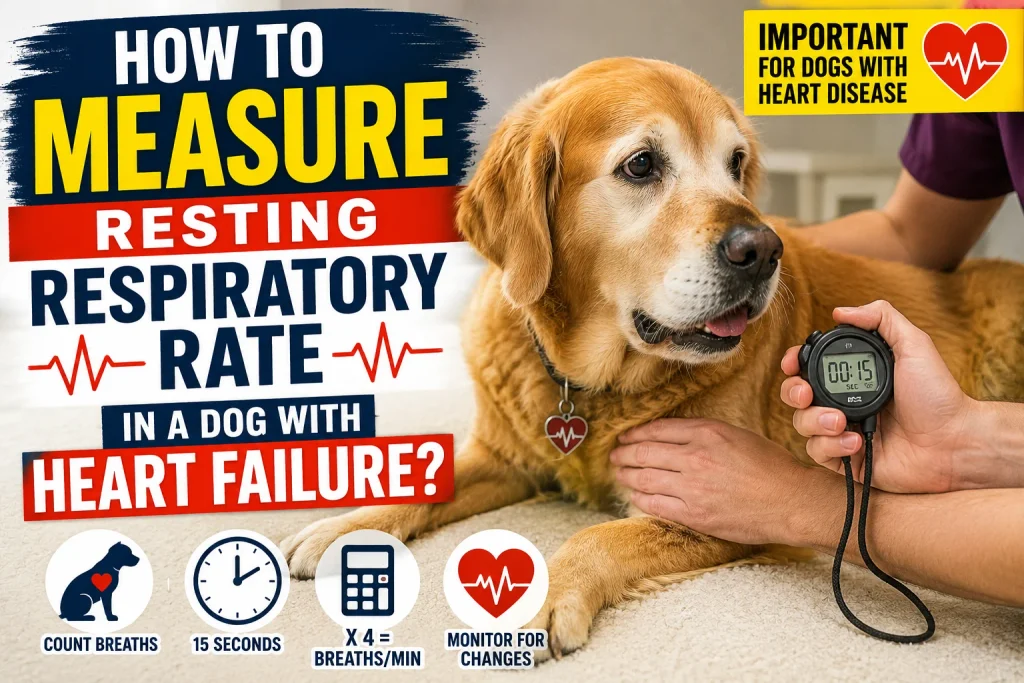
How to Measure Resting Respiratory Rate in a Dog with Heart Failure?. For those of you who have a precious pet with a diagnosis of heart failure, you probably feel like you’re already a major part of your pet’s health care team-administering medications, observing behaviour changes and now, here’s another one of the biggest (life saving!) tools in your dog’s arsenal to monitor with: the resting respiratory rate (RRR). This is a simple, non-invasive technique that can help you, the loving pet owner, recognize and alert the veterinarian to fluid accumulation in the lungs (pulmonary edema) before they even begin to show the more obvious signs. With your vigilant monitoring skills, you can help your vet make the adjustments they need and potentially avoid a very expensive and highly stressful emergency hospitalization visit-helping your dog maintain a good quality of life for as long as possible.
1. Why is Monitoring RRR So Crucial in Heart Failure?
In a dog that has heart failure, the heart cannot effectively pump blood. The blood backs up and fluid is often found in the lungs: this is referred to as congestive heart failure, and is commonly know as CHF. The most sensitive indicator of an early increase in fluid (fluid back-up) that any owners would pick up, is often the resting respiratory rate, or the RR rate sleeping.
Studies have proven that the RR rate, (taken when sleeping) is by far the most sensitive and most specific single diagnostic tool to confirm heart failure as the cause of respiratory signs in a dog that has respiratory signs. Therefore if you know your pet’s RRR you can intervene early before your dog becomes gravely ill. This is a great, cheap and effective tool which you are in control of.
2. What is a “Normal” Resting Respiratory Rate?
Knowing what the typical breathing rate of your dog is-their own individual baseline-is key to problem identification. Fortunately, you have some general parameters regarding an acceptable and unacceptable heart disease RRR:
- Acceptable target range: Most dogs whose heart failure is under good control should have a sleeping respiratory rate of under 30 bpm. Your dog might normally be anywhere from 15 to 25 bpm sleeping.
- Warning Threshold: Any resting/sleeping breathing rate of above 30 consistently, warrants increased suspicion of a potential problem causing fluid build up. Thirty is a decent rule of thumb but some studies say anything above 35-40 in resting dogs warrant an immediate call to the vet. You should follow the cardiologist’s rules.
| Respiratory Rate (breaths per minute) | Interpretation | Recommended Action |
|---|---|---|
| < 30 | Well-controlled; within normal range | Continue routine monitoring. |
| 30 – 40 | Mild Elevation; “Yellow Flag” | Re-check in 1-2 hours. If consistently elevated, call your veterinarian to discuss a possible medication adjustment. |
| > 40 | Significant Elevation; “Red Flag” | Contact your veterinarian or emergency clinic immediately, especially if accompanied by labored breathing, coughing, or restlessness. |
3. A Step-by-Step Guide How to Measure Resting Respiratory Rate in a Dog with Heart Failure?
It’s a simple procedure to obtain your dogs RRR. It’s important that it’s performed properly every time to gain accurate, reliable information that your vet will depend on.
1: Choose the Right Time and Place
- When the timing is right: the rate should be taken while the dog is calm or sleeping deeply. The respiratory rate during sleep is generally seen to be most accurate, so a sleeping respiratory rate should be counted in a cool quiet environment. The respiratory rate should not be measured after exercise, stress or if the room is hot which causes normal panting.
- Watch out for dream sleep: the dog should be in a deep sleep, with no apparent twitching, paddling etc, which can lead to a temporary increase in the respiration rate; it should be counted during deep, dreaming sleep.
2: Find the Right Position
- You should be able to see and feel your dog’s chest or belly rising (during inhalation) and falling (during exhalation).
3: Count the Breaths
- The Count: A full breath is when your chest goes up as you breathe in and then goes down as you exhale.
- When to time: Take out your watch and time exactly 30 seconds using your phone or watch. Take note of how many breaths you or your pet has and multiply the figure by 2 to get the amount of breaths per minute. The alternative is to time the amount of breaths there are per 60 seconds to find the amount breaths there are per minute and you don’t need to multiply at all which might seem easier.
- Record the figure: Keep an eye on your pet daily or, each day when you measure your pet’s breathes per minute, simply record the date and number of breaths per minute in a little notebook; a calendar works to record the data or free-to-use software that was designed to do just this is on many mobile phones.
Also Check: Signs of Wound Infection After Dog Mass Removal Surgery
4. Pro Tips and Common Mistakes to Avoid
- Consistency is crucial. Take the RRR at roughly the same time each day. This will ensure you gather the most reliable and comparable data.
- More important than just looking at a number. For example, if there’s a number increase that’s related to them being startled by an unexpected noise, this can indicate a spike, but doesn’t usually warrant any further medical action. Try measuring the number in an hour again. One particularly high number might be of concern if persistent.
- It’s useful to use technology. The Caralis application and several others free and recommended by most veterinarians for the phone can also monitor and chart the dog’s respiratory rate in order for you to show your veterinarian.
- Using smart collars. Although they may monitor respiration, evidence is still new to determine consistency in readings when compared to human assessment, although one survey showed decent consistency between different collars as well as significant inconsistency in certain cases. Therefore they should be used for what they are intended to, which would not be a diagnostic measure.
Frequently Asked Questions (FAQs)
What is the difference between a resting respiratory rate and a sleeping respiratory rate?
A resting respiratory rate (RRR) is measured when your dog is awake but calm and resting. A sleeping respiratory rate (SRR) is measured during deep, dreamless sleep. The SRR is typically a few breaths lower and is considered the most reliable indicator for detecting early heart failure.
My dog’s breathing rate is 32 breaths per minute. Is this an emergency?
Not necessarily an immediate emergency, but it is a “yellow flag.” First, recheck the rate in an hour. Ensure your dog is in a cool, quiet environment and deeply resting. If the rate remains above 30, it’s time to call your veterinarian for advice. They may instruct you to adjust medication or bring your dog in for a check-up.
Why is it more important to count when my dog is sleeping, not just resting?
When a dog is awake, even if resting, environmental factors like noises, smells, or mild stress can elevate their respiratory rate. During deep sleep, these external influences are minimized, giving you the most accurate and consistent baseline to measure for subtle changes caused by fluid in the lungs.
My dog breathes a lot faster when it’s hot. How does this affect my monitoring?
Panting is a normal cooling mechanism for dogs. Hot temperatures, especially in brachycephalic (flat-faced) breeds, will cause an elevated respiratory rate. You should never measure your dog’s RRR if they are panting or if the room is excessively warm. Always measure in a comfortable, thermo neutral environment.
I counted 30 breaths in 30 seconds. Is that 60 breaths per minute?
Yes, that is correct. Your counting is accurate; however, 60 breaths per minute is dangerously elevated. This is a “red flag” and a medical emergency. If you’ve confirmed the count, you should contact your emergency veterinarian immediately.
What should I do if I can’t see my dog’s chest moving because of thick fur?
If your dog has a thick, heavy coat, it can be difficult to see chest movements. In this case, gently place your hand on the side of their ribcage. You will be able to feel the rise and fall of each breath, which you can then count.
How long should I count for?
Most veterinarians recommend counting the number of breaths in 30 seconds and multiplying by two. You can also count for a full 60 seconds, which provides a direct per-minute rate. The full-minute count might be more accurate if your dog’s breathing rhythm is irregular.
Is there an app that can help me with this?
Yes. There are several free applications for smartphones, such as Cardalis, “SuivieChienCeva,” and others, specifically designed for monitoring your pet’s breathing rate. These apps often provide a helpful graph to visualize trends and can easily email the data to your vet.
My dog’s breathing rate is within the normal range, but they seem to be breathing with more effort. What should I do?
Even if the rate is normal, increased effort (laboured breathing, seeing the stomach muscles work hard, or breathing with an open mouth) is a sign of distress. This could indicate pleural effusion (fluid around the lungs) or another issue. You should contact your veterinarian immediately, as this is just as concerning as a high respiratory rate.
How often should I check my dog’s RRR if they have heart failure but no symptoms?
If your dog has stable, well-controlled heart failure, your veterinarian will typically recommend checking their RRR once a day. If your dog has asymptomatic heart disease (pre-heart failure) but is at high risk, monitoring might be weekly or bi-weekly. Always follow the specific schedule recommended by your veterinary cardiologist.
Conclusion
The act of taking your pet’s resting respiratory rate-and acting upon its findings-is an easy yet incredibly valuable tool in the at-home management of heart failure. You are able to identify early indications that fluid is accumulating so that you can provide early and prompt assistance to minimize the risk of hospitalization, prevent crisis events, and better the quality of life your pet can experience. Taking this moment each day-you are doing so much more than just taking a breath count-you are insuring quality of life for your dog and partnership with your vet.





One Comment