Why Does My Dog Keep Shaking Its Head?
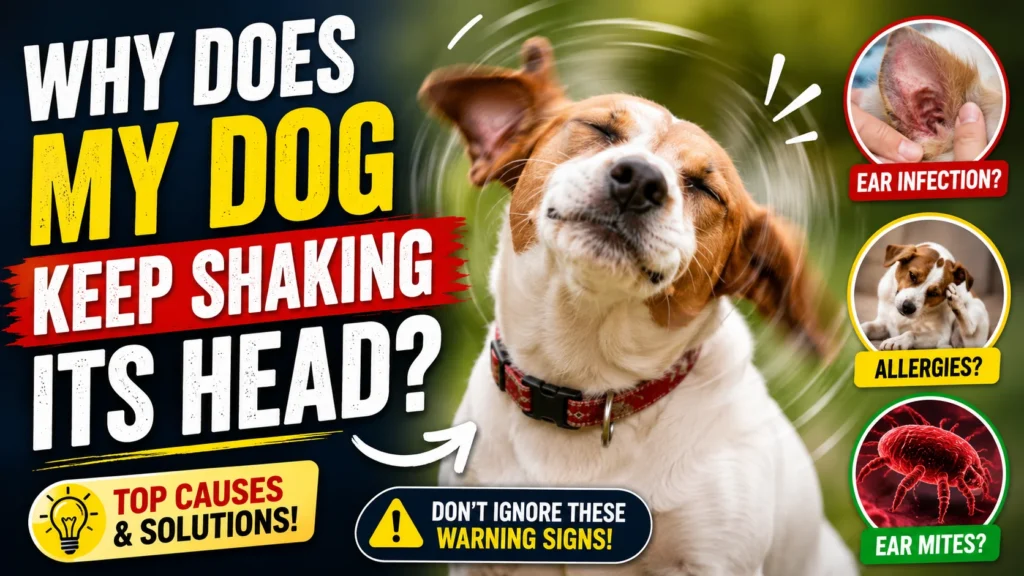
Why Does My Dog Keep Shaking Its Head? That persistent jingling of your dog’s collar tags in the middle of the night? It’s more than just a simple pet peeve. Even a simple doggy head shake can be innocent at times, but the more you see of it, especially if it’s severe or continuous, the more it becomes clear that something needs to be addressed. In my role as both veterinarian and animal behavior enthusiast (also known as pet care content writer), I’ll cover you: here are the obvious and less-obvious triggers to shake.
Why Does My Dog Keep Shaking Its Head?
Normal vs. Abnormal Head Shaking
Before anything else, you need to identify if a shake is a harmless one or a call for a helping paw. Of course, any dog will shake its head after swimming, taking a bath, scratching a mild itch or as a way to show excitement . That’s generally a short, one-off action and as soon as the cause is gone, so is the shaking.
The signs of head shaking that should worry you are: frequency : if the dog shakes its head a lot, or multiple times in an hour, or in hard, prolonged sessions intensity : if the shake is strong or harsh enough to have his ears flap on his head presence of other symptoms : if the ears have redness, swelling, discharge, bad smell, or if the dog scratches them or looks painful when you touch them If your dog exhibits any of these behaviors it is time to look into the problem and perhaps visit your vet.
The Most Common Culprit: Ear Issues
Ear Infection/Otitis externa: The number one reason for headshaking that your vet will find is otitis externa. This simply is the technical term for an outer ear canal infection typically this occurs from bacterial or yeast overgrowth.
How it will show: You will likely notice red, irritated ears with some discharge ranging in color from brown, black or yellow, which will most times be smelly, often with a unique odor, depending on the cause.
The ear can flinch upon being touched which may hurt, and you might also notice significant itching with yeast ear infections that can have a sweet smell and musky scent.
In these instances of infection there is typically a underlying cause: environmental or food allergies, hypothyroidism, breed of dog (such as those with long or floppy ears), etc.
1. Ear Infections (Otitis Externa)
By far the most common medical cause for your dog to shake their head is Otitis externa. This refers to inflammation of the external ear canal, commonly the result of over-growth of bacteria or yeast. Causes of Ear Infections How it presents: You’ll usually find red, inflammed ear with brown, yellow or black ear discharge and a foul odor with a characteristic smell.
The ear might flinch to touch and cause pain for your dog, especially with a yeast infection which tends to smell sweet and causes incredible itching and a characteristic musky aroma.
Other Causes There is rarely ever just an ear infection by itself; it’s more of a secondary sign to an existing condition. These may include: Environmental or food allergies hypothyroidism breed type floppy or long-eared dogs are often prone
2. Allergies
Yep, even canines get allergy sniffles. Regardless of if it is dust and dirt, mold, the air you might be trying to breathe in or something that’s inside your dog’s meals, your pet can endure systemic inflammation and one of the earliest places that manifests is in your dog’s ears. This inflammation develops an environment that’s ideal for bacterial ear infections to settle in. That’s why the shaking!
3. Foreign Bodies
If your dog loves to spend a lot of time outdoors, there’s always the risk that something as simple as a seed, a piece of foxtail or even small debris can get lodged inside their ear canal. The irritation caused by these objects is instant and extreme, and you’ll notice rapid and desperate head shaking. This is an emergency situation – those items can burrow even further and create extensive damage.
4. Ear Mites
A microscopic parasite which leads to extremely itchy ears. Puppies are most often affected by these tiny parasites, which cause intense scratching and dark-brown, crumbly discharge that resembles coffee grounds. Though it’s more common in young dogs, older pups can also be infected if exposed to another dog who has them.
5. Aural Hematoma: A Complication of Shaking
But the cruel irony is the shaking of the head is often the actual cause of a life-altering injury. As the ear flap or pinna wildly flutters back and forth, a small blood vessel within the ear can burst, creating a painful swelling that fills the ear with blood known as an aural hematoma. This ballooning ear is merely a consequence, not a precursor, and must be addressed by a vet before causing irreversible disfigurement.
Also Check: How Much Chicken Heart Can I Feed My Cat Weekly?
Beyond the Ear: Other Potential Causes
If your dog’s ears look clean and healthy, the cause of the head shaking may lie elsewhere.
1. Neurological Disorders
It may not always be actual head shaking, but an involuntary movement ortic. These can be indicative of neurological problems.
Idiopathic Head Tremors: These are periodic episodes of rhythmic shaking of the head (up and down or from side to side). This is often seen in Dobermans, Boxers and Bulldogs. These episodes are painless and the tremors will stop when the dog is distracted- a important clue for diagnosis.
Vestibular Disease: This is related to the inner ear and the balance system in a dog. The head will tilt and the dog may be unable to stand, will have rapid eye movements (nystagmus), and be disoriented or dizzy. These can be caused by infection of the inner ear or lesions in the brain, or it may be “idiopathic” (cause unknown), particularly in older dogs.
Cerebellar Hypoplasia: This is an congenital condition where the cerebellum (the area of the brain which controls motor skills) does not fully develop. This will often present as head bobbing and tremors that are worse when the dog is concentrating on something like eating.
What to Do If Your Dog Keeps Shaking Its Head
- Do not Wait. If your dog continuously shakes his head it usually means something is bothering him, so it is best to get it taken care of quickly because it will be easier, cheaper and less risky for future problems like hematomas.
- Check It Out (Carefully).
- Gently pull your dog’s ear flap and take a peep in to see if you notice anything red or unusual inside or If your dog pulls his head away from you and whines you must seek vet assistance and do not keep going.
- Visit Your veterinarian. Your vet will look inside the ear with an otoscope and may culture some of the debris for cytology to see if it is bacteria, yeast, or mites and then dispense medication to get rid of it.
- What Not to do is assume you know what the problem is and treat it on your own with or without over-the-counter or home remedies as it may only be detrimental if the eardrum is rupturing and will make things much worse.
Frequently Asked Questions (FAQs)
My dog keeps shaking his head and itching his ear, what’s wrong?
This is a classic sign of an ear infection, ear mites or an foreign object. The irritation within the ear canal causes the dog to both shake and scratch trying to get relief from the cause.
Should I take my dog to the vet for shaking his head?
Yes. If he is constantly or shaking violently or if his ear is red, smelly or contains discharge you must get him to a vet. A small problem caught early is always better than the risk of a nasty infection.
Can I put olive oil or vinegar in my dog’s ear if it has an ear infection?
NO! Although this is often advised as a home remedy for dog ear infections it is both useless and potentially dangerous. If your dog’s eardrum is punctured, putting anything other than vet-prescribed ear cleaner can cause them severe pain, make them deaf and even cause inner ear damage.
My dog keeps shaking his head but his ears are clean, why?
This would indicate a problem not originating in the ear. A neurological issue such as idiopathic head tremor, a dental problem, or even allergies ( causing the head to itch) can manifest itself as head shaking without obvious infection.
My dog is shaking his head after eating or drinking, why?
Most of the time this is just a normal reflex, but could be as serious as a dental problem or the inability to dislodge a bone chip from the mouth.
Are certain breeds more likely to suffer ear infections?
Yes, breeds with floppy ears which trap moisture such as the Cocker Spaniel and Basset Hound, and those with hairy ear canals such as Poodles and Schnauzers are at greater risk.
What is a head tremor?
This is the involuntary shaking of the head back and forth like a ‘yes or no’ head movement. It can be frightening, particularly if it seems prolonged, but is not painful and can often be stopped if food is offered or if the dog is distracted.
Do allergies cause head shaking?
Yes, a primary cause of ear infections is allergies. Allergic inflammation leads to the lining of the ear canal changing, thus allowing yeast and bacteria to flourish and cause discomfort, which the dog tries to resolve with head shaking.
My dog’s ear flap is swollen like a balloon, what’s wrong?
This condition is called an aural hematoma, a blood clot on the ear flap which results from trauma (usually the dog himself from all the head shaking) that causes a blood vessel to burst. This requires veterinary attention to drain the blood and treat the original cause of the head shaking.
How will the vet treat my dog’s ear infection?
The vet will first need to thoroughly clean out the ear canal, and prescribe ear drops that contain antibiotic, antifungal and anti-inflammatory properties for a set number of days.