How To Train A Rescue Dog To Trust You?
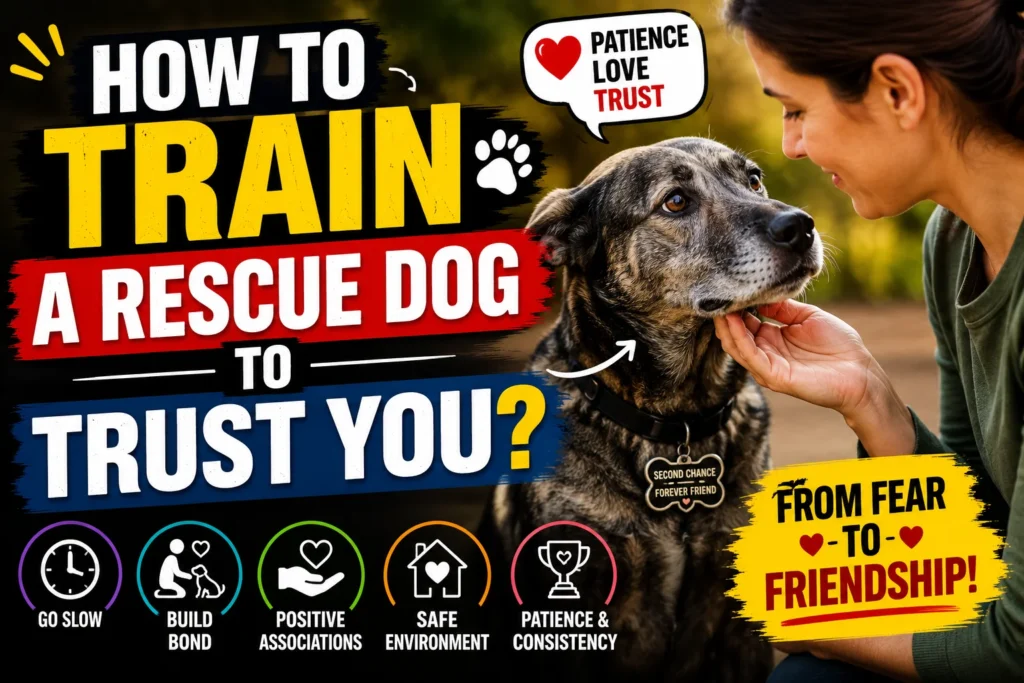
How To Train A Rescue Dog To Trust You? One of the greatest acts of love you can take part in is bringing a rescue dog into your home. But even if this adorable fluffy companion has stolen your heart, and you have the urge to love them instantaneously, this might not be how your new best friend feels about you! There can be all sorts of emotional damage neglect, trauma, or just the unfamiliar circumstances of a shelter which makes this creature distrust the new love you’re offering.
Fortunately, we’re here to show you how you can gain your new furry companion’s confidence. We’ll offer practical techniques that can turn a timid dog into a best friend, using veterinary insight.
How To Train A Rescue Dog To Trust You?
The 3-3-3 Rule: Understanding the Adjustment Period
Understand Your New Rescue Before You Train it (or any other animal). Before training even starts, you need to grasp what the rescue animal is experiencing. The “3-3-3” Rule For example, “3-3-3” refers to the general time frame for a rescue dog to adapt: First 3 Days The dog may feel terrified, anxious, and shut down or refuse to eat. He’ll hide and just “check out.”
Limit interaction and demands at this time. First 3 Weeks They’re getting to know the house and their new family and will start showing their personality. They may have some issues as they become more relaxed, so start creating a bond. First 3 Months They feel like they’re home. Your bond is growing, and you’re establishing a good relationship.
This entire time, it’s about being consistent with your rules and routine. Of course, this guideline is not set in stone, some dogs may take a long, long time to adapt. That’s okay too.
The First Contact: Setting the Stage for Trust
When you bring your new rescue dog into the home is perhaps the most important part. In all honesty the most important role is to appear un-threatening. Here is a step-by-step approach from both veterinary and shelter experience.
1. Adopt a Non-Threatening Posture
The key is never tower over a scared dog upon meeting it. Place your body beside and never in front of a dog and do not use harsh, direct eye contact; this is often seen as confrontational. Sit or crouch down so your body is lower.
Extend your hand palm up with your wrist turned slightly away so he may approach you for a sniff, and so that he does not feel he is being cornered. If he backed up, do not follow; let him approach you .
2. Master the “Treat Toss”
Don’t hand your dog treats toss them nearby. He’ll eat them there and you can start by tossing them just to the side, gradually throwing them closer and closer to where he’s lying to learn that being near you is associated with treats!
3. Establish a “Safe Space” and Routine
Create a space that the dog can go to and will be completely left alone such as a crate or bed in a corner, basically their sanctuary. Develop a routine feed him at the same time every day, take him out for his walk at the same time, send him to bed at the same time consistent routines decrease overall anxiety, and demonstrates that you are a stable leader in their life.
Also Check: How To Stop A Dog From Pulling On Leash?
Positive Reinforcement: The Language of Safety
1. Reward Confidence, Ignore Fear
Most of us love to comfort a scared dog with pats and loving murmurs but it does unfortunately tell them they’re right to be afraid. Stay calm about any fear they show, and positively reward any hint of their courage, relaxation or your ability to engage with them.
2. Identify High-Value Rewards
Deep anxiety won’t necessarily disappear with regular kibble. Figure out what your dog absolutely goes gaga over-boiled chicken, cheese, or a certain toy-and save this exclusively for training and trust-building. This forms the base of desensitization and counterconditioning: With each repetition of pairing a scary trigger (like your advancing on the dog) with a high-value reward, that scary trigger begins to reliably anticipate good things.
3. Allow the Dog to Choose Interaction
Lots of pets don’t like being handled. Don’t push. Allow the dog to come to you and make the approach. When you’re petting, begin on the dog’s chest and/or shoulder area.
This is a lot less imposing than putting your hand over the top of the head. Check your dog’s body language to ensure they appear relaxed (soft eyes, etc.) and that you should be the one to call off the petting.
Navigating the Environment
1. The “Slow and Steady” Walk
For a reactive or nervous dog, the outside world is often quite frightening. Aim for a “decompression walk” on quiet open spaces where they have a chance to sniff and explore. This isn’t about providing exercise, but is about providing a mentally stimulating, relaxing and rewarding bonding opportunity. Stick to a very short familiar route to start off.
2. Calming Aids
You might consider trying calming pheromone diffusers such as ADAPTIL, or a calming wrap. This may help decrease their baseline anxiety as you focus on behavioral training.
3. Advocate for Your Dog
If somebody approaches your while you are walking and asks you if it’s OK to pet your dog and you know that your dog isn’t going to like it if they do. Say NO!! It goes a very long way in demonstrating to your dog that you are its protector and by doing so and taking them away from an uncomfortable situation, no animal could place any greater trust in their guardian!
When to Seek Professional Help?
If you have been fortunate to have the aggression stem from dog’s fears (more significant bites, in seconds from a growl to bite, personality change and evidence of true pain) you would greatly benefit from a visit to your vet. Quite often, a dog that is suffering from a medical condition will be exhibiting problematic behavior, and your vet can help to alleviate medical conditions and may suggest medication that reduces a dog’s anxiety, making behavior modification easier. When more serious fears are present, consider seeking a behavior consultant.
Conclusion
It’s a process-not an instant fix. Teaching your rescue dog to trust you is all about patience, kindness and boundaries. More than teaching your dog sit and stay, you are teaching your dog that they are safe, loved and finally home. Celebrate the successes, but do not give up if things slip back. The relationship you will build with your rescued dog is the most meaningful you may ever have.
Frequently Asked Questions (FAQs)
How long does it take for a rescue dog to trust me?
The “3-3-3” rule of thumb suggests about three months before a dog starts to truly feel safe and settled, although there’s no hard-and-fast timeline. Some dogs take a few days to adapt, others may take well over a year. The dog’s background, personality, and your commitment are all significant factors.
What is the “3-3-3” rule for rescue dogs?
A good rule to follow in the adjustment process for your new rescue dog is the “3-3-3” rule: First three days your dog will be decompressing from the first home. First three weeks your dog will become accustomed to your household and routine. First three months your dog will begin to feel secure and part of the family.
Is it alright for a nervous dog to sleep on my bed?
Your dog doesn’t necessarily need to be physically in your bed with you, but you want to ensure they’re sleeping in the same room. This will help them feel a sense of security, and they will be aware of your presence in the room to comfort them and reassure them.
What should I do if my rescue dog has “accidents” in the house?
Most rescues will have an accident or two at some point; patience is the key here. Continue to take your dog out for lots of potty breaks this is especially important after they have eaten, played, or woken up. Make sure you are using enzymatic cleaners to properly clean all accidents to prevent odors. You do not want to scold your dog for having an accident as that will make him scared of you.
How do I introduce a new rescue dog to my existing pets?
I like to introduce a new rescue in a neutral environment somewhere outside the home like a park. On leashes for both, allow each dog to initiate when to approach the other. Monitor both dog’s body language very closely.
Is it okay to pet a scared dog on the head?
Typically not. Approaching a dog’s head direct head on can seem confrontational and scary. For dogs who are already scared, it’s generally best to avoid direct eye contact, approaching them sideways rather than face-to-face. Instead of putting your hands over their head, try petting them on the chest or their shoulders which are usually more relaxed and accepting of petting.
How to get my rescue to stop being afraid of going for a walk?
Your first walks with the dog should be brief and occur in calm environments with fewer people and fewer distractions. Let your dog dictate the pace don’t drag them, pull them forward, or push them along; instead, allow them to explore and sniff at their leisure. Using lots of positive reinforcement, treats, and encouragement will help build positive experiences related to walks.
What do I do if my dog won’t take treats?
If your dog isn’t able to focus enough to eat treats, it is likely “over-threshold” (overwhelmed with stress, too to learn) and you will need to increase distance to increase their comfort level with the trigger. If your dog isn’t interested in the treats you are offering for some other reason (i.e. Fullness, particular dislikes) or even just doesn’t value the treats, offer him a more exciting option like pieces of chicken, hot dogs, or a game/toy he finds motivating.
What is “hand feeding” and why is it recommended?
Hand feeding is the act of providing all the dog’s meals from your hand rather than from a bowl. This simple yet powerful gesture of placing all nourishment directly from your hand into the dog’s mouth helps forge a bond, as it demonstrates to the dog that you are the provider of this vital resource, which can be particularly helpful for those who have had a history of food disputes.
Can a rescue dog bond with a new owner?
Yes, yes. It’s all about building trust! Most of the time, over time and with love, patience and commitment, the relationship you can develop with a rescue dog is absolutely one of devotion.