Signs of Separation Anxiety in Newly Adopted Puppies
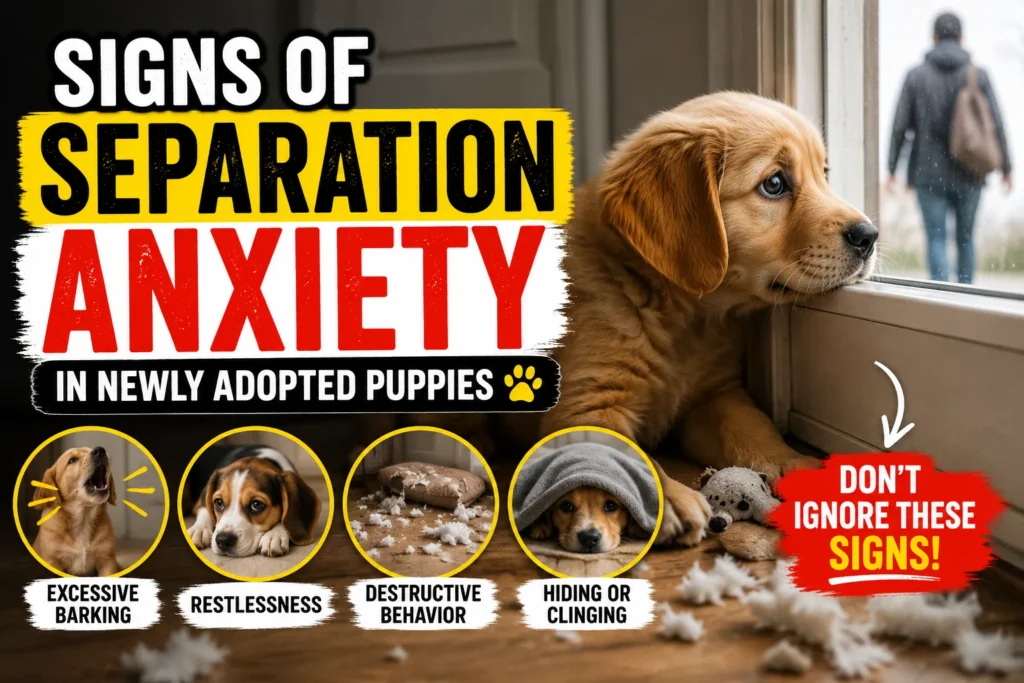
The crying, destruction, and panic that follow aren’t just bad behavior they may be signs of separation anxiety in newly adopted puppies.Signs of Separation Anxiety in Newly Adopted Puppies.Bringing a new puppy home is like welcoming a tiny four legged tornado of joy. The first few weeks are usually a blur of potty training, chewed shoelaces, and puppy breath. For others, the end of the “honeymoon period” comes suddenly when they must leave the puppy alone.
Why Newly Adopted Puppies are Most Vulnerable
Puppies that have been adopted will likely have gone through traumatic experiences. They have lost their littermates their mother and their familiar environment. Even if they came from a loving shelter, the change is jarring. This “lact of permanence” triggers a primal fear Will my new human leave forever too?
From a statistical standpoint separation anxiety is prevalent in puppies aged between 12 weeks and 8 months old that have been rehomed. It is important to understand this background information prior to calling your puppy “naughty.”
7 Signs of Signs of Separation Anxiety in Newly Adopted Puppies
Knowing how to tell the difference between puppy naughty behavior and anxiety is very important. The bored puppy chewing on the table leg. An anxious puppy hyperventilates, drools and tries to dig through a door to find you.
Here are the specific signs to watch for which usually appear within 15 to 30 minutes of your departure.
1. Vocalization: The Distress Call
The dog will make a distinctive noise. While it’s perfectly acceptable to hear a quick “bye-bye” noise, the puppy that’s suffering from anxiety makes a high pitched barking or whining noise. It is not a greeting but an expression of panic.
2. Destructive “Escape” Behavior
This isn’t chewing for fun. An anxious puppy will focus destruction on exit points door frames, window sills and the edges of their crate. You might find scratched paint, bent crate wires or blood on their paws from trying to escape. This is dangerous they are willing to hurt themselves to get to you.
3. Salivation and Drooling
Some breeds drool anxiety drool is different. You might see excess rope-like saliva drooling on the ground close to the front door or in the crate itself. There may be pee spots or loose poop even if the puppy had just gone potty. The anxiety takes priority over bladder control.
4. Pacing and Hypervigilance
Watch your puppy via a pet camera. An anxious pup won’t settle. They will walk in repetitive, tight circles or follow a specific pattern door to window or window to door for 30 minutes straight. They look “stuck” in a loop.
5. Not Eating When Left Alone
The usual puppy eats everything from the stuffed Kong with peanut butter. The anxious puppy does not eat the high value treat when you are away but immediately eats once you return.
6. “Velcro Dog” Behavior with a Dark Twist
Most puppies follow you to the bathroom. That’s normal. But an anxious puppy panics when you simply stand up to get water. The “twist” is that this clinginess is followed by punishing you when you return jumping, nipping and frantic zoomies that seem aggressive but are actually relief.
7. Self-Injury (The Emergency Sign)
This is the most severe sign. Excessive licking or chewing of their own tail, paws or flanks until the skin is raw or bleeding. If you see this upon your return you need immediate veterinary intervention.
Also Check: How to Heal a Torn Dog Claw at Home?
The “Arrival vs. Departure” Test
In order to verify your assumption you will need to watch the puppy while following your departure ritual.
- Behavior of an ordinary puppy: In distress at first but calms down after 10 minutes.
- Behavior of a distressed puppy: Shaking, panting or hiding even before you make an effort to open the door.
How Your Vet Handles Separation Anxiety (Don’t Be Punishing!)
When your dog shows these signs don’t scold your puppy. Punishment only makes things worse. This is what should be done instead:
- Check for Health Problems First: Make an appointment with your veterinarian first to eliminate UTIs or digestive problems leading to accidents.
- Desensitization: Start by going out for a second then five seconds then 30 seconds. Repeat this process 50 times daily.
- Environmental Management: Use adaptil pheromone diffusers near their bed.
- Medication: For severe cases , SSRIs like fluoxetine are safe and effective. This is not “drugging” your dog it is relieving a panic disorder.
A Note on Crate Training
Never force an anxious puppy into a crate. For a pup with confinement anxiety, the crate is a torture chamber. Use a puppy proofed room or a playpen instead. The goal is safety not imprisonment.
When Will It Stop?
With consistency, most newly adopted puppies show improvement in 4 to 6 weeks. However, if your puppy is still destroying property or hurting themselves after 2 months of training seek a veterinary behaviorist.
Frequently Asked Questions (FAQs)
Is separation anxiety possible in a puppy that is 10 weeks old?
It may very well be since there is a difference between crying and separation anxiety.True separation anxiety requires object permanence which develops around 12-16 weeks. However, early trauma can accelerate this.
How long should I wait before leaving my new puppy alone?
For the first 3 days, do not leave them at all. For weeks 1-2, leave for only 5-15 minutes. By week 4, you can work up to 2 hours. Puppies under 4 months should not be left alone for more than 2-3 hours anyway.
Will getting a second dog cure my puppy’s separation anxiety?
Rarely. True separation anxiety is about you not the company of other dogs. In fact an anxious pup may teach the second dog bad habits. However, this should only be tried if there is light anxiety and the other dog is an adult.
My puppy only damages things when I leave. Is that revenge?
No. Dogs do not feel revenge. Destruction is a displacement behavior a physical outlet for a chemical panic attack in the brain.
What is the “5-minute rule” after returning home?
When you return, ignore your puppy for 5 minutes until they are completely calm. No eye contact, no talking or no petting. This teaches them that departures and arrivals are no big deal reducing the anxiety peak.
Are certain breeds more prone to separation anxiety?
Yes. Velcro breeds like Labrador Retrievers, Border Collies, German Shepherds and Vizslas have higher rates. Rescues with unknown backgrounds also have elevated risk.
Does CBD oil work for puppy separation anxiety?
There is no peer reviewed veterinary evidence supporting CBD for anxiety in puppies. Some owners report mild results but dosing is unregulated. Stick to vet prescribed adaptil or trazodone for safety.
Why does my puppy poop in the house only when I’m gone?
This is a physiological panic response not a housetraining failure. Stress hormones trigger the gastrocolic reflex. If the accidents stop when you are home, it is 99% anxiety-related.
Can I use an anxiety vest or ThunderShirt on a young puppy?
Yes, for puppies over 8 weeks and 5 lbs. These provide gentle, constant pressure which lowers cortisol. However, they are a management tool, not a cure.Desensitization training is required at all costs.
When do you absolutely have to give medication to your puppy?
Right away if he shows symptoms of self-harm. Additionally, if the puppy stops eating due to stress for more than 24 hours or experiences a fit of anxiety resembling a seizure.
Final Verdict
Bringing home a puppy is one way of showing your love. Identifying the signs of separation anxiety will help you replace fear with security. Keep in mind that your puppy is not making things difficult for you – he just finds it difficult.