
The Ultimate Guide to Protecting Your Dog’s Paws from Winter Ice and Salt Burn
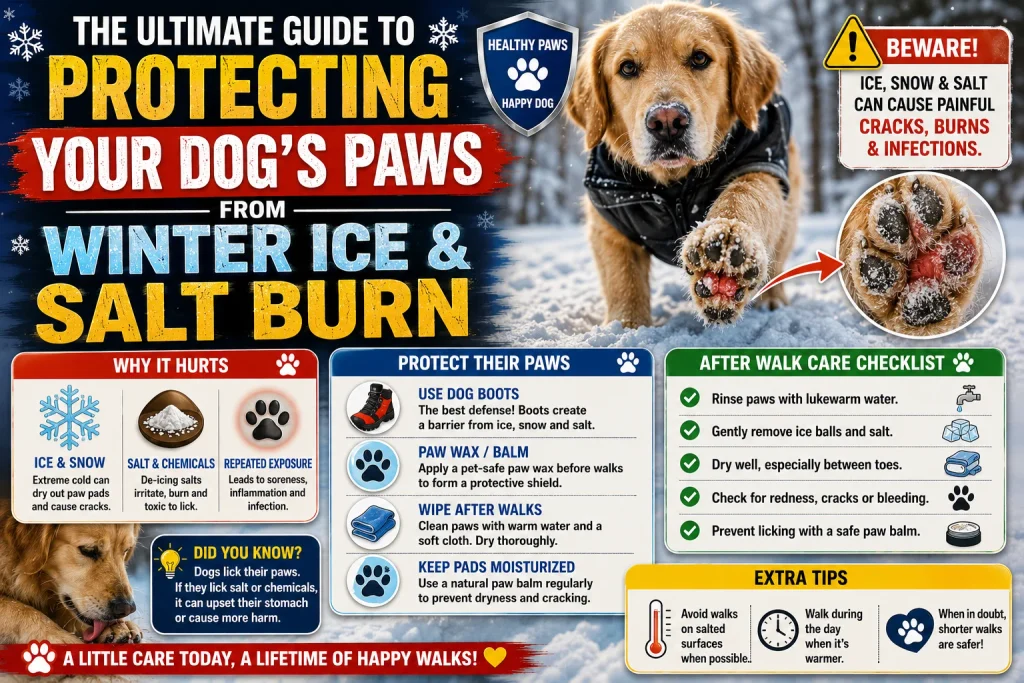
The Ultimate Guide to Protecting Your Dog’s Paws from Winter Ice and Salt Burn. Sure, a winter wonderland walk can be lovely and magical for you, but the experience might be agonizing for Fido. The salt and chemicals we slather on our walkways to prevent slippery conditions can lead to red, dry, chapped and even burned paw pads for your canine. Because I’m both a vet and a dog parent, I’m going to share with you my tried and true tips to prepare and care for those paws to ensure your dog has comfortable, pain-free winter romp sessions.
Why Winter Is Dangerous for Dog Paws
Although your dog’s paws are resilient, that doesn’t mean that they are damage-proof. Several common winter hazards can severely injure your dog’s paw pads:
- Chemical Burns From Ice Melt: Ordinary road salt or any kind of chemical ice melt chemical produces severe chemical burns on the paw pads. If your dog walks on sidewalks or roads covered in the product, the chemicals come into direct contact with the soft tissue of the paw producing reddened, irritated, cracked paw pads that can painful. Dr. Gene Pavlovsky the University of Illinois Veterinary Medicine South Clinic said that chemical ice melt products have compounds like “magnesium, potassium, calcium or sodium salts which can be highly irritating”.
- Ice Ball Accumulation: If Snow and ice get packed into your dog’s paw pads, they can create a sphere of snow that then solidifies creating ice balls; they make it extremely uncomfortable and painful for your dog and they may begin to lift their paws or even cease to move.
- Risk Of Frostbite: Animals, like people can acquire frost bite on their paw pads particularly non arctic dog breeds. Cold environments can really take their toll on tissue at freeezing temperatures.
- Poisoning from Ingestion: It has proven detrimental for dogs to be given products that are safe for animal use to clear walkways, because they can acquire poisoning from licking these toxic compounds from their paw pads while at home. These effects include stomach distress, sickness, sickness, throwing up, sickness diarrhea and depending on the ingredient may not do anything to your dog unless he is an animal which shows signs that, even though it is safe it cannot deal with said ingredient.
The Ultimate Winter Paw Protection Strategy
Dog Booties: The Gold Standard
Dog booties are your ultimate winter safety solution. They form a barrier between paws and salt, ice, and harsh cold, and offer traction on icy patches. Here’s what to look for when buying winter boots for dogs. What your winter dog boots should have Based on pet product pros, the right winter boots feature: waterproof material to keep paw dry insulation (fleece, lambswool) non-slip soles to grip on ice straps to keep the boots snug higher cut to stop snow from filling them
Choosing the Right Size:
Measure from their heel to the nail on your dogs longest toe. The fit of the boot should be snuug, not too tight and in no way restrict blood flow.
Training Your Dog to Wear Booties:
A lot of dogs hate boots at first! Here is one surefire method that works:
- First, put just one boot on your dog.
- Let your dog walk around the house with the one boot on.
- Use treats and praise for positive reinforcement.
- Slowly add more boots over the course of a couple of days.
- Start with a couple of minutes of wearing time and slowly lengthen.
- Be patient. Most dogs will adapt and even associate boots with treat time! boots with fun outdoor adventures.
An Essential Second Line of Defense
Paw balm protects, moisturizes, and heals paw pads against salt, chemicals, and moisture. It’s also a good alternative for dogs reluctant to wear boots or can be worn on the paw pads in conjunction with boots for extra protection.
What to Look for in a Good Paw Balm:
You want to see characteristics of those listed above, such as:
All-natural ingredients, like coconut oil, beeswax, hemp seed oil, or shea butter
Lick-safe ingredients in the form of food-grade materials
Intense moisturization to treat dry or cracked paws
Non-greasy, fast-absorbing formula
How to Use Paw Balm:
The American Kennel Club suggests applying the paw balm before walks for prevention, and applying them after the walks for healing and moisturizing properties.
DIY Paw Balm:
If you prefer to make your own at home, an easy paw balm recipe at home uses ingredients such as:
- 70g organic coconut oil
- 10g beeswax
- 1 tbsp almond oil
- 2 tablespoons of dried chamomile flowers
Melt them down, strain plant material (if using plant material at that stage)aterial, and store in a small jar. This all-natural mixture will protect your dog’s paws without chemical concerns.
Post Walk Paw Care Routine
Your post-walk cleanup protocol is just as essential as preparation. Follow these steps for each walk with your dog:
- Rinse thoroughly After wiping with a towel or rinsing paw pads with cool or lukewarm water remove harmful salt and other chemicals from your dog’s feet a cold-water rinse won’t do, and hot water can lead to burns.
- Dry fully Dry off all parts of the paw pads with a towel, especially between each toe pad (where moisture and bacteria can lead to infection) with a towel.
- Examine thoroughly Do a thorough check for cuts, bleeding or cracked paw pads, and red or infected areas. Your veterinarian will be able to help if you see anything suspicious.
- Apply balm Put on a moisturizing paw balm to cushion and protect his pads.
4. Grooming and Trimming
Groom your dog The long hair between your dog’s paw pads attract all the snow and ice. It can be a magnet for small pieces of snow that accumulate between the paw pad to form ice balls, that cause your dog to be uncomfortable to walks. Long hair between the pad of the foot of dog attract snow.
This may have a negative impact your dog to walk without difficulty.
Tip: Check for ice between the paw pads, if it seems that your dog is stepping differently, chewing or biting the foot a lot when they come home. The easiest way to remove is to pour the lukewarm water between the pads and carefully try not melt it with your hands or gently lift it apart.
Common Winter Paw Problems and When to See a Vet
Watch for these warning signs that indicate paw problems:
- Excessive licking or chewing at paws
- Limping or reluctance to walk
- Red, cracked, or bleeding paw pads
- Whining or crying when walking
- Blisters or raw spots
When to Contact Your Veterinarian:
- Deep cuts that won’t stop bleeding
- Signs of frostbite (pale or gray skin that doesn’t return to normal color)
- Severe limping or inability to bear weight
- Persistent licking despite cleaning and protection
Also Check: How to Change a Wet Paw Bandage on a Dog Safely at Home 2026
Pet-Safe Ice Melt Options for Your Property
Since you can’t control what your city or neighbors use, do what you can control. Buy pet-friendly ice melt products for use in your own yard to ensure your dog is safe at home.
Vet-Approved Products that are Pet Friendly:
Your veterinarian recommends the following ice melt products be safer for your pets:
Safe Paw Ice Melt: This brand is completely salt and chloride free and approved by veterinarians to be environmentally friendly as well as pet safe.
Morton Safe-T-Pet: Salt-free and created by veterinarians for the health of humans, pets, and plants.
Pestell Paw Thaw: This brand is bio degradable and economical.
Natural Ways to Treat Ice:
You can also buy traction enhancer with grit, using it sand or kitty litter, but they are less of a mess (after they are gone). Sugar beet/ beet juice based products should be less harmful than most chemicals ice melters if advertised pet safe.
Indoor Exercise Alternatives
Considerations for Bad Weather: If the conditions are particularly severe, your dog will be much safer indoors. Some fun alternatives to playing outside can include:
- Puzzle games.
- Training exercises (this is both physically and mentally taxing on your dog).
- Hide-and-seek with toys or treats.
- Building stairclimbs (again, this needs to consider your dog’s breed and age).
Frequently Asked Questions (FAQs)
How can I tell if my dog has paw burn from salt?
Signs include excessive licking or chewing at paws, limping, redness between paw pads, cracked or bleeding skin, and reluctance to walk. Your dog may also lift their paws frequently or whine while walking.
Are dog booties really necessary for winter walks?
For most dogs, yes, especially in urban areas with salted sidewalks. Dog booties provide complete protection against salt, ice, and chemicals while also offering insulation from extreme cold and better traction on slippery surfaces. Some winter-hardy breeds may tolerate short walks without them, but prolonged exposure requires protection.
Can I use Vaseline or human lotion on my dog’s paws?
No. Vaseline and human lotions often contain mineral oil and chemicals that can be harmful to dogs. Use products specifically formulated for canine paws that are lick-safe and made with natural, pet-safe ingredients.
What should I do if my dog has cracks or bleeding on their paws?
Clean the area gently with lukewarm water, apply a pet-safe antibacterial ointment if appropriate, and contact your veterinarian. Deep cuts may require professional treatment and potentially antibiotics to prevent infection.
Is rock salt really that dangerous for dogs?
Yes, traditional rock salt and chemical de-icers can cause chemical burns on paw pads and are toxic if ingested. Ingestion can lead to vomiting, diarrhea, dehydration, and in severe cases, seizures or kidney failure. Always use pet-safe alternatives on your property.
How often should I apply paw balm in winter?
Apply before every walk to create a protective barrier and after each walk to soothe and moisturize. Reapply during long walks if needed. For dogs with sensitive paws, apply multiple times daily.
Can my dog get frostbite on their paws?
Yes, dogs can develop frostbite on their paws, especially breeds not adapted to cold weather, small dogs, short-haired breeds, and senior dogs. Frostbite symptoms include pale or gray skin that doesn’t return to normal colour. If you suspect frostbite, contact your veterinarian immediately.
What’s the safest ice melt to use around dogs?
Veterinarians recommend salt-free, chloride-free products like Safe Paw Ice Melt, Morton Safe-T-Pet, or Pestell Paw Thaw. These products are formulated specifically to be safer for pets, plants, and the environment while still effectively melting ice.
My dog licks their paws constantly after walks what should I do?
This likely indicates salt or chemical irritation. Immediately rinse your dog’s paws with lukewarm water, dry thoroughly, and apply a soothing paw balm. If the licking continues, your dog may have a burn or injury requiring veterinary attention. Monitor for signs of toxicity like vomiting or diarrhea.
Conclusion
Paw protection is a layered effort your dog depends on during the snowy and icy season. With this in mind, the ideal defense against winter-ice and salt burns is a blend of boots, balm, adequate post-walk care, and pet safe de-icing products on your walkways/driveway. Come ready, be diligent, and watch always for signs of distress.
Remember: if you can’t leave your bare hand down on your sidewalk for seven seconds it’s to hot/cold for your dogs paws. These vet endorsed methods can help keep your pal healthy and comfortable through winter!




2 Comments