How to Collect a Clean Urine Sample from a Female Dog at Home?
How to Collect a Clean Urine Sample from a Female Dog at Home?. It may feel like a challenge, but learning how to collect a urine sample from a female dog is an important skill for every pet owner. A urine sample is”liquid gold” for your veterinarian and can tell them so many things about your dog’s well-being from simple UTIs, to early stages of diabetes, kidney disease and beyond. Here you will have the knowledge an expertise you need to obtain a clear, free-catch sample yourself at home.
Understanding Why Your Vet Needs a Sample
Let’s examine the “why” behind what we’re about to go into the “how.” Why does our vet want a urine sample from you and your companion? Reasons run the gamut from looking for sugar (diabetes monitoring), to crystals that can form stones, blood, or even evidence of an infection.
If your vet needs a sample they would like you to obtain what they call a“free catch”or a“mid stream”sample.
This is ideal for you to obtain the samples at home; It is the only 100% stress free/non invasive collection method for your pet (compared to the clinic options of cystocentis or catheterization.
Step-by-Step: How to Collect a Clean Urine Sample from a Female Dog at Home?
Urine collecting can be slightly complicated from a female dog because they just bend way down. Here is how to collect from your female dog.
1. Gather Your Supplies: The Right Tools Make All the Difference
Hygiene is also essential for clean collection. Here’s what you’ll require:
A clean container: your vet might give you a sterile collection cup. Otherwise any shallow wide dish, such as a fresh or impeccably clean aluminum pie dish would be most suitable for the female dog and any shallow, clean margarine tub for her mate.
A means of collection (preferred): to prevent your dog from becoming frightened by you stooping over her, some people will tape a fresh soup ladle or to the end of a long pole or garden stick- this really aids collection in particularly small and low squatters ( female dog ). Water tight container with a sealable lid, e.g. A sterile specimen cup, any small clean jam/jar with an airtight lid for transportation.
Disposable gloves and a ziplock bag or something similar; to transport the container in.
2. Choose the Best Time for Collection
Timing is also important for accuracy. A sample taken early in the morning is the ideal time. Your dogs’s bladder will be as full as possible after not being emptied over night, and will contain concentrated urine.
3. The “Stealth” Collection Technique
Then comes the crucial part. You need to remain as nonchalant and unthreatening as possible, because many dogs will stop urinating once they feel you hovering.
On the Leash: Leash your dog up and bring him to his regular elimination area.
Wait It Out: Don’t do anything at all. Wait until he’s ready to squat. Do not go over to your dog until he actually goes.
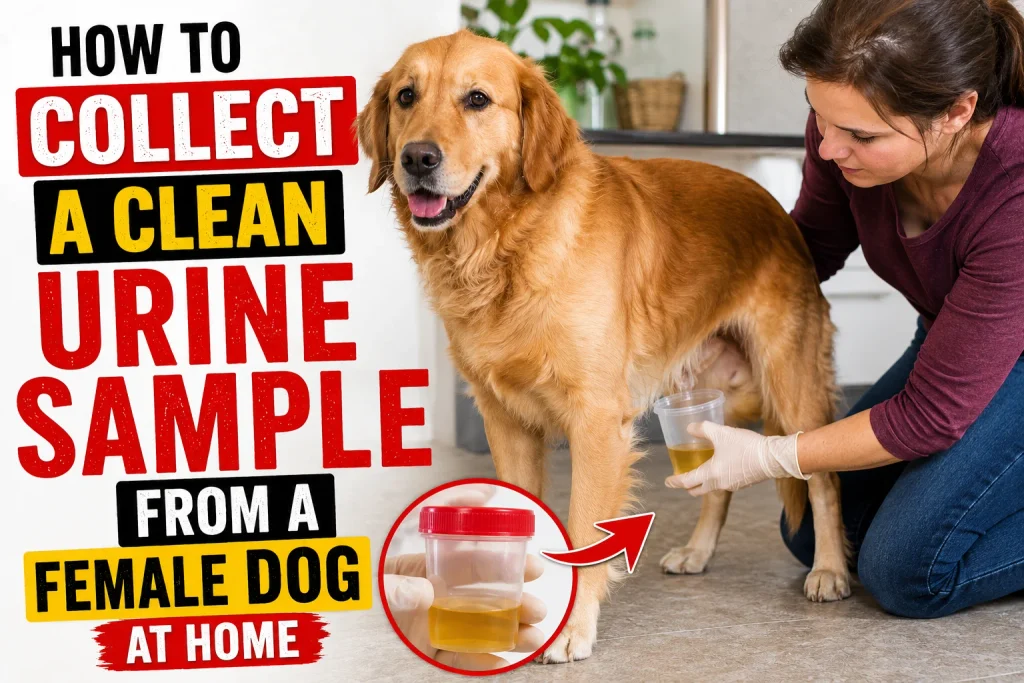
Catching It in the Act: Just as he’s beginning, the first burst of liquid has gone and as you do not want to capture contamination around the end of your dog’s urethra and all of his hair follicles, gently approach and scoop him in your container or ladle.
Stay Relaxed: When he’s startled, stops urinating and walks away just go wait and try it at the next round of eliminating.
Also Check: Can You Use Dilute Apple Cider Vinegar to Treat Cat Hot Spots?
4. Proper Storage and Handling
Now that you have the sample, don’t mess with it (and contaminate the results). Seal and Label: Replace the lid onto the collection container tightly or pour urine out of a pie plate and into a lidded container( make sure its leak proof). Put you dogs name and the date you collected the sample on it.
Cool It Down: Do not leave urine sitting at room temperature for more than 1-2 hours.
You must refrigerate the sample if you are not bringing it into the vet at that time. Put it in a lidded container, then place that into a Ziploc bag and place in refrigerator. DO NOT put your sample into the freezer! Make sure to inform you vet that the sample was put in the refrigerator and at what time.
FAQs: Frequently Asked Questions
Can I use any container from home for the sample?
Yes, but it must be thoroughly washed with hot, soapy water and dried completely before use to avoid contamination. Avoid containers that have held chemicals or soaps. A shallow dish like a pie plate is best for female dogs who squat.
How much urine does the vet need?
Not much! Believe it or not, a teaspoon (about 5 milliliters) is generally enough to run a complete urinalysis. Don’t worry if you only collect a small amount.
My dog stops peeing when I get near her. What should I do?
This is a common challenge. Try a “stealth” approach by using a ladle taped to a long stick so you don’t have to bend over her. You can also try collecting the urine from the ground immediately after she finishes, using a syringe to suck it up (though this sample is more likely to be contaminated).
Why does the sample need to be so fresh?
Chemical changes start to occur in urine shortly after it leaves the body. For instance, crystals can form, and bacteria can multiply, skewing the results. For the most accurate diagnosis, the sample should be tested within 30 minutes to 2 hours of collection. Refrigeration slows this process down.
How long can the urine sample be stored in the fridge?
If you cannot get the sample to the vet immediately, you can store it in the refrigerator for up to 24 hours. However, it is always best to get it to the clinic as soon as possible. Do not freeze it, as this will destroy the cells and crystals the vet needs to examine.
Is a “free-catch” sample sterile?
No, a free-catch sample is not sterile because it can collect bacteria from the urethra and genital area as the urine passes. This is why a mid-stream sample is recommended, as the initial urine clears away some of that contamination.
When might my vet prefer a sterile sample?
If your vet suspects a complex or persistent urinary tract infection, they may prefer a cystocentesis sample. This involves collecting urine directly from the bladder with a sterile needle at the clinic, ensuring no contamination from the lower urinary tract.
What if my dog has a long coat around her vulva?
Hair can easily contaminate a sample. If possible, trim the hair around your dog’s vulva to help keep the collection area cleaner and reduce the chance of hair falling into the container.
Is it okay to let the container touch the ground?
No, you should try to avoid letting the container touch the grass or ground. This is a major source of contamination with dirt, bacteria, and debris. Aim to slide it just under the urine stream.
What if I can’t get a sample at all?
Don’t panic! Some dogs are simply too private. If you are unable to collect a sample at home after a couple of tries, contact your veterinarian. They are experienced in this and can often obtain a sample via other methods like cystocentesis or catheterization at the clinic.