
How to Check if Your Dog is Dehydrated 2026?
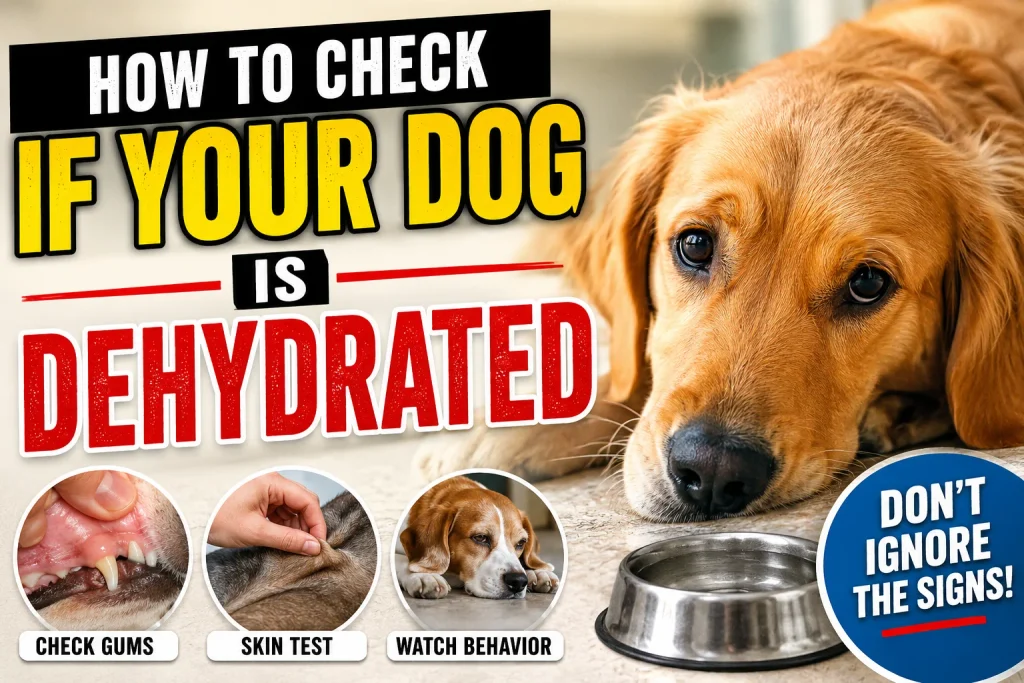
How to Check if Your Dog is Dehydrated?. One of the MOST frequent question I’m asked as a veterinarian by a nervous pet owner is this: “How can I tell if my dog is dehydrated?” In animals of any species, it can become a critical and potentially fatal problem very fast. Thankfully, there is ONE easy thing that you can check on your own dog that works reliably! It is the skin tent test!.
What is the Skin Tent Test and Why Does It Work?
The skin tent test, also known as the skin turgor test or skin pinch test, is a quick, non-invasive way to assess your dog’s hydration status. The test measures your dog’s skin elasticity a direct indicator of hydration levels .
Here’s why it works: In your dog’s skin, there are fibers called collagen and elastin that make skin elastic and supple. When your dog is hydrated enough, those fibers are not surrounded by very much fluid and can spring back quickly when you grab the skin and tug. When your dog has lost a mere five percent of its body fluid, the skin loses its fluid too. When its not there anymore, the skin’s elasticity is reduced;it does not spring back quickly (or at all).
It has been proven that this is a useful test, A study in the American Journal of Veterinary Research demonstrated that a skin tent test can identify mild dehydratation in dogs just 15 minutes after a bout of exercise even while their weight decreased by 0.83%.
How to Check if Your Dog is Dehydrated?: Step-by-Step
1: Gather Your Supplies
- A calm, comfortable dog
- A quiet environment free from distractions
- Optional: A timer (though a mental count works fine)
- Optional: Treats for positive reinforcement
2: Locate the Ideal Testing Spot
The most reliable location for the skin tent test is the loose skin on your dog’s back, between the shoulder blades (dorsal scapulae area) . You can also test the skin on the back of the neck (scruff) .
In pets that stiffen at the time of a shoulder pinch or dislike the procedure, veterinary providers opt for the below alternative places:
- Skin over the thoracic vertebrae (mid-back)
- On the lateral scapula (shoulder blade side)
- Between the ears on the cranium
3: Perform the Test
- Gently grasp a fold of loose skin between your thumb and forefinger
- Lift the skin slightly just enough to create a “tent”
- Release the skin and carefully observe how quickly it returns to its original position
- Time the return count the seconds it takes for the skin to flatten completely
4: Interpret the Results
Normal (Well-Hydrated): The skin should snap back immediately or within 1-2 seconds . The return should be quick and elastic.
Mild to Moderate Dehydration: The skin takes 2-3 seconds to return to normal. The “tent” remains visible for a moment before slowly settling.
Severe Dehydration: The skin takes longer than 3 seconds to return to its normal position or remains tented . If the skin takes more than 5 seconds to return, this indicates significant dehydration requiring immediate veterinary attention.
What the Skin Tent Test Results Really Mean
You must know how your dog’s health has been impacted by the skin tent test. This test must not be your only factor in determine your dog’s condition.
Normal Results (Skin Springs Back Quickly)
If the skin retracts in 1-2 seconds then, congratulate yourself! Your dog is probably in good shape. Don’t go relax just yet, because other dehydration symptoms to watch out for:
Tent Results (Skin Returns Slowly)
If your dog’s skin returns to normal with 1-2 seconds then, well congratulations! You more than likely have an extremely hydrated dog. Although, don’t get too excited; continue to watch out for other signs of dehydration in your pet, especially if the weather is warm or following any vigorous activity.
- The fluid loss may be due to:
- Excessive panting in hot weather
- Heat exposure without adequate water intake
- Vomiting or diarrhea
- Fever
- Insufficient water consumption
Dr. Dwight Alleyne DVM also asserts that if the skin tent test turns out positive you should be paying attention. “Don’t forget if the skin tents on your dog, then the animal is to the point that its inner organs are already being damaged due to the fact that their system is dehydrated.”
Important Limitations: When the Skin Tent Test is Unreliable
While the skin tent test is a useful screening tool, it’s not 100% reliable in all situations. Here’s when the test might give misleading results :
1. Age Matters: Puppies and Senior Dogs
- Puppies and very young dogs have increased water content and decreased fat compared to adults, making the skin tent test unreliable . Their skin maintains elasticity even when dehydrated.
- Senior dogs often have naturally decreased skin elasticity, which can make the skin tent test harder to interpret .
2. Body Condition
- Obese dogs may falsely preserve skin elasticity even when dehydrated
- Very lean dogs may show a prolonged skin tent even without clinical dehydration
- Emaciated or overweight animals often have mild skin tent that doesn’t indicate true dehydration
3. Breed Variations
Wrinkly breeds like Bulldogs, Shar-Peis, or Mastiffs naturally have looser skin that may not snap back immediately even when well-hydrated . The skin tent test is more difficult to read in these breeds.
4. Testing Location
The skin tent test can give different results depending on where you test. That’s why some veterinary professionals recommend:
- Testing in multiple locations for a more complete picture
- Comparing results to establish your dog’s baseline when you know they’re healthy
Other Signs of Dehydration to Watch For
The skin tent test is most effective when combined with observation of other dehydration symptoms. Here are additional warning signs to look for :
Gums and Mouth
- Tacky or dry gums if your finger sticks to the gums when you touch them, this indicates dehydration
- Thick, stringy saliva that appears ropey and clings to the mouth
- Pale or dull gums that lack their normal pink, glistening appearance
Eyes
- Sunken eyes a sign of severe dehydration when the fat pads behind the eyes lose fluid volume
Behavioral Signs
- Lethargy decreased interest in play, activity, or interaction
- Weakness dogs may lie around more than usual to conserve energy
- Loss of appetite refusing food or treats
- Depression or dullness
Physical Symptoms
- Excessive panting panting more than normal for your dog
- Dry nose though this can also indicate other issues
- Increased heart rate
- Weak pulse
- Collapse a medical emergency requiring immediate veterinary care
Also Check: Why Does My Cat Suddenly Stare at Me and Meow Aggressively?
What to Do If You Suspect Dehydration
For Mild Dehydration (Skin Tent 2-3 seconds)
- Offer fresh, cool water but don’t force your dog to drink
- Move to a cool environment away from heat or direct sunlight
- Allow your dog to rest in a quiet, comfortable space
- Monitor closely – repeat the skin tent test after 30 minutes
- Contact your vet if the skin tent doesn’t improve or if other symptoms develop
For Moderate to Severe Dehydration (Skin Tent 3+ seconds)
- DO NOT force water this could cause choking or vomiting
- Take your dog to the vet immediately severe dehydration requires IV fluids and professional treatment
- Call ahead to let the vet know you’re coming with a dehydrated dog
- Watch for vomiting if your dog can’t keep water down, this is an emergency
Preventing Dehydration in Your Dog
Prevention is always better than treatment. Here’s how to keep your dog properly hydrated:
- Always provide access to fresh, clean water ideally, change the water several times daily
- Carry water on walks especially during hot weather or long exercise sessions
- Monitor during exercise research shows dogs can become mildly dehydrated in just 15 minutes of exercise
- Consider electrolyte supplements during extremely hot weather (ask your vet first)
- Check multiple times daily especially on hot days or after exercise
- Know your dog’s normal practice the skin tent test when you know your dog is healthy so you’ll recognize what’s normal for them
Understanding Your Dog’s Hydration Needs
Different dogs have different hydration requirements. Factors affecting how much water your dog needs include:
- Size and weight larger dogs generally need more water
- Activity level active dogs need more water
- Weather conditions hot or humid weather increases hydration needs
- Health conditions certain conditions may affect hydration needs
- Age puppies and seniors may have different hydration requirements
- Diet dogs eating dry kibble need more water than those on wet food
As a general guideline, dogs typically need about 1 ounce of water per pound of body weight per day, but this can vary significantly based on the factors above.
When to Seek Emergency Veterinary Care
Seek immediate veterinary care if you notice:
Skin tent lasting over 3 seconds
Sunken eyes
Vomiting or diarrhea that prevents water intake
Collapse or inability to stand
Seizures or disorientation
Very pale or dry gums
Refusal to drink for more than 12 hours
Veterinary Perspective: The Bigger Picture
As a veterinarian, I want to emphasize that while the skin tent test is valuable, it’s just one piece of the puzzle. When assessing your dog’s health, veterinary professionals consider:
- The full clinical picture all symptoms together
- Medical history pre-existing conditions that might affect hydration
- Activity and environment factors that might have led to fluid loss
- Other diagnostic tests including blood work and urine analysis if needed
The skin tent test is a screening tool, not a definitive diagnostic test . If you’re ever unsure about your dog’s hydration status, always err on the side of caution and call your veterinarian. It’s better to make one unnecessary phone call than to delay treatment for a dehydrated pet.
FAQ: Frequently Asked Questions
How long should my dog’s skin take to go back after a skin tent test?
In a well-hydrated dog, the skin should return to its normal position almost immediately, typically within 1-2 seconds. Taking longer than 2 seconds indicates dehydration.
Is the skin tent test painful for my dog?
No, the skin tent test shouldn’t be painful when done gently. It’s simply a gentle pinch of the loose skin. If your dog shows signs of discomfort, you may be pinching too hard.
Can I do the skin tent test on any breed of dog?
Yes, but it’s less reliable in breeds with naturally loose or wrinkly skin. For these breeds, look for other signs of dehydration and consider doing the test in multiple locations.
How often should I check my dog’s hydration?
During hot weather or after exercise, check daily. Also check if your dog has been vomiting, has diarrhea, or seems off. For healthy dogs, it’s a good idea to practice the test when you know they’re well-hydrated so you know what’s normal.
What if my dog’s skin tents but they seem fine?
If the skin tents but your dog seems otherwise normal (normal energy, appetite, and no other symptoms), they may have mild dehydration. Offer fresh water, move to a cooler area, and monitor. Contact your vet if it doesn’t improve quickly.
Can a dog be dehydrated without the skin tent test showing it?
Yes. In puppies, senior dogs, overweight dogs, or wrinkly breeds, the skin tent test may not reliably indicate dehydration. Always look for other signs like sunken eyes, dry gums, and lethargy.
How does dehydration affect other parts of a dog’s body?
Dehydration reduces blood flow to organs, impairs kidney function, affects brain function, and can cause electrolyte imbalances. In severe cases, it can lead to organ failure and death.
Is there any way to practice the skin tent test?
Absolutely! Practice the test when your dog is known to be well-hydrated. This gives you a baseline for what’s normal for your specific dog’s skin elasticity.
How do vets treat severe dehydration?
Veterinarians typically treat severe dehydration with intravenous (IV) fluids. This allows for rapid rehydration and correction of electrolyte imbalances. The dog is monitored closely until hydration improves.


One Comment